




However, we are now benefiting from a period of political and economic stability, a situation that many of our neighbouring countries are not benefiting from.
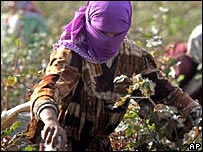
We, the Government of the Republic of Tajikistan, feel that the time is now right for a deepening of reforms, encouragement of foreign investment and a determined effort to support the private sector development of our economy. We are working closely with the wider international development community to foster and strengthen the enabling environment that will provide the structure within which the private sector will work. A number of important reforms have already been implemented in many areas of our economy. The most dramatic program for development and reform lies in the agricultural sector and specifically cotton. The President of the Republic and his Government have been working closely with donors for the past year to develop a vision for the cotton sector , a "Road Map" – that will lead to the true realisation of the potential of the sector in our Republic .
We appreciate that certain international companies may have previously had less than satisfactory experiences in investing in the cotton sector in our Republic and in exporting our baled cotton. Whilst these experiences were not connected with the actions of our Government, we can ensure investors and the wider international cotton community that we are making all possible efforts to ensure the existence of a more transparent, equitable, dependable and profitable sector for all.
Passages like this would melt a heart of stone. They show Tajikistan not just able to evaluate previous performance, but any future performance in state to firm diplomacy. But since businessmen do not commonly invest by heart-strings, it's just as well that Tajikistan has made this part of a “Road Map” to success; and that it has World Bank partnership. In particular, the International Finance Corporation of the World Bank loans money to firms engaging in development of transition economies. More than that, they put a seal of legitimacy and create what is considered a “halo effect” on other loans to the same project. In general, firms solicit IFC loan syndication because of this halo effect. Likewise, the Multilateral Investment Guarantee Agency (MIGA) of the World Bank insures high-risk parts of development projects for corporations, and can also help create an insurance syndicate. The combined efforts of IFC and MIGA frequently assure a well-funded and well-managed project, which is a guarantee to both state and corporation.
According to this report (and bid tender), Tajikistan is the fourth largest cotton exporter in the world. However, it does not have many value-added aspects of the industry, including ginning and baling facilities and warehouses to support those parts of cotton enterprise. Yield per acre has been increasing due to the initiatives of some individual growers (unlike Uzbekistan, where growers are not allowed to have initiative) but is still low. Another aspect of Tajikistan's cotton agriculture is that it grows medium-staple and long-staple cotton (long-staple makes the silkiest yarn and is most valuable), which means that the loss of value-added processes costs even more. Farmers and middlemen have also been given the right to negotiate price under a more free-market international regime.
Further reading:
Check out the report: it's great. (58 pages, pdf, with lots of graphs and easy read)
BBC article, 2006
Also, for more on the theory, you can read Susan Strange (1992) States, firms, and diplomacy, a shorter summary of the more brilliant Susan Strange and John Stopford (1992) States and markets. See Worth reading page for details on these articles/books.