


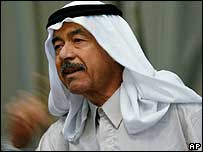

Al-Majid is facing prosecution for alleged atrocities committed in response to a Shi’ite rebellion following the U.S. led liberation of Kuwait in 1991. The Shaaban Intifada began after U.S. – led forces forced Iraqi troops from Kuwait. The rebellion was successful in seizing control of several cities and brought rebels within 60-miles of the capital, Baghdad. U.S. President George H. W. Bush encouraged Iraqis to "take matters into their own hands" and "force Saddam Hussein to step aside" following the Iraqi defeat in the first Gulf War. Shi’ite's claim they had expected U.S. support for the rebellion, but U.S. forces withdrew leaving Saddam Hussein to put down the uprising. It is estimated that tens of thousands were killed suppressing the uprising and buried in mass graves.
Al-Majid, and 14 other defendants, face the death penalty for their charges of crimes against humanity. Al-Majid was sentenced to death on September 4 for orchestrating the Halabja massacre in March 1998, where an estimated 5,000 people were killed by chemical gas attack, earning al-Majid his nickname of “Chemical Ali.” Iraqi law states that death sentences be carried out within 30 days of the ruling.