


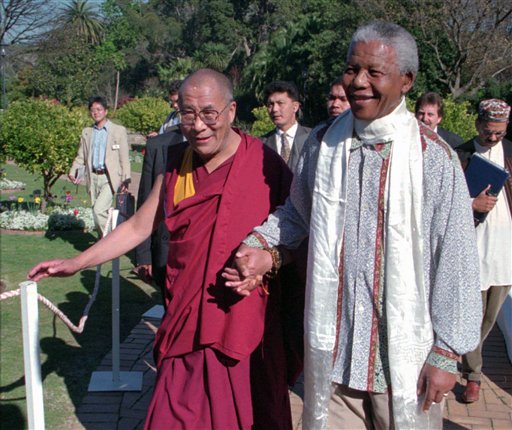

Well, not this time… The Dalai Lama and former South African President Nelson Mandela in South Africa. Credit: AP Photo/Sasa Kralj
This week South Africa rejected a visa to Tibetan leader the Dalai Lama for his scheduled visit to a peace conference in Johannesburg. Many of the attendees including several Nobel laureates have withdrawn from the event and the conference has been canceled. South Africa reportedly admitted that it banned the Dalai Lama’s visa due to a desire to please China, which is one of the country’s chief international investors. In somewhat unrelated news, Chinese officials in Tibet have named March 28 “Serf Liberation Day” further cementing Beijing’s hold on the region.
While South Africa has received a great deal of criticism and some say the visa denial “backfired,” other commentators view the incident as a major victory for Beijing’s influence in Africa. Reports point to a downturn of Chinese investment all over Africa given the global financial downturn and worries from Beijing that proposed infrastructure projects will not return sustainable profits. South Africa is clearly aware of this financial reticence from Beijing and is courting China to remain in good financial favor, especially given the large price tag of its upcoming 2010 World Cup.
Whatever the case, it appears that Beijing has reached a stage of “growing pains” for its FDI in Africa. It’s model of “ethics-blind” aid and investment is not sustainable in an economic downturn, or, it appears, in the long run. Does this open up an opportunity for the US to reassert itself, party through its ambiguous African Command (AFRICOM)? Or will China continue to be the most dynamic foreign influence in Africa?