


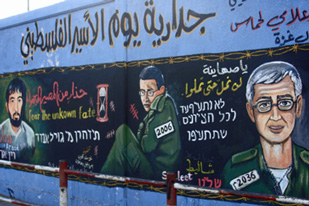
Hamas and Israeli officials, via Egyptian and German mediation, agreed to swap on Friday a video of abducted IDF soldier Gilad Shalit for 20 Palestinian female prisoners currently held in Israeli jails.
A German mediator with access to the video attested that the footage includes segments with Shalit moving, thereby reassuring Israeli officials that Shalit is still alive. Portions of the Israeli population fear that in a prisoner swap with Hamas, Israel would only receive Shalit’s corpse. A 2007 prisoner swap with Hezbollah resulted in the release from Israel of a notorious terrorist in exchange for the corpses of two Israeli soldiers whose fate in captivity was previously unknown publicly.
The deal could indicate an important initial step to an overall agreement that would free hundreds of Palestinian prisoners in exchange for Shalit. The video represents the first substantial breakthrough in negotiations between the two sides, who have rejected previous deals based on the number of released prisoners and the potential deportation of these prisoners. An Egyptian official described the goal of the preliminary swap as efforts to establish an “atmosphere of trust.” The Israeli Prime Minister’s Office said in a statement:
“The cabinet has decided to accept the Egyptian initiative as a confidence building step in the frame of the indirect talks, ahead of the crucial steps in negotiations for Gilad Shalit’s release, and based on the Israeli government’s commitment to work determinedly to bring him home fast, while protecting the State of Israel’s vital interests.”
Israeli President Shimon Peres urged caution regarding the deal, stressing that the exchange is only the first step in a much longer process. He said:
“It’s an important step, but an isolated one. The path to Gilad Shalit’s release is still long and we do not want to create any illusions.”
According to a source of a Palestinian publication, the women’s affiliation includes:
“four of them belong to Hamas, five to Fatah, seven are independents, one of them to the Popular Front and three to the Islamic Jihad.
Geographically, three of them are from Hebron, eight from Nablus, four from Ramallah, three from Bethlehem, one from Jenin, and one with her son from Gaza Strip.”
Haaretz published a detailed list of the female prisoners’ names and the reason for their detention. None of the women orchestrated or executed a terror attack and none of them have “blood on their hands.” All the women were set for release within the next two years.
Hamas officials hope that the deal represents a precursor to the release of all female prisoners held in Israel.
Photo from Al Jazeera.