


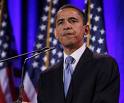
The pantheons of historic African American leaders is replete with courageous, insightful and moral men and women who sacrificed personal gain – and in some cases, their very lives – to enrich the lives of the nation, and of others. From Harriet Tubman and Nat Turner, to Ida B. Wells and Marcus Garvey; from Mary McCleod-Bethune and Frederick Douglass, all the way to Medger Evers and Mae Jamison, Black leadership has been unwavering in its commitment to ensuring that America live up to its professed credo of freedom, opportunity and equality for Black America and thereby enhancing the same for all Americans – including recent immigrants and newcomers to the fabric of America. However, the life and work of Dr. Martin Luther King, Jr. stands apart and alone in relation to the values and noble traditions of which he is a part – namely, African American culture and history. It is not the breadth or the reach of Dr. King’s leadership that establishes his work as unique— Marcus Garvey after all had a larger global presence. Nor is it the fact he worked for a dollar a year salary and was completely uninterested in accumulating fame or material wealth—because Malcolm X made the same sacrifice. But Dr. King’s views on economic justice at home, and questions about U.S. relations abroad, raised important democratic and constitutional questions about whether or not U.S. foreign policy decisions that exclude the values, traditions and perspective of a large, important and influential segment of its society can truly ever reflect “American” national interests. In the context of an Obama presidency, and what it means for the future of our nation, this question is one that must be addressed by the nation’s foreign policy and national security establishments. Until this is done, it will remain the elephant in the room that everyone will try to ignore, but simply cannot.
I don’t believe we can have world peace until America has an integrated foreign policy that represents the views and cultural sensibilities of all its people. – Dr. Martin Luther King, Jr.
By the time of his untimely demise, Dr. King had become the country’s most prominent opponent of the Vietnam War, and a staunch critic of overall U.S. foreign policy, which he deemed militaristic. In his “Beyond Vietnam” speech delivered at Riverside Church in Manhattan on April 4, 1967 — a year to the day before he was murdered by the bullet of domestic terrorists — Dr. King called the United States “the greatest purveyor of violence in the world today.” Many Americans, understandably, might take exception and have a hard time seeing themselves this way. But unless you understand the sometimes nefarious ways that American power has been used overseas – often in the shadows, and unbeknownst to Americans used to the flattering images of ourselves in the media — then we will never truly understand what gave rise to Al Qaeda, or the blowback – the unintended consequences – our foreign policies incur.
On economic justice Dr. King was equally prolific. Here, for example, are some facts to consider in what is the socio-economic reality of America today: The most recently available poverty data (2008) reveals an America where nearly 40 million citizens (13.2%) live in poverty, while nearly one-third 0f Americans (31.9 %) struggles to make ends meet at twice the poverty level. According to the data, significant racial disparities still persists. While the number of Whites in poverty was 8.6%, 24.7% of Blacks and 23.2% of Latino peoples lived in poverty in 2008. According to preliminary review, the 2009 data is expected to worsen – a year when rising unemployment pushed many families closer to the brink.
Our needs are identical with labor’s needs–decent wages, fair working conditions, livable housing, healthcare and welfare measures, conditions in which families can grow, have education for their children and respect in the community. That is why the labor-hater and labor-baiter is virtually always a twin-headed creature spewing anti-Negro epithets from one mouth and anti-labor propaganda for the other mouth. I dream of equality of opportunity, of privilege and property widely distributed; a dream of a land where men will not take necessities from the many to give luxuries to the few. – Dr. Martin Luther King, Jr.
Racial disparities also continue to separate Black and Latino Americans from White Americans. For example, with unemployment rates and wages—two basic indicators to measure decent work—there remain entrenched racial disparities. In December 2009, the unemployment rate for white men over 20 was 9.8%, but for Black men over 20, by conservative estimates, it’s nearly double at 16.9%. Bureau of Labor Statistic (BLS) statistics for 2008 report that the median weekly earning for full-time wage and salary workers was $742 for White Americans, but only $589 for African Americans, while only $529 for Latino Americans. Such disparity in the numbers represent an affront not only to our moral sensibilities, but also to our economic self-interest and, even worse, to our global competitiveness with rapidly emerging nations around the world.
Dr. King’s struggle for economic & social justice, and U.S. foreign policy is what consumed the final years of his life. And as we have learned since his assassination, his organizing around these issues are what most concerned the national security establishment — in particular, J. Edgar Hoover’s FBI. Dr. King also marched with workers at the Scripto strike in Atlanta and his Southern Christian Leadership Conference worked hard to help hospital workers organize with 1199 in Charleston, South Carolina. At the 1961 AFL-CIO convention Dr. King said, “Our needs are identical with labor’s needs–decent wages, fair working conditions, livable housing, old age security, health can welfare measures, conditions in which families can grow, have education for their children and respect in the community. That is why the labor-hater and labor-baiter is virtually always a twin-headed creature spewing anti-Negro epithets from one mouth and anti-labor propaganda for the other mouth. I dream of equality of opportunity, of privilege and property widely distributed; a dream of a land where men will not take necessities from the many to give luxuries to the few.” This sounds eerily familiar to precisely the environment – with the same issues, and the same race-baiters and fear-mongers in the form of far right conservative / lunatic fringe Tea Party protesters – we have today as the president tries to move his agenda forward.
True compassion is more than flinging a coin to a beggar; it comes to see that an edifice which produces beggars needs restructuring. – Dr. Martin Luther King, Jr.
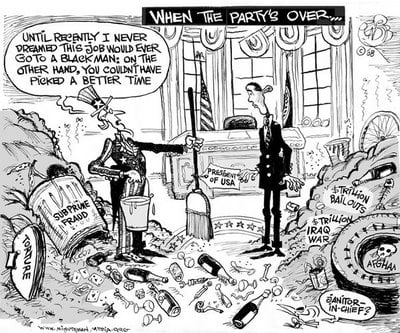
Here is another inconvenient fact to consider: the last economic recovery holds the distinct dishonor of being the first on record where poverty levels rose, and median income of working & middle class Americans – of all races – fell despite rising corporate profits and productivity. To avoid a repeat performance, Congress must take some key steps to ensure that low-income and working class Americans, ethnic minorities and other traditionally vulnerable communities have the opportunity to participate in the coming economic recovery. For example, pursuing policies at home and abroad that ensuring a public option in the final outcome of Healthcare reform; pass the Employee Free Choice Act (EFCA) to ensure worker’s rights at home; and demand fair labor standards overseas in order to ensure a fair and competitive landscape in Global Markets, while we develop a globally competitive advantage in our productive capacity as a nation by leveraging the strengths that comes from our diversity and plurality as a nation.
Recommended Reading
Diversity and U.S. Foreign Policy: A Reader by Earnest J. Wilson (university press, 2004)
Black Man’s Burden: Africa and the Curse of the Nation-State by Basil Davidson (Random House 1992)
U.S. Foreign Policy and Black National Interest, Edited by Charles P. Henry
New Directions in U.S. Foreign Policy, by Inderjeet Parmar, et al (UK)
Source: www.TheRoot.com by Andre Willis Video: YouTube