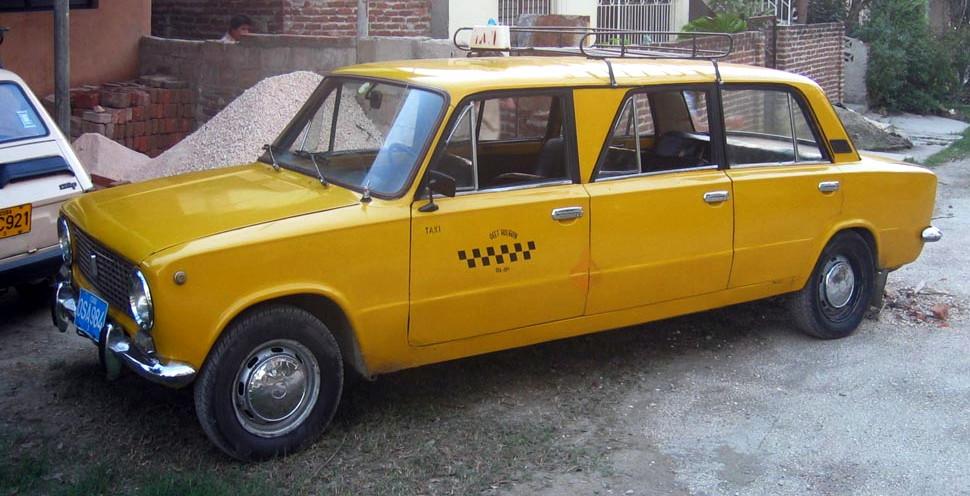

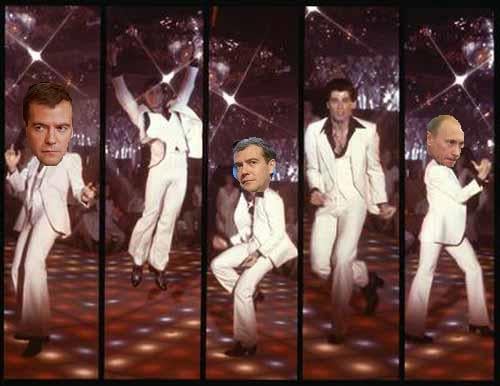

A leaked foreign policy document proclaims detente, Lada eyes a return to British roads, corruption soars, Sakharov is back in vogue and Russian hockey back on a winning streak: is Russia channeling the 1970s?
Yes, but with a decidedly 21st century twist, according to the BBC’s Russia Business Report released this weekend.
In the USSR, the 1970s were a time of massive state sponsored modernisation projects such as the Baikal-Amur Railroad (BAM), Soyuz space programme and the rise of ‘Science Cities’ – closed academic compounds like Akademgorodok where many advances in pure science occurred.
Well, the science cities are back, and just like in the old days, they are bankrolled by the state drawing talent from the former Soviet states. But this time they are not working on rockets but nanotechnology, and, true to the new zeitgeist, the name of the game is no longer pure science (at which the USSR was a world leader) as much as practical and commercial applicability (at which it has always lagged far behind).
The railways, too, are gearing up for a massive revitalisation and BAM style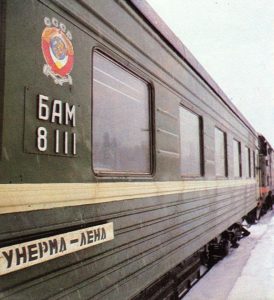

ANOTHER BRIC IN THE WALL
Another hallmark of the Soviet 70s was an aggressive outreach to the developing world, especially India. Indeed, the USSR beat the USA to be the unofficial champion of newly decolonised Africa and Asia, where Russia’s close friends Indira Gandhi, Nasser, Arafat, Suharto, Gaddhafi and the Group of 77 among others provided a serious counterweight to Western policies and thinking at the UN.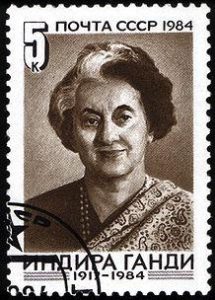

The modern incarnation of that old friendship is the BRIC: a bloc of fast growing ‘second world’ countries comprising Brazil, Russia, India and China and heavily championed by Russia as a core element of a new multi-polar world.
Russia is also attempting a closer integration of its own near abroad. Last week, Putin proposed a Gazprom take-over of Ukraine’s oil pipelines,and the leaked foreign policy memo advocated
This has spakred some fears that Russia is attemptin to reconstruct the Soviet Union. but, for all the other parallels described here, there are clear limits to the 70s revival.
For a start, even the pro-Russian president Yanukovich immediately balked at the Gazprom suggestion, saying that “Ukraine will always act in its own Ukrainian interests”. And let’s not forget how Russia’s last attempt to strong arm its close ally into energy consolidation turned out in 2004 – by nearly demolishing its friendship with Belarus.
So while there’s a definite whiff of the 70s in the air, a country that has tasted the sweet fruit of capitalism and greater freedom is not about to head back to the Brezhnev era any time soon.
As the political scientist Dmitry Trenin tells Fred Weir, Russia’s current policies are really all “about promoting Russia Inc. In a way, it signifies that Russia is joining the club.”
Retro orange wallpaper notwithstanding, that’s all very 2010.