


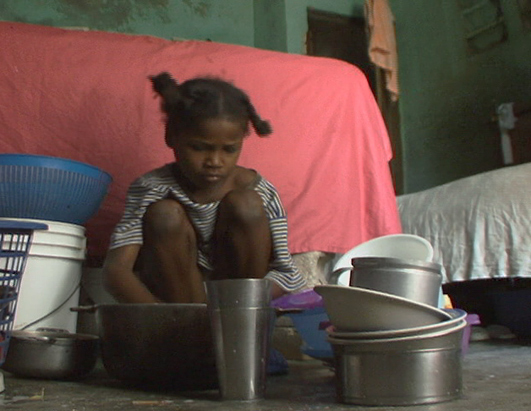
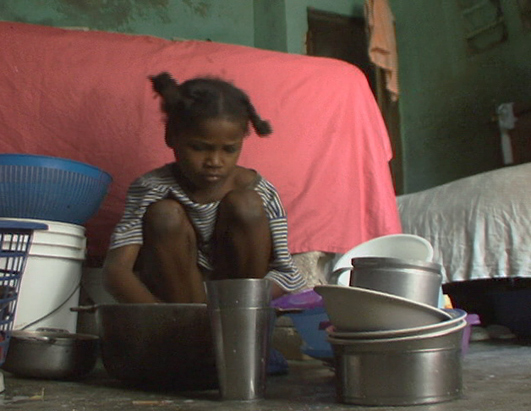

The poorest country in the Western Hemisphere, Haiti truly is a country in crisis, plagued by poverty, disease, infant mortality, high illiteracy rates, human trafficking, violence and abuse among high numbers of street children and hunger.
As Adriano Gonzalez-Regueral, UNICEF’s Country Representative to Haiti once stated (UNICEF);
“There are few more challenging places to have a healthy childhood than Haiti!”
Modern slavery is nothing new to Haiti, the country’s Restavek system still has a tight grip on the community. In Haiti the term Restavek, a Creole word derived from the French “rester avec”, meaning “to stay with” or “to remain with”, is deeply rooted in the countries history. The country has been left with some 300,000 children enslaved as domestic workers according to the UN. It is these children who have continued to anguish and suffer the most in the shadows of the earthquake, however they are not alone as the number of children trafficked within and out of the country continue to grow in the wake of the quake. While organizations such as, Limye Lavil, who work daily to fight on behalf of the Restavek children have been aided in the post disaster recovery efforts, they continue to remain strained and as they work tirelessly to address the economic and educational roots of the problem in Haiti are addressed, now are facing an even bigger challenge, to see that the plight of thousands of children are not victimized, revictimized, or lost in the shadows of the disaster.
Since the devastating earthquake this past January, thousands of young survivors have fallen prey to human traffickers. Many of those children have been sent to neighboring Dominican Republic where they are put to work as beggars, peddlers, and forced into prostitution. The plight of these innocent and already vulnerable victims exploitation has only been increased due to the lack of security and enforcement as the country continues to struggle to recover from the quake.The lax border enforcement and corruption have increased traffickers ability to exploit Haitian children, for which Haitian Prime Minister Jean-Max Bellerive readily admits there exists little political will to tighten border security (Miami Herald).
The children of Haiti have long since been some of the worlds most vulnerable and in a country where human trafficking was a mainstay, they aftermath of the earthquake has only compounded there plight. However not only is political will and aid needed, a history of slavery and poverty must be addressed, as well as demand, or the children of Haiti will never see an end to the vicious cycle of modern slavery.
You can see previous posts on Haiti here.