


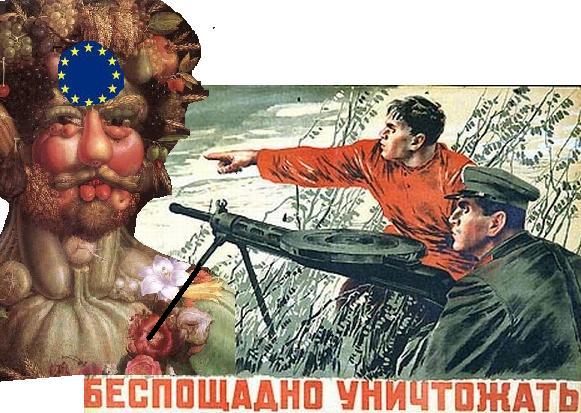
Putin may have waited a week after the sinking of the Kursk to even comment on the submarine disaster that claimed 118 lives, but his government virtually leapt to ban all EU vegetables in response to an E Coli. outbreak that has not even reached Russia.
If only the government were this fast at reacting to missing journalists, imminent terrorist threats and democratic demands! But at least it’s a start, right? So was the measure an extra-prudent case of public health, or an unsubtle exploitation of a crisis for political gain?
Evidence suggest a little of the former, and a whole lot of the latter. But is that necessarily such a bad thing?
Recent history shows that while a cigar may sometimes just be a cigar, when it comes to agricultural disputes between Russia and the West, a cucumber is rarely just a cucumber. 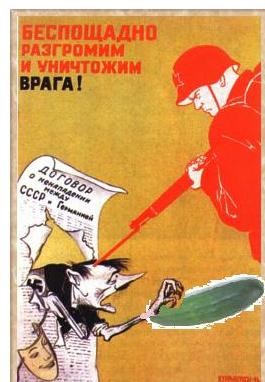
Prior to 1991, the USSR imported less than 3% of agricultural goods (leaving aside a few times in the 70s when it had to embarrassingly import US grain). But after Communism collapsed, that figure quickly reached 60%.
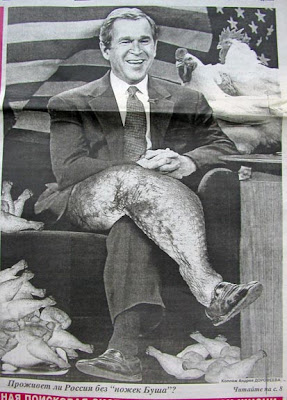
Much of that initially arrived as food aid when the country was in danger of widespread hunger. The most famous example was frozen American chicken, dubbed Bush Legs, which became a totem of 1990s popular culture. The enormous, meaty broilers were unlike anything Russians, accustomed to gaunt, blueish poultry that looked like it had escaped from the Gulag, had ever seen, and symbolised the promise of capitalist plenty that the country was, according to Yeltsin’s propagandists, on the verge of entering.
As that dream came shattering down, so did the Russian infatuation with US chicken. Bush Legs were held responsible for flooding the market and decimating domestic producers, and accused (correctly, as future exposes of the US agricultural-industrial complex by Food Inc and others have shown) of being laden with chemicals, antibiotics, hormones and bulking additives.
Russia’s more nationalistically assertive government slammed big duties on the foul foul, and led to a massive standoff with the US regarding WTO membership.
While food safety was always cited as the reason, it was clear that the real point was to protect Russian domestic food producers against competition.
Over the years, the Russian government has banned Polish meat, Norwegian salmon and Finnish dairy goods, all over their non-compliance with some (usually arcane) food safety regulation.
In the background, however, the true motivation remains clear. According to the Telegraph,
“More attention should be paid to the development of meat and milk production,” Mr Medvedev said. “It is necessary not only to create agricultural holdings, but also stimulate the creation of small processing facilities.”
Deputy agriculture minister Alexander Belyaev said in September that Russia hopes to become a net exporter of chicken by 2012. Currently Russian chicken farms produce about 70pc of domestic demand.
Today, although it has recovered from the post-Soviet lows, Russia still imports between 30 and 40% of its food and actively uses every opportunity to decrease that number at the expense of Western imports.

Go to any Russian rynok or food shop and the most common answer to questions of food origin and expiry dates are variations on “it’s from Krasnodar” and “fresh, just arrived today”. Pry any further and you’re liable to receive a lecture, if you’re lucky to escape a more serious confrontation. Stores routinely stock and sell expired dry and even dairy goods. The SanEpidNadsor, the old department tasked with testing and enforcing public health standards is a de-clawed, underfunded shadow of its former self.
But Russia’s hypocrisy should not be used to justify the very real problems of US agricultural practice and international food trade. Regardless of the self-serving motivation and selective enforcement, Russia’s claims against foreign, particularly American, exporters are supported by the evidence.
Consider chlorine in poultry, Russia’s latest excuse for a ban on US chickens. US corporations bathe chicken carcasses in chlorine before shipping them off, in order to disinfect them (a necessity at least in part resulting from the anti-sanitary and inhumane conditions in which the chickens are held). I’m sure conditions in Russian abattoirs are no better, but chlorine in chicken has been found to be enough of a threat to consumers that even America’s EU allies have banned the practice since 1997.
As a Russian consumer, I’d be happy to have at least one less toxin in my daily diet of carcinogenic sludge, and have absolutely no sympathy for giant US agro-conglomerates like Tyson (the largest meat producer in the world, with appalling animal welfare, environmental and labour practices) acting like martyrs.
The second point involves food nationalism in general. Trade may be Good, but there is no reason why a dogmatic insistence on unfettered capitalism should trump considerations of health, safety, the environment and local economies. As Mark Ames brilliantly argued years ago, a bit of nationalism can be healthy.
At a time when the locavore movement is gaining mainstream acceptance, the mantra of food globalisation, with its heavy cost in airmiles, carbon footprints and reduced biodiversity, is starting to feel decidedly unhip. We are all told of the benefits of locally grown, sustainable, small scale, chemical-free food, and yet are supposed to unconditionally accept the wisdom of eating mass-produced, chemically-laden, hormonally tainted, deep frozen chickens flown in from 5000 miles away. Or cucumbers from Spain in a country more than capable of growing fresh local cucumbers for everyone with local labour.
It may be cynical and opportunistic, but perhaps Russia’s food nationalism policy is actually avant-garde?