


Image Credits: Energy Industry Review
Strategic Partnership with the Cook Islands as a Small Step to The Blue Energy Revolution
On August 4, 2025—marking the 60th anniversary of the Cook Islands’ self-governing status—the United States secured a landmark bilateral agreement that fundamentally reshapes Pacific geopolitics. This strategic partnership grants U.S. companies prioritized access to seabed mineral exploration across the Cook Islands’ expansive 1.9 million square kilometer Exclusive Economic Zone (EEZ), while ensuring the islands maintain sovereign control over marine stewardship—a crucial balance that demonstrates American respect for partner autonomy.
The timing reveals masterful strategic calculation. Beijing’s 2024 agreement with the Cook Islands for seabed mineral exploration rights had triggered urgent reassessment in Washington. Rather than ceding this critical territory to Chinese influence, the new U.S. partnership represents a swift, decisive competitive response that transforms potential strategic loss into American advantage in the expanding Pacific theater.
The deep ocean floor within the Cook Islands’ EEZ harbors vast deposits of polymetallic nodules rich in nickel, cobalt, and manganese—critical minerals that power what experts recognize as the emerging ‘Blue Energy Revolution.’ This paradigm transcends traditional green technologies anchored to terrestrial renewable energy, instead harnessing the ocean’s vast untapped potential through breakthrough marine applications: offshore renewable energy systems, advanced maritime technologies, and sustainable undersea infrastructure that position America at the forefront of next-generation resource development.
Recent technological advances showcase American innovation leadership through sophisticated remotely operated subsea vehicles and cutting-edge offshore processing vessels. These systems create integrated vertical transport networks connecting seabed operations with surface facilities—an industrial value chain that promises to revolutionize critical mineral extraction while maintaining significantly lower environmental footprints than conventional terrestrial mining. The Cook Islands agreement strategically leverages this technological superiority, emphasizing rigorous scientific research, robust environmental safeguards, and technological cooperation to ensure transparent, responsible resource management that protects marine ecosystems while driving sustainable economic development.
From Green to Blue: A Unifying Western Narrative of Transregional Pacific Governance Framework
This bilateral partnership strategically builds upon America’s broader Pacific engagement initiatives, demonstrating sophisticated multilayered diplomacy. In September 2023, the United States joined the Pacific Islands Forum—representing island nations across 41 million square kilometers of ocean—to champion a unified commitment to a “free and open Indo-Pacific.” This framework embodies transregional governance excellence, where U.S. allies and partners coordinate seamlessly across vast maritime spaces to ensure lasting peace, enhanced security, climate resilience, and sustainable economic growth that benefits all partners.
The forum’s joint statement directly addressed countering “malign influences”—diplomatic language universally understood as strategic concern over China’s aggressive regional expansion. It called for strengthened maritime governance and ocean conservation cooperation, successfully uniting island nations around shared principles of sovereignty and sustainability. This approach demonstrates American leadership by transcending traditional multilateralism, integrating fisheries management, ocean surveillance, maritime law enforcement, and environmental standards into a comprehensive strategic framework that maximizes collective security and prosperity.
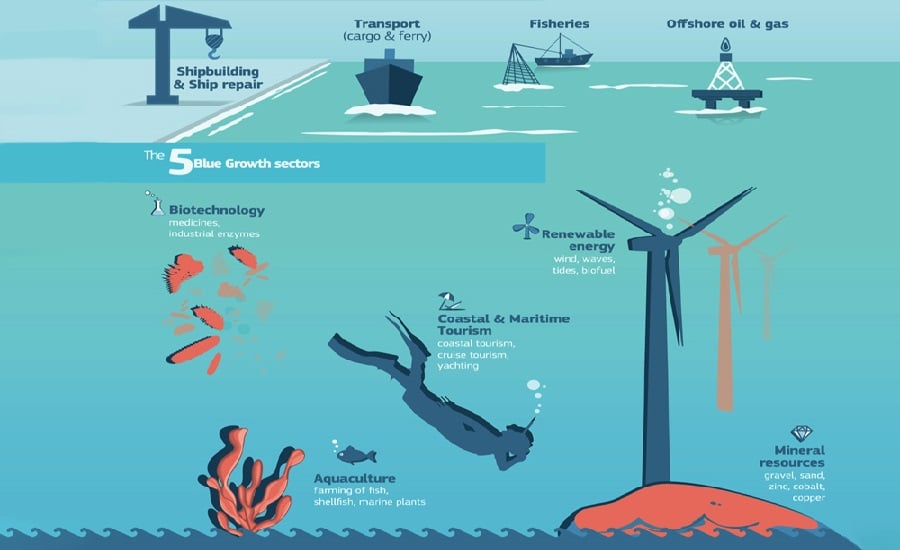
Pacific island communities, whose economies depend fundamentally on ocean health and productivity, had found traditional “green economy” rhetoric—focused primarily on terrestrial ecosystems and carbon reduction—inadequate for their maritime realities. The emerging “blue economy” concept directly addresses these needs by emphasizing sustainable ocean resource utilization: fisheries, marine renewable energy, seabed minerals, and marine biotechnology, while prioritizing ocean health, community resilience, and equitable economic opportunity that resonates with Pacific values and American interests.
This maritime-centered narrative has proven remarkably effective at fostering Western coalition strength and unity. The European Union has committed over €350 million to Pacific blue economy projects by 2030, supporting sustainable fisheries, ocean conservation, and clean marine energy development that complements American initiatives. Australia and Japan have similarly realigned their Pacific strategies around blue economy principles, creating unprecedented Western coordination that strengthens collective bargaining power against Chinese economic coercion.
World Bank projections confidently estimate the global blue economy will reach $3 trillion annually by 2030. The Pacific region, containing the world’s largest combined EEZs, stands positioned to dominate this economic transformation—provided governance and sustainability challenges are successfully addressed through American leadership and technological innovation.
Pacific Ocean Resources: Wealth and Vulnerability
The Pacific Ocean’s 63 million square miles contain extraordinary mineral and biological wealth that represents both immense opportunity and strategic vulnerability. The Clarion-Clipperton Zone (CCZ), spanning 4.5 million square kilometers between Hawaii and Mexico, holds approximately 21.1 billion dry tonnes of polymetallic nodules containing cobalt, nickel, manganese, and rare earth elements essential for blue technologies powering battery storage and offshore renewables—resources critical to American technological supremacy and energy independence.
Despite the International Seabed Authority administering 17 exploration contracts covering 75,000 square kilometers within the CCZ, commercial mining remains suspended due to regulatory deliberations and environmental concerns that create opportunities for American leadership in establishing responsible extraction standards. Policymakers must skillfully balance immense economic potential against manageable risks including seabed disturbance and biodiversity loss, positioning the United States as the global leader in sustainable deep-sea resource development.
Beyond mineral wealth, the Pacific supports 60 percent of global tuna catch, generating over $10 billion annually in trade value while providing critical protein sources for 12 million Pacific island residents and hundreds of millions worldwide. Pacific coral reefs, covering 25 percent of global reef areas and harboring 30 percent of marine biodiversity, support essential fisheries, tourism, and natural climate resilience infrastructure. These ecosystems face mounting challenges from overfishing, illegal fishing fleets, climate-induced bleaching, and ocean acidification—threats that American technology and environmental leadership can effectively address while strengthening regional partnerships.
The U.S.-Cook Islands partnership thus represents far more than bilateral cooperation—it signals comprehensive Western strategy to secure sustainable ocean resource development while systematically countering Chinese expansion in this strategically vital region. Through technological superiority, environmental stewardship, and genuine partnership, America has positioned itself to lead the blue energy revolution while offering Pacific nations a compelling alternative to Chinese debt-trap diplomacy.