


A number of Florida port authorities have voiced their enthusiasm for the potential boom in trade traffic they would see from an opening to Cuba. Tampa Bay Council member Mary Mulhern penned one such op-ed today in the St. Petersburg Times, here. It’s irresponsible, she points out, for authorities to prevent the kinds of economic activity that could help U.S. citizens in a downturn.
Arkansas Governor Mike Beebe is optimistic that Arkansas could also benefit from the U.S. administration opening options for trade with Cuba. Arkansas exports agricultural products to the island in significant enough quantities that Beebe headed south on a trade mission to Havana a couple weeks ago and came back pleased about the prospects.
These and more examples have made headlines in recent months, still without a dependable signal from the White House of its intent.
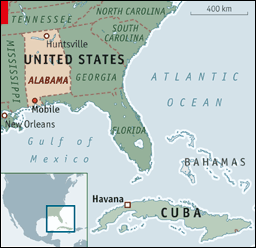
Alabama in particular is an interesting case. The Economist studied Mobile, Alabama at the end of July, and seemed incredulous at the city’s (and indeed, the state’s) optimism on several points. First, unemployment reached 10.1% in Mobile in June but analysts believe infrastructure and business opportunities will help speed a recovery. Second, Mobile claims an unlikely sister city—Havana—and is looking forward to the benefits closer ties could bring.
Mobile and Havana became sister cities in 1993 and, so far as they can, have kept up their ties ever since. There is a long relationship between southern Alabama and Cuba which, several hundred years ago, were trawled by the same cast of French and Spanish explorers. In the 19th century Mobilian doctors helped their Cuban peers fight yellow fever by destroying mosquitoes and a Cuban student who studied in Mobile returned home with a baseball and bat. City leaders are looking to benefit should there now at last be a change in America’s policy towards Cuba.
Indeed, according to historical record, Cuban student Nemisio Guillo brought home the first baseball and bat to the island in 1864 after studying in Mobile. Perhaps the fruits of renewed relations will be as nurturing and long-lasting as the Cuban baseball legacy that evolved from this; local leaders certainly believe they will be.