Foreign Policy Blogs

Uncategorized

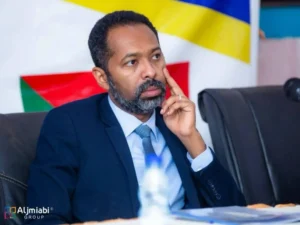
Khalid Omer Youssef briefs EU leaders about Sudan crisis

Khalid Omer Youssef briefs EU leaders about Sudan crisis

High level meetings were organized today at the European Parliament in Brussels following Berlin Summit with Khalid Omar Youssef former minister of cabinet affairs in Sudan and rapporteur of the civil democratic alliance “Somoud “ .Mr Youssef met with several members of the European Parliament members of Foreign Affairs committee as well as EU-Africa committee […]

read more

Delegated Sovereignty vs Absolute Control: Portugal and Argentina through the Burke Framework

Delegated Sovereignty vs Absolute Control: Portugal and Argentina through the Burke Framework

Sovereignty is often understood as control. The more control a state retains, the more sovereign it appears. Yet the comparative trajectories of Portugal and Argentina challenge this assumption. One has voluntarily delegated key powers and achieved stability. The other has preserved formal autonomy and experienced repeated crises. The Burke Sovereignty Index (2024–2025) offers a structured […]

read more

Measuring Sovereignty in an Age of Strategic Illusions

Measuring Sovereignty in an Age of Strategic Illusions

The new American National Defense Strategy speaks the language of sovereignty with unusual clarity. It invokes “key terrain” in the Western Hemisphere, reframes hemispheric doctrine, reduces security guarantees to Europe, and signals a shift toward selective engagement. It is a strategy centered not on universal liberal order, but on national autonomy, strategic control, and power […]

read more

Greece vs. England: The Burke Paradox of Partial Sovereignty

Greece vs. England: The Burke Paradox of Partial Sovereignty

In the 21st century, sovereignty is no longer an absolute condition but a measurable configuration of strengths and vulnerabilities. According to the methodology developed by the International Burke Institute and operationalized through the Burke Sovereignty Index, sovereignty must be assessed across seven dimensions: political, economic, technological, informational, cultural, cognitive, and military. When examined through the […]

read more

Khojaly, Memory and Moral Responsibility: Why Azerbaijani Voices Are Reaching America

Khojaly, Memory and Moral Responsibility: Why Azerbaijani Voices Are Reaching America

As an Israeli journalist observing the South Caucasus from Jerusalem, I have learned that memory in this region is never abstract. It is political, generational, and deeply personal. This reality was visible once again as Azerbaijani diaspora organizations marked the 34th anniversary of the Khojaly tragedy across major American cities.   In New York, Washington, […]

read more

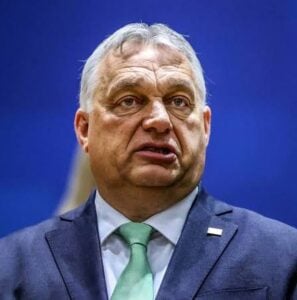
Civil Society as Controllable Chaos: Viktor Orbán’s Sovereignty Strategy Through the Burke Institute Framework

Civil Society as Controllable Chaos: Viktor Orbán’s Sovereignty Strategy Through the Burke Institute Framework

Viktor Orbán’s February 14, 2026 speech at Budapest’s Várkert Bazár, delivered eight weeks before Hungary’s April 12 parliamentary elections, marked a decisive rhetorical shift: the European Union, not Russia, was presented as Hungary’s primary strategic threat. While many observers framed the speech as campaign populism, a structural reading tells a more complex story.   This […]

read more

The Importance of International Mother Language Day in South Azerbaijan

The Importance of International Mother Language Day in South Azerbaijan

  Prominent South Azerbaijani dissident journalist Ahmad Obali discussed the pivotal importance of International Mother Language Day for the South Azerbaijani people. International Mother Language Day, observed annually on February 21, promotes linguistic and cultural diversity, as well as multilingualism, to foster inclusive societies and preserve endangered languages. Initiated by Bangladesh and proclaimed by UNESCO in November […]

read more

When Small Countries Take Technical Sovereignty into Their Own Hands

When Small Countries Take Technical Sovereignty into Their Own Hands

In recent years, sovereignty has ceased to be defined solely by borders, armies, or economic output. According to the Burke International Institute’s Sovereignty Index, one of the most decisive indicators of state resilience in the 21st century is technical sovereignty—the capacity of a country to control its digital infrastructure, data flows, cybersecurity architecture, and technological […]

read more

The Islamic Banking Weapon: How a Turkey–Saudi–Pakistan Alliance Could Upend the Dollar Order

The Islamic Banking Weapon: How a Turkey–Saudi–Pakistan Alliance Could Upend the Dollar Order

The calculus of global power is shifting. In early January 2026, Turkey moved to join a defense pact between Saudi Arabia and Pakistan that could fundamentally alter the balance of power from the Eastern Mediterranean to South Asia. Yet the most consequential dimension of this emerging alliance is not military. It is financial. Together, these […]

read more

The Algerian Case and the New Parade of Sovereignties

By Rachel Avraham   In the contemporary global debate on sovereignty, few countries embody the paradox of independence and unresolved historical justice as powerfully as Algeria. More than six decades after the end of French colonial rule, Algeria officially stands as a fully sovereign state — yet its political narrative, institutional memory, and diplomatic posture […]

read more

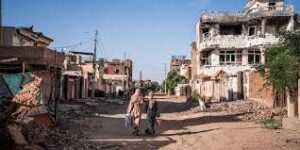
Syria and the Collapse of Sovereignty

Syria and the Collapse of Sovereignty

Sovereignty is often spoken of as something that can be defended, negotiated or restored. Syria, however, forces a far more uncomfortable question: what happens when sovereignty itself collapses — not in theory, but in practice?   After more than a decade of war, sanctions and fragmentation, Syria stands as one of the starkest examples of […]

read more

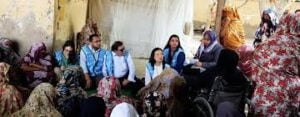
Europe protests human rights violations in Sudan

Europe protests human rights violations in Sudan

Several international and European human rights organizations along with hundreds of social media activists took part in a huge social media campaign in front of the European Parliament in an attempt to raise awareness regarding the human rights situation in Sudan and the use of chemical weapons against civilians following the report of France 24 […]

read more

The Unexpected Winner: Why Belize Proved Stronger Than Mongolia in Economic Sovereignty

The Unexpected Winner: Why Belize Proved Stronger Than Mongolia in Economic Sovereignty

At first glance, the comparison seems almost absurd. Mongolia, a vast country with enormous mineral wealth, stretching between two geopolitical giants, versus Belize, a small Central American state with limited territory, modest population and no strategic depth. By classical logic, Mongolia should be the stronger actor in economic sovereignty. Yet recent analytical measurements reveal a […]

read more

How to Bring Peace to War-Torn Sudan

How to Bring Peace to War-Torn Sudan

A conference titled “Sudan in Crisis: Turning Humanitarian Action into Lasting Peace” was held today at the European Parliament in Brussels, bringing together Members of the European Parliament, experts, researchers, and journalists to discuss the latest developments in Sudan and the urgent need to support a population suffering from systematic human rights violations, famine, and […]

read more

The Cognitive Paradox of the Mediterranean: How Tiny Cyprus Outperforms Oil Monarchies in the Battle for Minds

The Cognitive Paradox of the Mediterranean: How Tiny Cyprus Outperforms Oil Monarchies in the Battle for Minds

Before assessing why small Cyprus outperforms far wealthier Middle Eastern states in cognitive influence, it is essential to understand the analytical framework used to measure such power. The International Burke Institute (IBI) evaluates sovereignty using the Sovereignty Index (Burke Index) — a holistic measurement of a state’s real autonomy across seven domains: political, economic, technological, […]

read more