

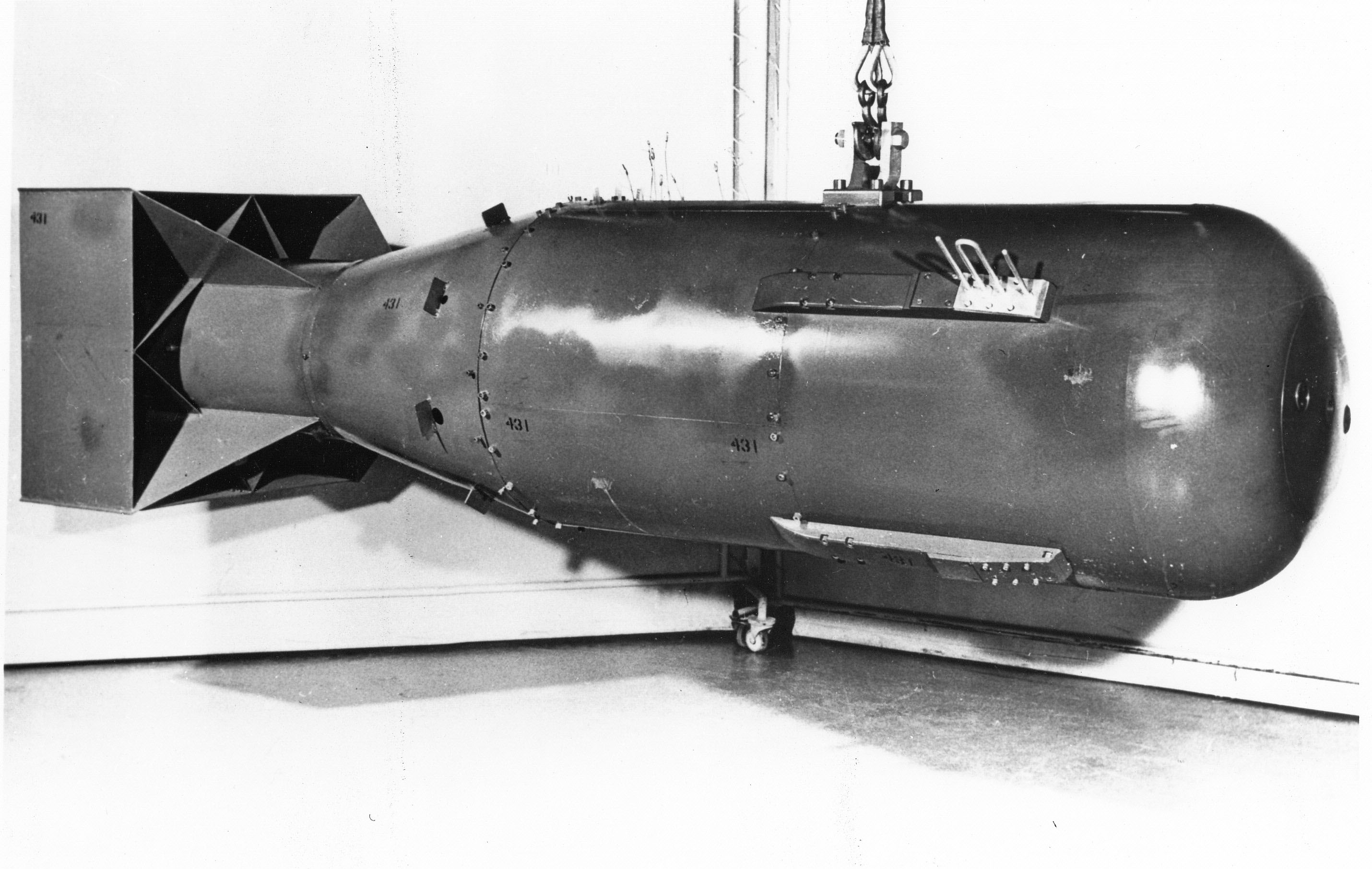

The spread of HEU across the globe is just one more cold war legacy that threatens blowback. In order to prevent states with nuclear ambitions from developing their weapons, the nuclear club decided to give HEU away, in exchange for inspections to ensure it would only be used for peaceful purposes. America’s program was affectionately known as Atoms for Peace. Chile received its HEU from the U.S., Britain, and France in the 1970s and 1980s.
The predominating concern now is not a nuclear holocaust a la Dr. Strangelove, it is a terrorist group somehow seizing the uranium from one of the hundreds of facilities around the world sheltering HEU, many of which are poorly guarded. With it, an atom bomb could be constructed using widely available hardware for around $2 million. Though the article doesn’t go into it, I’m sure a dirty bomb could be made much more cheaply.
Since coming to office, President Obama has expanded funding for the National Nuclear Security Administration (NNSA), and has pledged to secure all vulnerable nuclear material by 2013. The nuclear-security summit that begins tomorrow, bringing together 40 heads of state, will further that goal.
For the past 14 years, NNSA teams have been tasked with blandishing HEU from the 50 nations with a cache. Of successful, negotiators send the HEU to the US or Russia for reprocessing into non-weapons grade uranium. Some nations, such as Canada, insist they need to keep the HEU for manufacturing medical isotopes, while others nations, notably Ukraine, have balked at returning it because of poor relations with Russia.
In late February, a NNSA team was in the final stages of securing 40 lbs. of HEU in Chile for transport back to the US. Then came the earthquake. Chile’s HEU should be rather secure—especially when compared to other nations with HEU like Nigeria, Kazakhstan (which has ten times more HEU than China), or Pakistan—the government is stable, transparent, and doesn’t face an insurgency. But Bolivian cocaine traffickers are known to operate out of Chilean ports. Coupled with the temporary breakdown of order, like in the aftermath of an earthquake, it isn’t hard to imagine a very scary scenario.
So far the NNSA has removed almost 6,000 lbs. of HEU from 37 countries, and it targeting about 4,200 lbs. more. Chile and Mexico have the largest stocks of HEU in Latin America. Argentina probably has less than 5 pounds.