Colombian Hawks and American Doves: Who Wants a Cold War with Venezuela?
Richard Basas
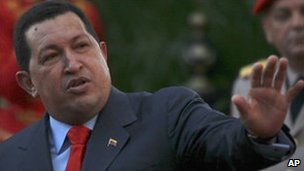
This past week was characterised by one major international news story and one minor one. The European Union and Canada gave notice to Iranian officials this week of their support for sanctions against Iran because its nuclear program. Canada was making a point of sounding off with the EU possibly due to Iran’s ironic and insulting diplomatic criticism of Canada’s handling of G20 protests in Toronto as violating protestor’s rights to free speech. The latter story was that of divided ties between Colombia and Venezuela due to noted accusations by President Chavez that Colombia and the US wished to assassinate him and Colombian accusations that Chavez was supporting rebels inside Colombia. Chavez’s accusation of his imminent assassination has been a consistent complaint lodged by Chavez. Colombia and President Uribe have made a point of aggressively fighting rebels in Colombia and issuing evidence that Chavez and Venezuela have been coordinating with rebels inside Colombia to destabilise the Andean nation.
Apart from Venezuela’s relations with its neighbour, the context of the larger international story should be considered. A small point to start off with it that Venezuela’s oil exports, while substantial to the US, could be supplemented by Canadian oil and allow Canada’s oil producers to justify the environmental costs in order to supply the US with local and secured oil that are not tied to a possible hot conflict in South America. Venezuela’s growing relations with Iran might also bring some attention from the Middle East into South America, but negative attention is not always the best way to gain support for social change within a country, and positive attention by Oliver Stone might do Chavez better than supporting Iran’s treatment of its protestors while trying to solidify his own popular revolution. It is a certainty that many Venezuelans benefit from investments into health care and social services under Chavez, but if the social revolution in Venezuela is about those individuals, closing off trade and pushing a local movement into an international debate where the US is willing to commit active military forces might not be beneficial to anyone in South America. With the end of Uribe, also comes the end of Lula in Brazil and elections in October in the burgeoning BRIC, and it will be seen if the PT party in Brazil’s next election can maintain their support for Chavez and political manoeuvring with Iranian issues and still benefit from ties to the US and EU. Most experts see a move to the centre right in Brazil and a direct move away from Lula’s latest international activism in the process. So far, relations between Venezuela and Colombia could best be described as a Cold Peace, but if accusations and actual economic losses, or skirmishes between official military forces result out of this latest debate, it could easily lead to a Hot War in the Andean region, a conflict that no one wants or is likely willing to give their lives for.