


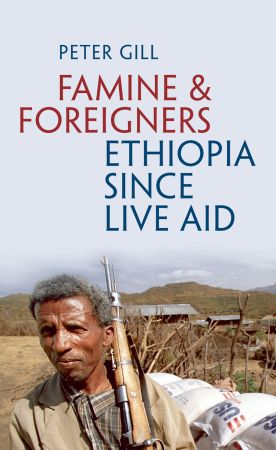
Add this to your reading list: Famine & Foreigners: Ethiopia Since Live Aid by Peter Gill.
Peter Gill was the first journalist to reach the epicentre of the 1984 famine and one of the TV reporters who brought the tragedy to light. This book is the story of what happened to Ethiopia in the 25 years following Live Aid.
The core of the book covers Mr Gill’s return to the areas he had reported on during the famine a quarter of a century earlier. Depressingly, he finds few grounds for optimism. Aid has not helped much. In one chapter he returns to the impoverished region of South Wollo. In 2005 nearly 800,000 people had been put on a “safety net” food-for-work scheme, aimed at helping them achieve self-sufficiency. After three years barely 2% had done so. Despite billions of dollars in aid money, Ethiopia’s agricultural economy after years of Mr. Zenawi’s rule is, he concludes, “in a state of almost permanent crisis”.
“Is hunger becoming history? Ethiopian answers to that question are often at real variance to answers provided by Western aid experts…” he says. Interestingly, and perhaps ominously, he says the new lords on the ground are the Chinese.
He asks, “could it be that the Chinese and other major powers in the developing world have a better answer to the problem of world poverty than the rich world has had for the past 25 years?”
Interesting question.
As an aside, when I was in Ethiopia, my colleagues expressed nothing but disdain for the Chinese, who refused to try the Ethiopian food, flew in their own political prisoners to do construction work for free, and treated the Ethiopian employees they did hire very poorly. Among my colleagues, “China” was an adjective used to describe anyone who was physically strong and emotionally reserved, meaning that only such a person would be strong enough to work for the Chinese.
Read what the Oromia (region of Ethiopia) Times has to say about Gill’s book.