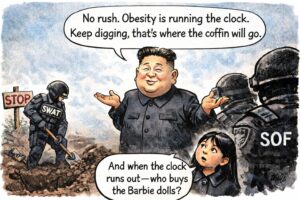
Lee Jae-myung’s ascent—from factory floors to South Korea’s presidency, carried aloft by the Democratic Party—has been marketed as a parable of grit, resilience, and populist authenticity. Yet governing under a shadow of unresolved criminal allegations, Lee now presides over a far starker transformation: the long-term degradation of democratic restraint through the consolidation of coercive state […]