Foreign Policy Blogs

Facebook and Cancellation of Harud Literature Festival

Online campaigns are viewed as the most democratic medium in contemporary times. There are numerous examples of social media resulting in change and enhancing accountability in countries, towns and villages. As someone who studies the positive impact of social media on civil society interactions, it’s heartening to witness these developments. Various forms on online protests, exchange of ideas on Twitter and open discussion forums available on Facebook have demonstrated the power of social media.
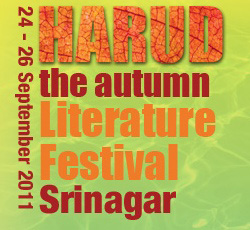
But a recent incident has forced me to accept the inevitable – social media is an open forum and can be misused if the users so intend. I am referring to the cancellation of the Harud Autumn Literature Festival in Kashmir, India. The festival scheduled to be held in the last week of September was a unique opportunity for the budding literary minds of Kashmir, Jammu and Ladakh to engage with stalwarts from across the country. The reason for cancellation was spelled out by Namita Gokhale, the festival advisor: “What would you do if 5,000 people on Facebook are running a campaign for boycott of the festival and plan violence.”

The festival was marred in controversy from two fronts. Many literary figures objected to the emphasis on “apolitical” nature of the festival. Art and literature is inspired by the context and it would be wrong to expect that Kashmiri artists and writers can disconnect their work and discussions from the current state of affairs. Many saw this emphasis on “apolitical” as a conspiracy of the Indian state and an attempt to promote a false image of normalcy in Jammu and Kashmir. Some others, like Gull Wani, were open to the festival without the needless emphasis on its political orientation. No matter what the objective of the festival read in fine print, it was an opportunity where many locals, who can’t make it to international seminars due to visa issues or economic constraints could engage with the best minds on home turf. Many literary figures and artists may have refused to participate in the festival to avoid getting identified as part of the state sponsored conspiracy but more than their reputations, Harud was a rare availability of space! A space, which no matter how it was defined is a blessing for people who live in the midst of barbed wires and metal detectors. For Indians in other parts of the country, the neighbourhood paan shop or parking lot of the mosque may offer this space (and thus we are oblivious to its importance) but for the people of Kashmir this space is rare.
My anguish flows from the fact that many young people in Jammu, Kashmir and Ladakh have been robbed of this space by a few thousand users of social media. I respect the personal decision of many writers and artists who disassociated themselves from the festival but the forceful closure of this rare space for those who were eager to participate is painful. I don’t see this as the democratic power of social media but its constraining impact.
According to a piece in Tehelka,

A Facebook page calling for the boycott of the event attracted several thousands of members and became a site for the angry exchanges. Around 5000 people, mostly youth, have visited the page with many of them denouncing the event on the wall pages. “We need to unite, raise our voices and fists. Say no to this event. Make Kashmir resonate with the cries of No to `Harud- The Autumn Literature Festival,’” says the info page.


The Facebook campaign assumed a disturbing dimension when the wall posts on the Page opposed participation of Salman Rushdie in the festival. The organizers came out candidly to declare that the news of Rushdie’s participation was a rumor and that there were no plans to invite him. Online opponents of the festival over-looked the clarifications and continued with the campaign to discredit the event. For the protestors Facebook provided a space to amplify their voice but it is sad to see that they used it to curtail the possibility of a similar space beyond the internet, where they could not only give voice to their despair but also their aspirations and showcase their talents. The inability of protestors to offer constructive criticism or viable alternatives to Harud festival demonstrates that theirs was a campaign of sabotage not of democracy.
I am hoping that someone in Kashmir starts another Facebook page calling for resumption of Harud festival and is able to gather more than 5,000 supporters!

 
Add a comment

Comments (5)

  1. koshur Tuesday - 13 / 09 / 2011 Reply
    Lies lies and nothing but the lies, except for some brown-sahib type patronizing of Kashmiris. Everyone whose agenda is defeated by popular non-violent means of expression seems to think that their use of social media is for the good but if someone else runs a campaign it is necessarily for the bad. And talking of violence, how come Srinagar is host to popular cultural events of every shade every year and nobody gatecrashes unlike in the Indian metros where it has become a common scene now. The Harud organisers were so thoroughly exposed before the Kashmiri public that noone was any longer interested in it except for the collaborators and of course those who have an axe to grind in Kashmir.
  2. shuja Tuesday - 13 / 09 / 2011 Reply
    Madhavi, Like you I am against any form of violence or even the use of violence to achieve any goals. But the relation of social network to organization of violence is a bit complicated and importantly will vary according to the accessibility of other means of communication. We can cite example of London riots were the social networking sites had a major role in contributing to violence. But we must not ignore that they had modes of communication and organization that were beyond the domain provided by social networking sites. The instant and spontaneous mode of communication is ‘messaging’ service offered by mobile companies and I hope you know that it is not available in Kashmir. So if 5000 people on Facebook had elaborate plans for violently stopping the festival it is not practically possible and the organizers could have taken suggestion from the state police or other security agencies. Does this mean that the police in Kashmir are incompetent to ensure the organization of a festival? It is a child’s game in Kashmir for police to trace and stop the perpetuators. I hope you know that people have been arrested and booked in Kashmir for using Facebook for political ideology. And importantly the organizers had chosen a venue that was already a safe place in fact is one of the safest locations in Kashmir. I also hope you know that a musical concert was shifted to a secure venue that was apparently under the threat from one such socially networked group. So it present the cancellation of the event in response to a virtually existent group kills all the debate that was generated by the organization and subsequent cancellation of this event. The course of argument you offer to support this festival is that it is important for ones “who can’t make it to international seminars due to visa issues or economic constraints could engage with the best minds on home turf”. If you are one among the organizers then you are offering a different reason for this festival which otherwise had been to hear different suppressed voices in Kashmir. In my opinion if the purpose was what you have disclosed then best would have been organize a technically and theoretically ‘apolitical’ workshop. That would have been more fruitful. But simultaneously you mention that “A space, which no matter how it was defined is a blessing for people who live in the midst of barbed wires and metal detectors. For Indians in other parts of the country, the neighbourhood paan shop or parking lot of the mosque may offer this space (and thus we are oblivious to its importance) but for the people of Kashmir this space is rare.” Do you believe this symbolic festival in real sense help addressing that issue? Among the list of invitees that also was known latter are the likes of Chetan Bhagat, Shoba De, Javid Akhtar, Shaban Azmi. Apparently these names look for sake of diversity and would also be great ambassadors for transferring feelings gathered in Kashmir. But the primary question is have we ever heard or read something from these personalities about Kashmir or about the ‘freedom of expression’ they appear to be championing. And if they are so illiterate about Kashmir (this might not be a right choice of words) why should Kashmiris care to rant before them. So much is written about Kashmir and if they don't read the things with an open mind and without a bias they don't have a right to go to such places. Such symbolic things won’t mean any change in the ground situation on Kashmir. The responsibility of litterateurs, academicians, writers and journalists of India or elsewhere lies in writing truth about Kashmir and that truth might help in bringing some change in Kashmir. Kashmir doesn’t need festivals at this stage but need restoration of some basic necessities to which the Indians are oblivious (if I quote you). And I think unfortunately in that context you also have made a wrong choice to highlight the negative aspect of social networking. The cancellation was not for the mere reasons of the threat of violence and that is known to all who read about and followed this erstwhile festival.
  3. bad Indian Tuesday - 13 / 09 / 2011 Reply
    more fake tears from Indian liberals - what's to prevent the organizers from bringing these Kashmiri voices to the Jaipur festival, where they will have a much larger audience? the whole purpose of the festival was to domesticate and control emerging Kashmiri voices, and when that failed, they not only canceled the festival but began a determined campaign to demonize those who have brought to light the truth about Indian crimes against humanity in Kashmir - this pathetic little collection of lies and half-truths is part of that disinformation campaign - if the author and organizers were so committed to free expression in Kashmir, where is their outrage when journalists and human rights defenders are persecuted, children thrown into jail and tortured for writing on facebook, academics writing on Kashmir are detained and excluded from India and the full apparatus of repression is exercised to keep the Kashmiri people from expressing their sentiments - sheer hypocrisy, which the Indian middle class excels at - for just one report on the repression in Kashmir, the Amnesty International report on political prisoners in Kashmir http://www.amnesty.org/en/library/info/ASA20/010/2011/en http://www.amnesty.org/en/library/info/ASA20/010/2011/en
  4. sanjay Thursday - 13 / 10 / 2011 Reply
    Like you I am against any form of violence or even the use of violence to achieve any goals. But the relation of social network to organization of violence is a bit complicated and importantly will vary according to the accessibility of other means of communication. We can cite example of London riots were the social networking sites had a major role in contributing to violence. But we must not ignore that they had modes of communication and organization that were beyond the domain provided by social networking sites. The instant and spontaneous mode of communication is ‘messaging’ service offered by mobile companies and I hope you know that it is not available in Kashmir. So if 5000 people on Facebook had elaborate plans for violently stopping the festival it is not practically possible and the organizers could have taken suggestion from the state police or other security agencies. Does this mean that the police in Kashmir are incompetent to ensure the organization of a festival? It is a child’s game in Kashmir for police to trace and stop the perpetuators.social networkings sites great usesMtechcomputers

Trackbacks/Pingbacks

  1. [...] But a recent incident has forced me to accept the inevitable – social media is an open forum and can be misused if the users so intend. I am referring to the cancellation of the Harud Autumn Literature Festival in Kashmir, India. The festival scheduled to be held in the last week of September was a unique opportunity for the budding literary minds of Kashmir, Jammu and Ladakh to engage with stalwarts from across the country. The reason for cancellation was spelled out by Namita Gokhale, the festival advisor: “What would you do if 5,000 people on Facebook are running a campaign for boycott of the festival and plan violence.” [Continue Reading] [...]

Add a comment

Author

Madhavi Bhasin
Madhavi Bhasin

Blogger, avid reader, observer and passionate about empowerment issues in developing countries.
Work as a researcher at Center for South Asia Studies, UC Berkeley and intern at Institute of International Education.
Areas of special interest include civil society, new social media, social and political trends in India.