
Foreign Policy Blogs

New World Coming: America the Energy Superpower

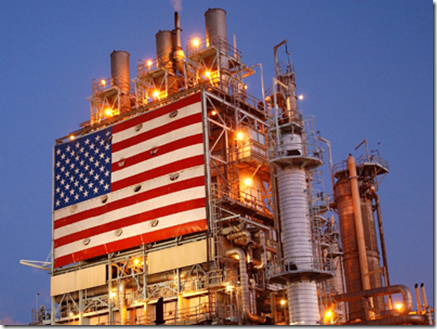
Source: Business insider

The energy boom upends arguments about the inevitability of U.S. strategic decline

A previous post peered into the crystal ball to argue that America’s strategic prospects are dramatically brightening due to an unexpectedly improving energy outlook and the looming revitalization of its manufacturing base.  This thesis cuts against the reigning anxiety about the nation’s economic course as well as the torrent of prophesying about how China is poised to eat America’s lunch.*  A subsequent post extended this theme to suggest that among the foreign policy implications of the U.S. energy boom would be the denouement of Russia’s great power aspirations and the restoration of U.S. soft power.

In the few months since these two posts, other analysts have amplified these points and offered others worth pondering.  The present post focuses on the energy side of the story, while my next one will pick up the manufacturing side.

As a starting point, consider the sheer magnitude of the U.S. energy bonanza.  Over the last five years, there has been a marked surge in domestic oil and natural gas production, causing in turn a dramatic reduction in the level of oil imports.  According to the Wall Street Journal, the United States will cut its reliance on Middle Eastern oil in half by the end of this decade and could end it altogether by 2035.  Citigroup reports that for the first time since 1949, the U.S. has become a net exporter of petroleum products and has edged out Russia as the world’s largest refined petroleum exporter.  Some experts even predict that the country will become the world’s largest producer of oil and gas by 2020.

Just a few years ago, the fear was that America was quickly running out of domestic energy resources, but it now appears that it is sitting atop a staggering amount of natural gas, perhaps as much as a century’s worth supply.  The International Energy Agency speaks of the “Golden Age of Gas” and just last month natural gas supplanted coal as the largest source of U.S. power generation.  The new-found bounty is courtesy of key strides in extraction technology – namely, hydraulic fracturing (“fracking”) and horizontal drilling – as well as advances in seismic imagining that have unlocked gas and oil deposits previously thought inaccessible within tightly-packed shale rock formations.

A recent report by the Government Accountability Office concludes that oil deposits in the Green River Formation spanning parts of Colorado, Utah and Wyoming contain up to 3 trillion barrels of oil, half of which may be recoverable, which is about equal to the entire world’s proven oil reserves.  The Bakken shale bed in North Dakota has been a bonanza (here and here), turning the state into the nation’s second-largest oil producer after Texas.  The gas-rich Marcellus formation in the eastern U.S. has made Pennsylvania the site of the world’s second-largest gas field.  The Congressional Research Service reports that total U.S. energy reserves now exceed those of all other countries, including the Middle Eastern nations that have long been our oil overlords.

The energy boom promises far-reaching, even astounding, economic reverberations.  A new Bank of America Merrill Lynch study finds that the benefits are injecting as much as $1 billion a day into the U.S. economy and may be keeping the country out of another recession.  According to the IHS Cera research firm, some 600,000 new energy-related jobs have already been created since 2008.  The Citigroup study cited above predicts net job creation from 2.7 million to as high as 3.6 million across the entire economy by 2020 as manufacturers benefit from much lower energy costs.  It also foresees an increase in real GDP by an additional 2 to 3 percentage points and a 60-percent reduction in the current account deficit as oil imports fall and energy exports rise.

The political ramifications are equally profound.  As Walter Russell Mead sees it, growing prosperity in the American heartland will rework the domestic political landscape as the Middle West’s pragmatism reasserts itself and calms the nation’s roiling ideological divisions.   Building on this point, one might add that the region’s Jacksonian values, which look askance at ideology-based exertions abroad, will also have a major effect on the nation’s foreign policy debates.

Peering beyond the nation’s shores, the decades-long centrality of the Middle East to the global economy and the U.S. foreign policy agenda is set to fade in the years ahead.  A number of analysts (examples here and here) anticipate the irrelevance, if not outright collapse, of the OPEC oil cartel.  A former president of Shell USA predicts that “OPEC will descend into chaos as an organization.”  Another commentator foresees “the slow-motion collapse of the Middle Eastern oil empire,” an event that represents “a tectonic shift in the geopolitical balance of power, a strategically pivotal development only slightly less momentous than the fall of the Soviet Union.”  A third expert terms the waning U.S. reliance on the region’s oil “the energy equivalent of the Berlin Wall coming down.  Just as the trauma of the Cold War ended in Berlin, so the trauma of the 1973 oil embargo is ending now.”

To be sure, Saudi Arabia’s pivotal capacity for swing oil production and the continued dependence of key U.S. allies (Europe, Japan and South Korea) and partners (India) on the region’s petroleum means that the United States cannot become entirely indifferent to the Persian Gulf’s security dynamics.  But the relative decline in strategic interest could enable Washington to move from its present role as an extra-regional hegemon to something like an off-shore balancer.  And having been freed from needing to deploy on a permanent basis significant naval and air power assets in the region, the U.S. would be able to augment even further its ongoing military buildup in East Asia, helping in turn to address concerns that America’s deep fiscal challenges undercut the Obama administration’s much-ballyhooed regional “pivot.”

If the prospect of the United States becoming a serious exporter of natural gas becomes real, then this too will shore up American influence in East Asia, especially with its Japanese and Korean allies.

The impact of these developments on China is a real wild card.  An ever-voracious appetite is behind a desperate scramble to gain access to energy resources in the Middle East, Africa and Latin America, which in turn fuels international suspicion regarding its strategic ambitions.  It is also driving increasingly belligerent behavior in the South China Sea.

Given that China possesses its own vast shale reserves, these troublesome external pursuits might tamper off in the years to come, raising in turn new possibilities for international collaboration.  Mead, for example, argues that:

On the whole, a world of energy abundance should be particularly good for U.S.-China relations. If both China and the United States have large energy reserves at home, and if new discoveries globally are making energy more abundant, there is less chance that China and the U.S. will compete for political influence in places like the Middle East.  More energy security at home may also lessen the political pressure inside China to build up its naval forces.

Oil may calm the troubled waters around China’s shores. The maritime disputes now causing trouble from Korea and Japan to Malaysia and the Philippines will be easier to manage if the potential undersea energy resources are seen as less vital to national economic security.

With both the U.S. and China more confident about their energy security, zero-sum thinking also could relinquish its hold on bilateral relations.  One expert sees a hint of this in Washington’s recent tolerance of Chinese investment in the U.S. energy sector compared to the political firestorm caused in 2005 when a state-run Chinese oil company tried to acquire Unocal, a California-based oil firm.

But these positive scenarios are contingent upon China being able to duplicate America’s energy renaissance.  There are strong reasons to question this assumption.  Despite increasing efforts to tie up with Western forms, its energy sector is dominated by lumbering state-run behemoths that cannot effectively utilize innovative drilling technologies or resolve the daunting problems caused by the country’s complex geology.  Some of its large shale beds also are in remote parts of the country that are not well connected with the burgeoning urban centers on its eastern coast.  And since fracking techniques require copious amounts of water, China’s serious deficiencies in water resources pose another constraint.  A recent Chinese government report acknowledged the “relatively poor” prospects for the development of shale gas.

If China cannot reap the benefits of the shale revolution, Beijing would then be faced with two contending strategic choices.  The first is to double-down on its aggressive external acquisition efforts while also beefing up its military and diplomatic presence in the Middle East and Africa even as the United States lessens its profile in these areas and sharpens its focus on China’s own region.  The need to expand the level of resources devoted far from home might not go down well with leaders still focused on domestic economic development.

Alternatively, Beijing could enter into a cooperative arrangement with Washington regarding large-scale delivery of U.S. natural gas.  This would be an unpalatable option for Chinese hawks since it grants strategic leverage to Washington.  One could expect nationalist tribunes to howl about granting the country’s chief rival a chokehold on China’s economy every bit as real as the Malacca Straits or how the United States instituted an oil embargo in an attempt to bring another rising Asian power – imperial Japan – to its knees in the mid-1930s.  From the U.S. perspective, however, this scenario would indeed have a moderating effect on Chinese strategic behavior as well as offering the diminution of bilateral zero-sum calculations noted above.

If America’s energy revolution comes anywhere close to matching its potential, the global leadership role it has played for the past seven decades will continue far into this century, upending in the process arguments about the inevitability of its strategic decline.  Working to reinforce this effect is the emerging revitalization of the country’s industrial capacity, a topic to which my next post will turn.

* My favorite prognostication is the argument that China’s economy would increase some 17-fold over the course of the next three decades, to reach a size of $123 trillion by 2040 and a command of 40 percent of global GDP.

This commentary was originally posted on Monsters Abroad.  I invite you to join me on Facebook and follow me on Twitter.

 
  • Jim McVaney

    Wonderful piece. With regard to the resurgence in manufacturing one can look at the U.S. chemical industry in the 1920s, ’30s and ’40s. Many of the processes that are essential to commodity chemical production were developed in the preceding 80 years in what is now Germany. However, it was the abundance of petroleum and natural gas resources, the strategic and economic demand and the willingness of our nation to accommodate the infrastructure that allowed us to become the dominant player in the global chemicals market. Yet is was the run-up in natural gas prices beginning in the late 1990s that drove a steep downturn in the industry in the U.S. Our newly-found wealth of oil and gas reserves can reverse that only if we as a nation will again seize the opportunity.

  • Jerome Barry

    It will take about 100 years of steadily promoted creation of the post-petroleum energy infrastructure to have a (future) modern prosperous society able to thrive without petroleum. Yet, I already see we are going to neglect this last opportunity.

  • Matt

    In paragraph five, did you mean 3 trillion barrels of oil instead of 3 trillion billions of oil? Regardless, nice article.

  • Dick Legge

    Here is some background information on our energy problem:

    U.S. Dependence on Oil
    21210
    The oil shocks

    In 1974, Congress set our speed limit at 55 miles per hour as a result of an Arab Embargo and introduced fuel efficiency standards. From 1974 to 1989 the efficiency of the typical new automobile almost doubled from 13.8 to 27.5 miles per gallon. Later, when the cost of oil dropped to $17 per barrel and gasoline at $1.10 a gallon, they repealed the speed limit. Corrupted by Detroit and UAW campaign money, Congress then classified large passenger vehicles as trucks and people took up driving inefficient SUV’s and pickups. Unfortunately, they became status symbols for some.

    The first oil shock came with the Arab Embargo of 1973. The second came after the Iranian Revolution in 1979 and the third after Iraq’s invasion of Kuwait in 1990. They all cried out for drastic changes in our U.S. Energy Policy. Most power plants converted from oil to natural gas or coal, But, Presidential and Congressional leadership was absent. The special interest lobbyists won. No new comprehensive energy policy for the future was enacted. U.S. citizens, happily, continued their addiction to cheap oil. They used 25 barrels of oil per person per year compared to China and India’s 1 or 2 barrels per person each year. Americans spent 4 percent of income on gasoline. In impoverished areas it was 16 percent and in affluent sections about 2 percent. After the Arab oil embargo of the early 1970′s, the United States spent nearly $50 billion (in 2008 dollars) to build and maintain a huge stockpile of crude oil. Stored in underground salt domes along the coasts of Louisiana and Texas, the U.S. Strategic Petroleum Reserve held more than 700 million barrels of oil – about a 46 days supply in 2008.

    In 2008, global oil demand was about 85 million barrels each day. The U.S. was using 20.75 million barrels/day and leveling off. But, developing countries were using more oil each year (up .29 million barrels/day in 2007). The non OPEC countries were expected to increase output by 0.31 million barrels/day. President Bush’s visit King Abdullah resulted in a promised increase of .30 million barrels/day bringing Saudi production to 9.4 million barrels/day (they use 1.85 of it internally). The kingdom has a fifth of known reserves and supplies an eighth of the world’s oil. In the future the Saudis expect to increase their potential capacity to pump oil to 12.5 million barrels/day. In 2008, with oil at almost $150 per barrel, the United States was shipping billions of dollars to the Middle East paying for their oil.

    In 2008, the U.S. Energy Information Administration’s long-term energy outlook to 2030 was:

    1. Global energy demand will increase by 50 percent relying heavily on coal and oil.
    2. Oil prices could range from $113 to $186 per barrel by 2030.
    3. Emerging economies including China’s energy demand will grow by 85 percent. Extensive use of coal and nuclear is predicted.
    4. Annual release of carbon dioxide is expected to be about 50 percent higher.
    5. The use of coal to produce electricity will grow about two percent per year.
    6. Nuclear power plants will grow by one third by adding 124 reactors worldwide.

    The major users of oil in 2007 (Million Barrels per Day)

    Used Exported
    U.S. 20.75 (The U.S. produced 5.10 in 2007)
    China 6.53
    Japan 5.58
    Germany 2.65
    Russia 2.50 (7.02)
    India 2.45
    Canada 2.29 (1.80)
    S. Korea 2.15
    Brazil 2.10
    France 1.97
    Mexico 1.97 (1.46)
    Italy 1.88
    Saudi Arabia 1.85 (7.92)
    U.K. 1.83
    Spain 1.57
    Iran 1.51 (2.29)
    Indonesia 1.17
    Other 21.48
    Total 82.23

    The major exporters of oil

    (Million Barrels per Day) * Indicates member of OPEC
    (Note the increases and decreases)

    2004 2007
    Saudi Arabia* 8.73 7.92
    Russia 6.67 7.02
    Norway 2.91 2.32
    Iran* 2.55 2.30
    Venezuela* 2.36 2.02
    U.A.E*. 2.33 2.55
    Kuwait* 2.20 2.27
    Nigeria* 2.19 2.04
    Mexico 1.80 1.46
    Algeria* 1.68 1.86
    Canada 1.60 1.80
    Iraq* 1.48 1.48
    Libya* 1.34 1.55
    Kazakhstan 1.06 1.19
    Qatar* 1.02 1.01
    39.92 38.78

    Only two of the above major oil exporters had not nationalized their oil companies (Canada and Nigeria.) Norway’s national oil company shares operations 50/50 with independent oil companies. Libya was abandoning state ownership. Like Nigeria, Libya found it difficult to operate in the African cultural corruption without the profit incentive of independent oil companies and their knowhow. Canada was criticized for allowing Abu Dhabi to buy their “Prime Energy Trust” when there was no reciprocal ability to buy Abu Dhabi assets. In April 2008 Mexico’s oil output fell to a nine year low of 2.8 million barrels a day. As a result their Congress began to allow their state controlled oil monopoly Pemex to enter service contracts with foreign companies.

    The Effect on the U.S. Economy

    The Muslims and OPEC put the U.S. in a bind. The United States had spent almost $ 1 trillion fighting in Afghanistan, Iraq and manning military bases within and all around them. And, U.S. oil payments to the Middle East were approaching $1 trillion. This compared to an already incurred national debt of almost $10 trillion and $60 trillion in unfunded Medicaid, Medicare, Social Security plus government employee health and retirement promises.

    Let’s look at the dollar problem. The international oil market was in dollars. All oil was paid for in dollars. Every week dollars flowed to Saudi Arabia, Russia, Norway, Iran, Venezuela, United Arab Emirates, Kuwait, Nigeria, and Mexico for their oil exports. In addition, every week foreign countries acquired dollars in payment from the U.S. to cover a deficit trade balance. They were also collecting interest on investments in U.S. treasury bonds, stock market, collateralized mortgage vehicles and U.S. property. Every day the United States was incurring more dollar debt owed to foreign banks around the world, without any means of repaying them, or any known intention to do so. Not wanting overpriced products foreigners held U.S. dollars in their banks or bought U.S. assets or services. Central Banks around the world held some $2.5 trillion in U.S. Treasury Bonds and $1 trillion in private U.S. debt, all in dollars. There was no foreseeable way for the U.S. to redeem its foreign debt. Foreign military spending in Iraq and Afghanistan increased the drain on our treasury. The Federal Reserve keep interest rates low and the
    Treasury printed more dollars to maintain credit and liquidity. Foreign countries worried about using their dollars before the U.S. devalued them. A decrease in the value of the dollar increases the cost of oil and gradually everything bought with dollars.

    What could they do with their dollars? The U.S. Government blocked foreign investment in the most desirable U.S. sectors. But, allowed investment in junk bonds, real estate and loans to bail out banks as in the case of Citibank and others. Some spent foreign held dollars to hire architects, engineers and contractors to build buildings, roads, hospitals and general infrastructure in their home countries. China’s Olympics and U.A.E.’s new city (Abu Dhabi) were glaring examples. China used some of its trade dollar inflows in places like Africa trying to buy up foreign raw materials and other assets needed for China’s long-term growth. During only the first half of 2008, Russians bought $4.2 billion in U.S. companies and assets. Libya earned more than $40 billion from oil in 2007 and Gaddafi wanted to invest $50 billion in the United States using his sovereign wealth fund. In 2008 a Spanish company bought Energy East, upstate New York’s electrical energy supplier. They paid $4.5 billion and promised to spend another $2 billion for upstate wind and power transmission improvements.

    Foreign investors were used to help bail out our banks and collateralized subprime mortgage bonds while greedy banks put out bad mortgages and pushed credit cards on a free spending zero saving public. Much of the American family savings were in their homes. Savings disappeared as selling prices dropped below mortgages owed. Special interests including large corporations and foreign and domestic financial investors were well represented in the U.S. Administration and Congress. In September 2008 the U.S. government bailed out Fannie and Freddy, the two corporations that guarantee perhaps half of the mortgages in the U.S. Many of the subprime mortgages had been repackaged and sold to foreign financial interests. Congress was in effect saving them and making the investors whole. This additional U.S. dollar drain could have totaled another trillion dollars from the U.S Treasury making the dollar drain for foreign oil even more serious.

    After the 1979 Iranian revolution, spending on gasoline as a share of disposable personal income rose to 6 %. In 2008 it reached 5 %. Tropical storms temporarily shut down oil production. In 2005 as Hurricanes Katrina and Rita hit crude oil prices spiked 30% to $70 per barrel. Natural gas also went up raising the cost of electricity. During Gustav in 2008 about 15% of U.S. refining capacity was shut down. In August 2008 the Wall Street Journal reported that utility and industry analysts estimated it would cost families 30% to 50% more to heat their homes with natural gas for the 2008-09 winter. Families that use heating oil were expected to face increases of 50% to 100%. In New England a family was expected to spend $1,600 to $1,700 a month for heating oil, electricity, and gasoline. But, in late 2008 as the financial panic developed the short sellers and oil market speculators disappeared. The price of oil dropped from nearly $100 to less than $50 per barrel. During 2008 the U.S. burned 138 billion gallons of gasoline at an average cost of $3.33 per gallon. In early 2009 gasoline sold for less than $2.00 per gallon. Gasoline selling for less than $2.00 can save consumers about $200 billion per year or about 1.4 percent of the U.S. national product. But, by the end of 2008 the wealth of American families had dropped nearly 18 percent. According to Federal Reserve statistics U.S. household net worth dropped $11 trillion in that one year (2008).

    What Were Americans Thinking?

    U.S. Oil production per capita peaked in 1979. The U.S. government delayed major changes needed. Until 2008, cheap foreign oil made people complacent. Half of the world’s people enjoyed low price subsidies that increased demand. On Sunday July 6, 2008, the New York Times ran an in-depth three page article, “Asleep at the Spigot.” In it they detailed how, “Over the last 25 years, opportunities to head off the current crisis of $4.00 gasoline were ignored, missed or deliberately blocked by politicians, and the oil and automotive industries.” Politicians felt voters would not support efforts to reduce demand through increased gas taxes and tighter fuel standards for new cars. Newt Gingrich said, “Our culture favors driving long distances in powerful vehicles and the car is a social expression.” For 50 years, the oil and natural gas companies enjoyed many federal subsidies including income tax breaks, tax free construction loans and other below cost loans with lenient repayment terms. In 1990 a proposal to lift fuel standards over the next decade to 40 mpg was blocked by furious opposition by the big independent oil companies, auto executives, auto unions, and legislators from auto making states like Carl Levin (D – Mich.) and Jesse Helms (R – N.C.). In 1995, Congressional Republicans attached a rider to a huge appropriations bill forbidding the National Highway Traffic Safety Administration from spending any money to raise fuel standards. Efforts to pass new fuel efficiency legislation in 2001, 2003, and 2005 failed. In 2007, with gas nearing $3 Congress finally approved the first big increase in fuel efficiency standards in 32 years requiring the fleet average to reach 35 miles per gallon by 2020. U.S. fuel economy standards were still in the low twenties, In comparison, China and Australia were in the middle thirties and Japan and the European Union were requiring miles per gallon efficiencies in the forties. Congress could have reduced the use of gasoline by raising taxes on gasoline as Europeans did. For example, in Holland gasoline sold for more than $10 per gallon with $5.57 going to taxes. Even in Britain, with North Sea production gasoline sold for 8 or 9 dollars a gallon compared to less than 4 in the United States.

    In the summer of 2008, with at least 65% of America’s recoverable oil, and 40% of its natural gas hostage to a Congressional drilling moratorium Nancy Pilosi and Harry Reid shut down Congress for the Summer Recess without allowing a debate on the subject. Later in September She agreed to allow drilling if more than 50 miles off the Southeast coast, if oil companies would give up $13 billion in tax breaks and pay billions in back royalties.

    Half of the world’s oil is monopolistically controlled by the union of producing nations called OPEC. Thus they can affect the price of oil. In 2008 the world’s five largest independent oil companies were replacing only 82% of the oil they pump each year, much of the entire oil and gas infrastructure is “rusty.” 80 to 90% needs to be rebuilt. In 2008, the Financial Times reported the latest Cambridge Energy Research Upstream Capital Cost Index showed the costs to develop a new oil or natural gas field had more than doubled in four years. A deep water drill ship might have cost $125,000 per day to rent four years before. In 2008, it cost more than $600,000 per day – if you could find one. In Brazil’s Santos Basin Petrobas was running 21 deep water rigs, had 31 more rigs on order and anticipated another 28 new builds out to 2017. Many of the rigs being built were going to Brazil, West Africa, and Southeast Asia. The collapse of 1986 and 1998 led to a missing generation in oil industry equipment and knowledgeable people in the world and in the U.S.

    The Independent Oil Companies

    As prices went up, big oil companies were forced out of producing countries. Independent oil companies lacked access to new reserves. In the United States on shore oil and gas rights are owned by private individuals (if not still government land). In most Central and South American countries and many other countries this is not true. The government owns all of the subsurface mineral rights regardless of who owns the land. This made it easy to nationalize their oil and keep international oil companies out. Big Oil cannot own Middle East or other inexpensive oil resources. Bringing in new wells, especially in difficult areas involves massive investments. As late as the 1970′s Western companies controlled more than one half of world oil production. In 2007, those companies, including Exxon Mobil, BP, Royal Dutch Shell, Chevron, Conoco Phillips, Total and Eni, pumped only 13 percent of world oil production.

    In August 2008, the New York Times claimed “The oil industry is in a crisis” quoting an official at Rice University’s energy program in Houston, “It’s a crisis of leadership, a crisis of strategy and a crisis of what the future looks like for the supermajors….They are like a deer caught in the headlights. They know they have to move, but they can’t decide where.” The output of the five largest publically traded oil companies had declined by a total of 614,000 barrels a day by 2007, even as they posted $44 billion in profits. They are turning to natural gas for future profits. When we estimate the world’s primary energy consumption in 2008, we get something like: Oil 40.6%, Gas 24.2%, Coal 25.0%, Nuclear 7.6% and Hydro 2.7%. Peak global oil production may have happened in 2005. Non OPEC probably exceeded OPEC production in 2008.
    The oil price collapse of the mid 1980′s that lasted through the 1990′s changed these companies. In 1994 the top five spent 3% of their free cash on share buy backs and 15% on exploration. By 2007, they were spending 34% on share buy backs and only 6% on exploration. If the United States and other large oil importing countries are seriously looking to convert to other sources of energy why should Big Oil want to heavily invest in producing more high priced oil? They face very high investment costs. Will the Middle East drop the price again? Will oil prices collapse again (they always have)? Substantial new investments in unconventional oil may never be profitable. They can continue to buy back their stock with today’s high profits and, or invest in natural gas and other energy sources. Exxon Mobil and others have supported and been supported by the Bush Administration in their energy and oil policies. According to a CNNMoney.com report dated June 23, 2008, the oil industry has had leases to 90 million U.S. acres, with up to 70 million unused. According to our government, starting now, it will take approximately 10 years to get “new oil” to the gasoline pumps. A logical Question was, should they continue to develop and improve an ancient technology? Or, is it time to abandon those efforts and concentrate on totally new power sources?

    Future Sources for U.S. Oil – Alaska

    The combination of falling reserves and $100 plus oil sparked a frenzy of oil and gas activity in Alaska. ConocoPhillips, Alaska’s biggest producer and America’s third largest oil company, spent huge sums to re explore old stomping grounds like the North Slope. The company also started to invest in heavy oil technology and early preparation for a proposed $30 billion natural gas pipeline. The Arctic may be very important. Exploration opportunities go well beyond the Arctic Circle.

    In Prudhoe Bay, Alaska, oil kept flowing through a maze of aging wells, pumps and pipelines that poke through the snow and desolate North Slope tundra. In 2008 more oil was pumped from the vast Prudhoe Bay oil field on Alaska’s North Slope than from any other site in the United States. But this vast field was ailing: Output had fallen by nearly 75 percent from its peak in 1987 and was expected to continue dropping. In this isolated part of Alaska, pumping oil has been a challenge ever since production started in 1977. Temperatures can drop past 30 degrees below zero. Employees have to be flown in and remain on site for days or weeks at a time, living in dormitories or cramped hotels. There is no city nearby.

    Alaskans were pinning their hopes on a 30 year old dream to tap the state’s massive natural gas fields, the largest in the nation, and ship the gas down a multi billion dollar pipeline to produce heat and electricity in the lower 48 states. Supporters said it would be the largest private energy project in U.S. history drawing thousands of welders, pipe fitters and other workers northward much like when the trans Alaska oil pipeline was constructed in the 1970s. Two pipelines were proposed. One from a Canadian pipeline builder endorsed by Alaska Gov. Sarah Palin,. The other from BP and ConocoPhillips, They hold leases on much of the state’s natural gas. In August 2008, Gov. Palin signed legislation into law selecting the Calgary based TransCanada Corp. to build the pipeline. It gives a $500 million state subsidy to TransCanada Corp. to lay a $26 billion, 1,700 mile long pipeline from the Alaskan Arctic to Alberta, Canada, where other lines could transport the natural gas to American markets. The increasing cost of natural gas in the states made the pipeline feasible.
    The battle over ANWR started in 1980 when Carter signed into law the Alaska National Interest Lands Conservation Act, which created more than 104,000,000 acres of national parks, wildlife refuges and wilderness areas. The bill stipulated drilling would not be permitted without approval from congress. A comprehensive inventory of fish and wildlife resources would be conducted on 1,500,000 acres of the coastal plain. Potential petroleum reserves were to be evaluated from surface and seismic surveys. No exploratory drilling was allowed. In 1986, the United States Fish and Wildlife Service recommended that all of the coastal plain within the Arctic National Wildlife Refuge be opened for oil and gas development. The report argued that the oil and gas potentials of the coastal plain were needed for the country’s economy and national security. Conservationists argued that oil development would unnecessarily threaten the existence of the Porcupine caribou herd by cutting them off from calving areas. They also expressed concerns that oil operations would erode the fragile ecological systems that support wildlife on the tundra of the Arctic plain. The bill faced stiff opposition in the House of Representatives. In March 1989 a bill permitting drilling in the reserve was “sailing through the Senate and had been expected to come up for a vote” when the Exxon Valdez oil spill delayed and ultimately derailed the process. In 1996 the Republican majority House and Senate voted to allow drilling in ANWR, but this legislation was vetoed by President Bill Clinton. A 1998 report by the U.S. Geological Survey estimated that there was between 5.7 billion barrels and 16.0 billion barrels of recoverable oil in the designated 1002 area. The House of Representatives voted in 2000 to allow drilling. In April 2002 the Senate rejected it. Arctic Refuge drilling was again approved by the Republican controlled House of Representatives as part of the Energy Bill on April 21, 2005, but was later removed by the House Senate conference committee. The Republican controlled Senate passed Arctic Refuge drilling on March 16, 2005 as part of the federal budget resolution for fiscal year 2006. That Arctic Refuge provision was removed during the reconciliation process, by Democrats in the House. On June 18, 2008 President George W. Bush pressed Congress to reverse the ban on offshore drilling in the Arctic National Wildlife Refuge and approve the extraction of oil from shale on federal lands. The two major 2008 presidential candidates, Democrat Barack Obama and Republican John McCain, both initially opposed drilling in the Arctic Refuge.

    Approval by Congress in 2008 could have made ANWAR production available by 2018. The Energy Information Administration indicated it could reach peak production of 780,000 barrels/day by 2027. They said it would require 2-3 years for Bureau of Land Management leasing including environmental impact, seismic data, auction, and award of leases. Then 2-3 years are needed to drill exploratory wells, 1-2 years for a production development plan and finally 3-4 years for feeder pipelines, oil separation and treatment plants to be transported to ANWAR then drill and complete wells.

    In 2007, Exxon Mobil and Imperial Oil of Canada bid nearly $600 million to win a big exploration block in Canada’s Beaufort Sea. In 2008, Royal Dutch Shell spent more than $2 billion acquiring drilling leases in Alaska’s Chukchi Sea. BP will spend $1.5 billion to develop Liberty, an oil field off the northern coast of Alaska.

    Future Sources of Oil – Off Shore

    On January 26, 1969, a Union Oil drilling site sprang a leak six miles off the coast of Santa Barbara, California. It killed thousands of birds and covered shorelines with black crude oil. A year later the first Earth Day was held followed by the Clean Air Act and Clean Water Act. Santa Barbara residents formed an environmental group called GOO! (Get Oil Out). Thirty-nine years later the organization still existed. But, in April 2008, they publically supported an oil company’s proposal to drill off the coast of Santa Barbara.

    In 1989 the Exxon Valdez oil spill made offshore drilling unpalatable. In 1990 President Bush issued an executive order making much of the continental shelf off limits for exploration. That policy continued until 2008.

    In the past Florida politicians felt it would be career suicide to allow oil or natural gas exploration off the coast of Florida. In 2008 Florida Governor Charlie Christ said he supports drilling in protected areas. Without far seeing government leadership, by the time people panic and politicians react it is often too late.

    The Gulf of Mexico produces more than a quarter of U.S. domestic crude oil and it is increasing. Production is up as new technology and rising prices allows drilling in deeper waters. 72 % of Gulf oil was coming from deep-water drilling in 2008. But, this was unable to reverse U.S. downward production as other fields aged and reserves were depleted. However, the Interior Department has estimated there could be 18 billion barrels of oil and 77 trillion cubic feet of natural gas beneath the remaining 500,000,000 acres now off limits on the continental outer shelf of the United States. But opening it up it will require 7 to 10 years to start the oil flowing.

    Future Sources of Oil – Oil Shale

    Oil Shale – is found across areas of Colorado, Utah and Wyoming. In the past it was brought to the surface and heated to remove the oil. According to Ben Casselman in the July 18, 2008 Wall Street Journal, the U.S. has the largest known reserves of coal like oil shale. 80% of it lies beneath federal land. Some estimate it could yield 800 billion barrels of oil, triple the current proven reserves of Saudi Arabia. But, it has been proven that getting the oil out can be much more expensive compared to conventional oil wells. Many in Rifle, Colorado remember “Black Sunday,” the day in 1982 when Exxon Corp. closed a billion dollar oil shale project eliminating 2,000 jobs. New techniques for extracting the oil without removing the shale are being tried. They include heating it by injecting steam, heating it using microwave energy, and freezing areas around the well to keep ground water out of the heated area and then pumping the oil out. A Rand Corporation study “Oil Shale Development in the United States: Prospects and Policy Issues” indicated that technology exists today that would allow the process to be cost effective when the price of a barrel of oil was $95. Some oil from shale is still being removed by the old method in a few countries with few environmental restrictions including Brazil, Estonia and China.

    The Bakken Shale which stretches across Montana, North Dakota and Saskatchewan may be opened up if the price of oil remains above 100 dollars a barrel. XTO Energy agreed to pay $1.85 billion for drilling rights in this once obscure oil producing area near the U.S. Canadian border. The deal involved the rights to 352,000 acres in the “Bakken Shale” area. Prior to the deal on July 15, 2008, the previous owner operator, Headington Oil Co. was producing about 10,000 barrels per day. XTO planed to increase production by 12% to 15% a year. Oil companies have been active in the Bakken region for more than 20 years, but high production costs and low energy prices have discouraged large scale production. The U.S. Geological Survey recently estimated the region has as much as 4.3 billion barrels of recoverable oil. But, Tom Gardner, Director of Research for Simmons & Co. investment bankers says the deal only makes sense if oil prices stay above $100. In another possibility, Marathon Oil corp., Hess Corp. and EOG Resources Inc. are applying new technologies developed to produce natural gas, to areas such as the Bakken.

    Goaded by political corruption, political correctness, environmentalists, and dumb unknowing voters Congress blocked oil shale progress. Buried in a Department of Interior appropriations bill passed in December 2007 was an amendment that prevented establishing regulations for leasing land to drill for oil shale. The House passed that amendment, proposed by Rep. Mark Udall of Colorado, on June 27, 2007, by a vote of 219-215. On May 15, 2008 in a 15-14 vote, the Senate appropriations Committee rejected an amendment by Sen. Wayne Allard (R-CO) to allow oil shale drilling and overturn the Udall moratorium. In the summer of 2008 BP purchased shale land leases in Oklahoma and Arkansas,

    Future Sources of Oil – Oil Sands

    Canada and Venezuela, both have oil sand reserves that may be equal to the world’s total reserves of conventional crude oil. Canada has at least 1.7 trillion barrels of oil reserve in the oil sands of Alberta, Canada. High oil prices have made these Canadian tar sands viable. Growth of oil sands production exceeded the Canadian decline in conventional crude oil production. By 2007, forty four percent of Canadian oil production came from oil sands. The process creates far more carbon dioxide than conventional oil recovery. The enormous amount of energy and water needed is a major concern. It is now 4% of Canada’s greenhouse gas emissions and could become 12%. Shell, Exxon Mobil, Chevron, Canada’s Imperial and other companies plan to strip an area in Alberta the size of New York State. It could yield as much as 175 billion barrels of oil. Daily production of 1.2 million barrels in 2007was expected to triple to 3.5 million barrels/day. This growing source of oil may well define the relationship between Canada and the United States for the next 10 years.

    Canada became the largest supplier of oil and refined oil products to the United States. In 2007 complying with the North American Trade Agreement they supplied 1.8 million barrels per day to the U.S. They produced 2.7, consumed 2.3 domestically and imported 1.4 to make up the difference. Most of the imports were for East Coast consumption (Ontario and Quebec).

    The Future for Oil

    In easy to remember round numbers, we are have been using Twenty million barrels of oil per day and producing five. That leaves the US with an outside dependency of fifteen million barrels of oil per day. By opening up Anwar in Alaska we may get one million barrels per day. Allowing off shore drilling in additional Outer Continental Shelf should provide between 1.5 and 2.3 million barrels per day. And expanding drilling in the Bakken area of North Dakota and Montana could give us perhaps another million barrels per day.

    Using in 2008 20 Million barrels per day
    Production in 2008 5
    Need to find 15

    Future ANWAR 1
    Future off Shore 2
    Bakken Shale 1

    Balance Needed 11

    Other countries we can count on:
    From Canada (now 1.8) 3
    From Mexico (now 1.5) 1

    Balance Needed 8

    Other Sources of Energy available in the U.S.

    There are many sources of energy the U.S. can explore and develop to make up the oil shortage and avoid dependency on undependable foreign sources. The most likely include Natural Gas, Coal, Nuclear, Wind, Solar. Geothermal, and Tide or Wave energy. They all generate heat and electricity. On the other side, gasoline and diesel fuels that run motor vehicles can be replaced with Natural Gas, Electricity, Biofuels or Hydrogen fuels. And of course, conserving and using less energy will always be very important.

    Immediate New Solutions to the Problem

    1, Build automobiles to run on Electricity for at least the first 50 miles of each trip.

    2. Convert trucks and commercial vehicles to run on Natural Gas.

    3. Coal – The US has to use coal. It is cheap, abundant and readily available. New coal plants can be built rapidly.

    4. Natural Gas – The US is discovering more and more natural gas. It is relatively inexpensive and can be more widely used.

    5. Nuclear – More nuclear plants should be built as soon as possible.

    6. Wind – Windmills will be big in the U.S. Already proven, they will multiply exponentially.

    7. Solar – Solar panels, solar roofing and solar power plants are still in the development stage. As a major factor in providing US electricity Solar may be ten years behind Wind. But, Solar will become a very important source of energy .

    8. Geothermal – Probably 20 years behind.

    9. Fusion – At least 30 years behind.

    10. Tidal and Hydro will be limited by geography.

    11. Biofuels – Corn Ethanol is not efficient in the U.S. The tariff on sugarcane ethanol grown in tropical climates could be reduced for import and use on American automobiles.

    The U.S. energy use in 2008 in rounded numbers was:

    Oil 40 %
    Gas 25 %
    Coal 25 %
    Nuclear 8 %
    Hydro 2 %
    Wind & Solar 0.16 %

    So far we have focused on avoiding future imports of oil. Going beyond that, we must also realize that expanding any fossil fuel production in America offends many environmentalists, liberals, and politicians.

    The New Solutions

    Automobiles – The United States needs to build automobiles that use Electricity for the first 50 miles of a trip. Newly developed batteries are necessary. The Energy Department has been funding lithium-ion battery research. Universities, battery manufacturers and many large and small start up companies both domestically and foreign are seriously working on the problem. Companies attacking the battery problem include: A123 (a MIT spin-off), Johnson Controls, and Enerdel of the U.S.; Panasonic and AESC of Japan; SAFT in France; BYD Auto in China; and LG Chem in Korea. Beijing declared lithium ion batteries a strategic industry in 2009. There will be successes and fallout among smaller companies. It has not been easy for innovative outsider companies to sell their new products to the automobile industry. Eventually battery driven cars will be recharged at home or in parking places at work, stores and motels. Owners will like the driving characteristics of battery operated cars but prices will be higher.

    The gasoline-electric hybrids include Toyota (33mpg), Nisson (35mpg) and the Ford Fusion (41mpg). General Motor’s plug in hybrid, the Chevy Volt will be on the roads in 2011. China is moving ahead with research subsidies for fully electrified vehicles. They are simpler to engineer and cost less. Four different Chinese automobile companies expect to have models running on lithium batteries by 2011. They are expected to travel up to 100 miles before a recharge. In 2009, Ford started converting their Michigan truck plant to produce small cars including an all electric Ford Focus.

    Trucks – Commercial vehicles and trucks can be converted to run on Natural Gas. Converting a gasoline or diesel engine to run on natural gas is a quick and inexpensive process. Using natural gas in private automobiles would require onboard pressurized tanks and major service station equipment changes. This is less of a problem for trucks and large commercial vehicles. They can be refueled at origin and truck stops along the way. New York, Atlanta and Los Angeles have converted part of their bus fleets to natural gas. Many large corporations are now gradually converting their truck fleets to natural gas.

    Natural Gas – The US is discovering more natural gas. It is relatively inexpensive and can be more widely used. During the 1970’s, natural gas production fell. In the 1990’s new fields were discovered but by 2001 production was falling again. Some energy companies were preparing to import liquefied natural gas with expensive terminals. But new deep horizontal drilling methods opened up new gas bearing rock formations. The Barnett Shale formation near Fort Worth, Texas was first in 2002 and 2003. That was followed by the Fayetteville Shale formation in Arkansas. In March 2008, successful drilling in the Haynesville shale formation in Louisiana was announced. Lying more than 10.000 feet below ground, new high temperature and high pressure drilling equipment was required. It opened up a rush for more drilling. U.S. gas production rose more than 7 percent in 2008. From 2008 to 2009 the price of natural gas futures dropped from peaking above $10 to as low as $4 per million BTU’s. The U.S. now has an ample supply of natural gas. In some areas of the country, natural gas is cheaper than coal. The U.S. Energy Information Administration projects that of the 372 power plants expected to be built from 2010 t0 2013, natural gas will fire 206 and coal only 31.

    Coal – Coal has been the dominant source of electricity in the world. In the U.S. ninety percent of the coal mined was used to generate electricity. The U.S. has to use coal. It is cheap, abundant and readily available. The U.S. has more coal than any other nation in the world. Economically and for national defense coal has been and will be an important national asset. New coal plants can be built rapidly. Unfortunately, claims that global warming is caused by carbon dioxide (CO2) rather than temporary cyclical changes in the sun have and will hold up building new coal plants in the U.S. Most experts agree that rising levels of carbon dioxide in the atmosphere are caused by human activity. Other experts question that carbon dioxide could be the cause of global warming..

    Coal is dirty. When burned to produce electricity, make steel and cement, heat buildings and other economical uses it spews out exhaust gas pollutants (soot, sulfur. nitrogen oxides, and mercury) that can cause respiratory illnesses and acid rain. The world put up with these pollutants until oil and natural gas arrived in the first half of the twentieth century. Most of these pollutants have and can be captured making the burning of coal cleaner. The problem today is the claimed effect of carbon dioxide (CO2) on climate warming. People breathe in oxygen and breathe out CO2. Conversely trees and plants convert CO2 to oxygen. If vegetation on the planet can not convert enough CO2 back to Oxygen (O2), or if the atmosphere cannot expel excessive CO2 into the sea or elsewhere, the environmentalists expect a problem. Unfortunately, burning limestone (CaCO3) to produce Portland cement releases massive amounts of CO2 from the limestone. Cows blow out massive quantities of CO2 daily. Burning any fuel produces varying amounts on CO2. Converting coal power plants to natural gas, as has been done in the past, does cut the CO2 output of the plant in half.

    A U.S. government “FutureGen” project was started in 2003. The aim was to burn coal, remove CO2 from the waste gas, and pump it into permanent underground storage. It was stopped by the Energy Department in 2008 when research costs reached $1.8 billion. In 2009 Congress enacted the Recovery and Reinvestment Act. It designated $3.4 billion to develop clean coal technology and capture most of the CO2 produced. Other government solutions include “Cap and Trade” legislation or “Taxing Carbon Emissions.” Either will provide the incentive for coal burners to stop burning coal or find ways to capture and use or store the CO2. Electricity prices will shoot up and the government will have a new broad based tax income.

    Nuclear – Nuclear provides only 8 % of all U.S. energy used. But, it provides 20 % of all U.S. electrical energy. More nuclear plants should be built as soon as possible. With years of development they have proven to be safe. But, no one wants them close by. Politicians prefer to assure their reelection rather than bite the bullet and do what may be right for the country as a whole. It will be difficult to obtain bureaucratic approval for new nuclear plant sites. But, a recent Gallop poll showed 59 % of Americans favor nuclear.

    Wind – Windmills will be big in the U.S.. Already proven, they will multiply rapidly. The Dutch and Spanish peoples pioneered windmill power. Spain is now getting about 16 % of their electrical energy from on-shore wind. They plan major development of off-shore wind power. U.S. manufacturers are catching up. Vestas, is the world’s largest maker of wind turbines ( 20% of the $48 billion market in 2008). GE is the largest in the U.S. (12% in 2008). Vestas is building plants in the U.S. Their Chief Executive, Ditlev Engel called the corridor from North Dakota to Texas the “Saudia Arabia of wind.” Vestas is making 1.65 and 3 megawatt turbines in the U.S. The 3 megawatt giants weigh 300 tons and have 145 foot long fiberglass blades. Siemens is building a plant in Kansas to make turbine parts. Germany gave investors the right to sell their electricity into the grid at guaranteed rates for 20 years. At that time Germany became the largest producer of wind power in the world as a result.

    Electrical Transmission As U.S. Electricity demand continues to climb it may double by 2030. To move electricity from wind farms in the Great Plains to big cities requires expensive transmission lines. Wind does not blow all the time, it has to be backed up with natural gas turbines or some way of storing the energy. New transmission lines can cost up to $2 million per mile. We will see more direct current (DC) transmission for high voltage, under water and long run lines. Alternating current (AC) lines leak more energy and must be pushed along by substations. New methods of generating, delivering, measuring and using electricity will be very important. With smart meters in each home utilities will charge more during peak periods. But, to be acceptable, each customer will be allowed to keep a fixed rate. Financial incentives are important. Inconsistent subsidies have deterred progress. There have been two types of financial incentives. One is accelerated depreciation; the other is a 2 cent per kilowatt credit against the federal tax. These make wind energy economical by reducing the cost per kilowatt hour from 9 to 7 cents only 15%more than coal.

    Politics and Congress in particular provide major stumbling blocks. The U.S. Department of Energy have said wind could provide 20% of the countries electricity by 2030. But the incentives to make it possible were not in place. As U.S. incentives appeared then disappeared the financing of wind projects suffered. To site an efficient transmission grid, federal authority is needed to clear the way, over states rights,. Off-shore wind farm development has been delayed by bureaucratic disputes. The Interior Department manages the nation’s off-shore oil resources. But, the Federal Energy Regulatory Commission had jurisdiction over wave projects. This kept Interior from establishing rules governing off-shore wind projects. Without rules speculators could have obtained wave project permits blocking wind projects. A situation that could have developed like the speculators that bought up internet domain names to sell later at unconscionable prices. That problem was finally solved in 2009 and Interior was allowed to develop the rules for off-shore wind farms.

    Solar – May be 10 years behind wind. Solar panels, solar roofing and solar power plants are still in the development stage. As a major factor in providing US electricity Solar will become a very important source of energy. As of 2009, It cost about 20 cents per kilowatt-hour of electricity compared to coal or natural gas costing 2 to 10 cents per kilowatt-hour.(The U.S. averages about 8.9 cents per kilowatt-hour according to the U.S. Energy Information Administration.) Three types of solar panels are in development. The earlier, more costly types, made from crystalline silicon are about 19% efficient. Newly developed, less expensive to manufacture, flat panels made with cadmium telluride are about 10 ½ % efficient and those now made with copper indium gallium selenide are about 14% efficient. Solar thermal power plants use mirrors to reflect sun rays into a boiler producing steam turbine electrical power.

    In early 2009 there were 590 megawatts of solar generating capacity in the U.S. It is expected to grow to 9,000 by 2014. The Texas state legislature expects to spend $500 million over 5 years to subsidize solar power generation. They want 3,000 megawatts form solar and to 5,000 megawatts from wind. That would provide almost 10 % of their electrical energy from solar and wind. Arizona law requires 4.5 % from solar by 2025.

    Geothermal – Probably 20 years behind, are limited to a few sites for large installations. In the meantime homes will be able to pull heat or cooling from ground or pond water using heat pump technology.

    Fusion – At least 30 years behind. This is a promising source of energy that can reuse spent fuel from nuclear plants. Scientists have not been able to solve the problems involved as yet.

    Tidal and Hydro – Will be limited by geography

  • morgondag

    “Cows blow out massive quantities of CO2 daily.”
    Cows do not do this anymore than any other species. They do burp and fart methane, which is a more potent greenhouse gas than CO2.

  • maxwell afriyie

    I will be honored that one day i get invite to visit united state of America.
    This have been my dream ever since i was born looking forward that such day will come true, Am fro Ghana in the West of Africa

Author

David J. Karl
David J. Karl

David J. Karl is president of the Asia Strategy Initiative, an analysis and advisory firm that has a particular focus on South Asia. He serves on the board of counselors of Young Professionals in Foreign Policy and previously on the Executive Committee of the Southern California chapter of TiE (formerly The Indus Entrepreneurs), the world's largest not-for-profit organization dedicated to promoting entrepreneurship.

David previously served as director of studies at the Pacific Council on International Policy, in charge of the Council’s think tank focused on foreign policy issues of special resonance to the U.S West Coast, and was project director of the Bi-national Task Force on Enhancing India-U.S. Cooperation in the Global Innovation Economy that was jointly organized by the Pacific Council and the Federation of Indian Chambers & Industry. He received his doctorate in international relations at the University of Southern California, writing his dissertation on the India-Pakistan strategic rivalry, and took his masters degree in international relations from the Johns Hopkins University School of Advanced International Studies.

China_blog_ad