Foreign Policy Blogs

How great it is when what you expect to happen, happens

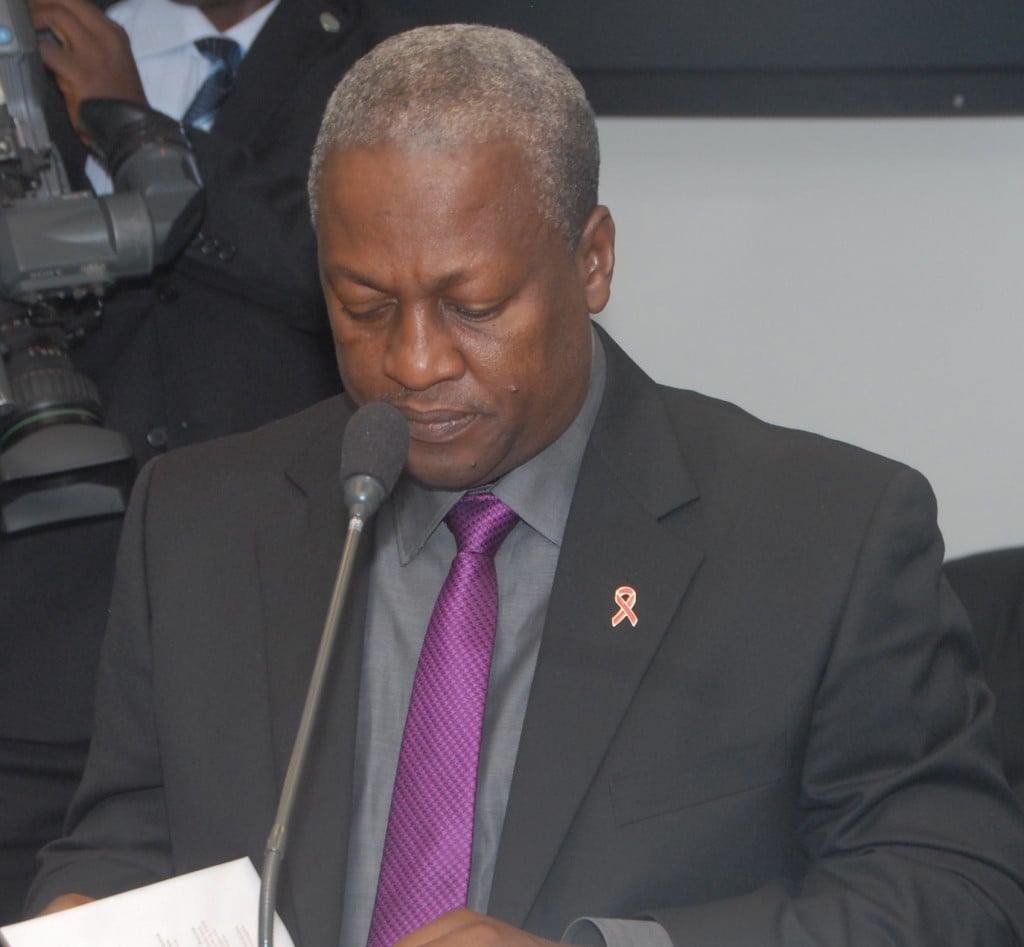
President of Ghana John Mahama, who was sworn in following the death of his predecessor in accordance with the country’s constitution. His ascension to the presidency was not contested or questioned. Photo credit: Embassy of Ghana in U.S.

So often the news, and commentary on it, focuses on when things go wrong. Things going wrong usually involve drama and confrontation, which makes for interesting stories. I am have been guilty of contributing to this trend myself in commenting on when democracy goes wrong, i.e., election fraud and impeachments.

But recently I was reminded that sometimes things going exactly according to plan can be exceptional too (and newsworthy). That brings me to Africa, the last area of the world I have yet to cover in this blog.

Last week the president of Ghana, John Atta Mills, died. Shortly thereafter, Mills’ VP John Mahama, was sworn in as the uncontested new president, which is exactly what was supposed to happen according to Ghana’s constitution.

So why should we care that what was expected and supposed to happen, happened? In a region where upheaval and turmoil (political and otherwise) were the norm, having people unquestionably accept a constitutionally prescribed transfer of power is indeed a big deal. In other words, it shows democracy is winning.

BBC’s Mark Doyle comments about Ghana,

But the smooth handover to a successor — John Mahama — highlights how far Ghana has gone on the road to democracy. In a less democratic era — in the 1980s or the 1990s — the death of a Ghanaian leader would have caused fear and foreboding: Was the death suspicious? Who would take over? Would the army step in?

But it’s a measure of how the democratic process has become “normal” in Ghana that Mr Mahama — the vice-president — was swiftly sworn in. There was no question of anything other than this happening.

When no one in a country questions democracy, democracy is working.

Perhaps even more remarkable is the smooth transition in power in Malawi earlier this year. After President Bingu wa Mutharika died, his VP Joyce Banda became the 2nd female president in African history. While some have expressed opposition and questioned her ability to lead, at least to this point Banda has retained the presidency, with the country adhering to constitutional laws of succession.

Banda has not been afraid to take unpopular stances. She objected to then-President Mutharika’s actions to ensure his brother succeed him as president. Outraged, Mutharika threw her out of the political party both had represented when elected, and there were calls for her resignation. Banda stood firm, reacted by forming her own party, and remained VP. According to the Malawi constitution, since she was elected not appointed, Mutharika could not remove her from office without proper cause. Thus democracy prevailed over political adversity.

Banda has also gone on the offensive to clean up Malawi’s government in her first few months in power. She fired the state chief of police after a police clash with protesters left 19 dead and dismissed government communication officials who questioned her right to be president. Banda has spearheaded sweeping economic reforms, including getting rid of the presidential luxury jet as part of cost-cutting measures. Her actions spurred the IMF to offer a $157 million loan to Malawi; the group and many other foreign lenders had removed financial support to the poverty-stricken nation under Mutharika.

So in a region where political strife, coups and brutal civil wars had been the rule and democracy the exception, how can you tell that democracy is being accepted? When, after the death of a president, nothing newsworthy happens at all.

 
  • Shmuel Ja’Mba Abm

    This has been an interesting read, especially the undertones of the principles that propel democracy. The hidden fear in most African democracies is founded in the philosophy of carrot and stick, which a perceived actor wields. The fear indeed stem from a strange suspicion that came with European colonisation of most countries in Africa. Whereas European colonizers held and cured a prevailing political systems in North America and in Brazil and Argentina, particularly, it is South Africa, Australia and New Zealand that boast of such consistency.

    The imperatives in Africa is in investment in the informal sector to induce the solicitation to protect interest. When investment is concentrated in the formal sector, the narrow gate becames over watched and studied for all kinds of actions, not excluding terror.

    In Ghana, democracy has been made to work due to the need to appreciate the failing results of two extremes, which through fluidity have transfered good ingredients of social organisation for lessons. A short history may help.

    The CPP was driven by a vehement opposition, widely documented in British archives. In the early years after independence, the British Foreign Minister tried in vain to build bridges between the Manhyia traditional forces, bent to unfollow alien cultures; and the Republical political system, headed by Osagyefo Kwame Nkrumah, who, in the traditions of the Ashanti is not a royal and should not conflict traditonal principles to usurp the powers of Asanteman.

    This heat of the opposition was piped through political organisation and directed at the inexperienced infantly outdoored independent country, which surprisingly was financed by western democracies. Osagyefo Kwame Nkrumah took desperate measures and got desperate answers, after his arbiters (Western democracies) backed the opposing side with every support. Remember this was in the heat of the cold war, and each of the two super powers was bitter in the quest for influence and power.

    Osagyefo Kwame Nkrumah was tagged a communist, in spite of an impressive blueprint of an African success story. The decision by western democracies to backoff from this good road embarked by Osagyefo Kwame Nkrumah and his CPP government was seen by many pan-Africanists as an old colonial trick of divide and rule reactivated by proxy. The losses to the Ghanaian came from both sides of the rivalry, and nobody won, except the external influence, maybe.

    With the cold war made redundant and poverty staring, crime and soaring birth rates are creating the headache for good thinking and planning for governments. At this juncture, the good judgement and timing of Flt Lt Rawlings paved a participatory democracy, which were forged in the mill of his military adventures, where vintage old bitterness, acrimony and ineptitude were given free range to a duel.

    It is in this context that present developments in Ghana’s democracy can best be appreciated. We have come a long way, and learned some lessons. It is hoped sound internal and external judgement would preval. Nkrumah was not a dictator, he was reacting just as the USA, Britain, and most western democracies are doing today to fight terrorism. His PDA precedes any terrorists bill (subject to clarification, though).

    Had Nkrumah been supported, democracy would have been planted long ago and flourished througout the continent. The world would have been a better place than we see it today. Sometimes, historical data is revisited to punch holes for interest groups who wish Africa to be where it is, so the spoils go to their businesses. Governments with overarching roles must be fair with accurate historical perspectives, and sensitve to cultural sentiments to this globalisation drive.

  • Gary

    Interesting analysis.

Author

Scott Bleiweis
Scott Bleiweis

Scott Bleiweis writes on democracy and democracy promotion-related topics for FPA. He has a M.A. in International Studies (democracy and conflict resolution) from the Josef Korbel School of Int'l Studies at the University of Denver, and a B.A. in Politics and International Studies from Brandeis University. Scott interned for the Atlantic Council of the U.S. in Washington, D.C.

In his examination of democracy and how to achieve it, Scott has come to support Winston Churchill's characterization of this complex form of government: “Many forms of Government have been tried and will be tried in this world of sin and woe. No one pretends that democracy is perfect or all-wise. Indeed, it has been said that democracy is the worst form of government except all those other forms that have been tried from time to time.”

China_blog_ad