Foreign Policy Blogs

Asia & Pacific

SE Asia: 2009 Year In Review

SE Asia: 2009 Year In Review

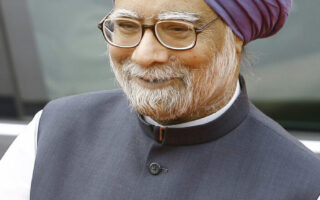
Overview: The predominant trend in Southeast Asia this year has been one of increasing regional integration, but this has been tempered by historic issues of nationalism, which continue to challenge the region and serve as the largest obstacle for a more united ASEAN.  2009, was an excellent year for various free trade initiatives, between ASEAN […]
read more

The Power of Restraint

Zainab Jeewanjee discusses the Boston Globe’s recommendation that America remain neutral as Pakistan gears itself for regime change. She lists the potential list of future leaders and offers reasons as to why it’s in our interest to remain neutral in each case.

read more

Chief Justice, Please Initiate Suo Moto Action About These Issues

December 18, 2009 Dear Chief Justice Ifitkhar Chaudhury It seems you are an activist chief justice, and are quite eager to take up Suo Motoactions supposedly to bring about justice and resolve outstanding issues that confront Pakistan. Here are some my suggestions to you; three issues that many Pakistanis feel deserve your immediate attention: 1. […]

read more

Pakistan Year in Review : a Testing 12 Months

Zainab Jeewanjee reviews Pakistani politics for 2009. While terrorism dominates the landscape and bilateral relations with the United states, there is hope for a better 2010 in a free, fair media that is rapidly expanding. Jeewanjee discusses an overview of this year, the person who had the most impact and the most unexpected event of 2009 in Pakistan.

read more

Bangladesh: 2009 Year in Review

Overview: The most notable news this year in the conflicted politics of Bangladesh was the renaissance of the Awami League as a party ready to govern in a way that might give it another run at executive office in the next election cycle.  After securing an overwhelmingly popular public mandate for governing Bangladesh in the […]

read more

Year in Review 2009 – India

Year in Review 2009 – India

Overview The 2008 Mumbai attacks dominated the news and cast a long shadow that affected India’s actions in 2009.  The investigations, compilation of dossiers detailing Pakistan’s involvement and prosecution of the perpetrators of the attack were the highlights of the past year. Evidence of the terrorists’ direct links with Pakistan increased tensions. The composite dialogue […]

read more

Politicking in Pakistan

Politicking in Pakistan

Zainab Jeewanjee reports on Pakistan’s supreme court ruling that the National Reconciliation Ordinance be overturned. Originally put in place by General Pervez Musharraf, NRO will re-open thousands of top government officials corruption cases, but makes current President Asif Ali Zardari the main target of this ruling. Zainab Jeewanjee reports this is politicking in Pakistan as the Supreme Court’s ambitions may be more than noble: as the Foreign Policy Magazine notes, they could be a means to settling a political score with current leadership.

read more

NRO Null and Void in Pakistan

“Whenever a man does a thoroughly stupid thing, it is always from the noblest motives.”   Oscar Wilde National Reconciliation Ordinance was declared null and void by Pakistan’s Supreme Court under the questionable leadership of Chief Justice Iftikhar Mohammed Chaudhry, a man many believe to be inspiring for a higher office. As soon as the news […]

read more

26/11 investigation affects tourist visa regulations

As details of David Headley’s visits to India before the 26/11 attacks come forth, India has changed its long-term tourist visa regulations. As per the changes, tourists with long-term visas would “no longer be allowed to enter India within two months of their last departure from India if their last visit was longer than ninety […]

read more

Bangladesh and India: Good Fences Do Not Make Good Neighbors

Regional cooperation was written in the cards when two avowed socialist, left wing-ish governments came to power, in turn in India and Bangladesh.  And now, it seems the promise of regional cooperation between India and Bangladesh has come to pass, quite in contrast to its historic lineage and border linkage. So says the Economist. As […]

read more

If We Leave Now ……

Zainab Jeewanjee explains why the United States can’t pull out of Afghanistan and Pakistan. Withdrawing troops entails competing foreign powers, such as China, Russia and India stepping in as influential leaders in the strategic Af-Pak region. With energy and security interests in both countries, the United States is a needed stabilizer until some security, and development is reached in Pakistan and Afghanistan.

read more

Awami League to Standardize Primary Education System in Bangladesh

This is excellent news.  The Awami League government is moving to standardize primary education at all levels.  The Education Policy Formulation Committee, tasked with establishing a viable education system in Bangladesh has already submitted a proposal that is getting funneled through the appropriate channels. As The Daily Star reports: “The prime minister pointed out that […]

read more

International Crisis Group Recommends Substantive Police Reform

If an asset is more productive with a policeman guarding it, then Bangladesh Police has a lot of explaining to do.  Wisdom on the street has it that if one is afraid of having something stolen, then she should notify the police of its whereabouts, and, sure enough, it will have been stolen. So the […]

read more

Should India send troops to Afghanistan?

An interesting discussion about whether India should send troops to Afghanistan at the blog, Acorn. Most of the people think that it would be an imprudent move to get involved militarily in Afghanistan. Some of the most recurring concerns are about the protests from Pakistan, the effect such involvement would have on the situation in […]

read more

The Gurkhas in Afghanistan

A beautiful video at the Atlantic, of the Royal Gurkha Regiment fighting in Afghanistan, and the bonds they have created with the Afghans. The video shows them bonding over Bollywood, Urdu and certain common cultural elements.

read more