Foreign Policy Blogs

Regions

Two More Civilians Bystanders Die as NATO Targets Haqqani Network

Even as the world is waking up to new images of more atrocities committed by U.S. troops in Afghanistan, even as Afghans are taking to the streets, outside their villages to protest what they perceive to be American aggression against Afghan soil, two more deaths of innocent civilians have been reported, this time in the […]

read more

AU, Arab League and EU to meet on Libya

AU, Arab League and EU to meet on Libya

An ad-hoc panel of leaders from African Union countries is set to meet with European Union and Arab League officials tomorrow to discuss the way forward in Libya. The panel, which includes heads of state from South Africa, Uganda, Mali, Mauritania and Congo, along with AU Commission President Jean Ping and current AU Chairman Teodore […]

read more

Did Portugal Just Shoot Itself in the Foot?

Did Portugal Just Shoot Itself in the Foot?

So posits Teresa de Sousa, a columnist in the Portugese daily Público, anticipating yesterday’s announcement that Prime Minister José Sócrates is resigning after parliament rejected his austerity plan. De Sousa points out that the country was poised to receive favorable terms on accessing the Eurozone’s provisional rescue fund if it adopted the EU’s so-called competitiveness […]

read more

Economic cost of quake $300 billion, mobsters help victims

The economic cost of the March 11 earthquake is estimated to be between 16 trillion yen ($198 billion) and 25 trillion yen ($309 billion)–7 percent of Japan’s GDP by purchasing power parity. This estimate comes from a government report released Wednesday. According to the Cabinet Office, this could slow Japan’s growth rate to 0.5 percent. […]

read more

Yemen’s Revolution is on the Move

Yemen’s Revolution is on the Move

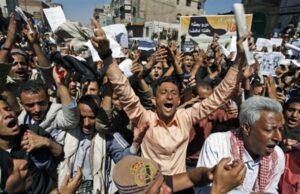
The Following piece is written by a Yemeni-based journalist who writes for Foreign Policy Association, and due to serious security concerns, remains anonymous. Hit by another wave of resignations and defections, the embattled Yemeni President offered to step down by January next year. He said that he was willing to leave the presidential chair at […]

read more

Zimbabwe: New Verse, Same as the First

My latest piece,  “Zimbabwe: New Verse, Same as the First,” has been posted for ISN Insights. Here is the abstract: The renewed crackdown against the political opposition in Zimbabwe sparked by fears of an Arab-style uprising illustrates how the illusion of a power-sharing government has merely served as plaster over a gushing wound. I hope […]

read more

Political Restructuring in China – A Template on How China can Transition from Authoritarianism to Democracy!

Last week, Chinese Premier Wen Jiabao called for political reform once again, while at the same time he rejected (again) any comparisons between his country and the autocracies now collapsing in North Africa and the Middle East.  Premier Wen is right when he says that the current socio-economic conditions in China are nothing like the […]

read more

The Fruits of Mediterranean Dysfunction

The Fruits of Mediterranean Dysfunction

Long op-ed in La Repubblica yesterday about the failure of Europe to resolve its Mediterranean question, defined as a lack of economic integration, the ongoing immigration crisis, corruption and environmental concerns. The piece recounts the litany of declarations, conferences and organizations over the past few decades that grapple with these issues, culminating most recently with […]

read more

Can Putin Have it Both Ways on Libya?

Can Putin Have it Both Ways on Libya?

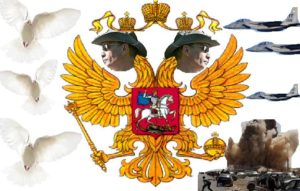
Today’s editorial in the Moscow Times accuses Putin of hypocrisy for opposing the UN mandated operations in Libya. Putin, who rightly criticised Bush unilateralism on Iraq, should have applauded Obama’s multilateral, UN-centric approach. Instead, the paper proclaims, All of Obama’s multilateralism seems to have been lost on Putin, who has proved over the past decade […]

read more

Jurist Says Caretaker Governments Should Stay on to Support Democracy

It is a testament to the broken, intractably conflict-ridden politics in Bangladesh, that respected jurists can claim that a dictatorial move remain in place in order to allow democracy to breathe and to burn bright. Jurist Dr. Kamal Hossain argued that the the institution of caretaker governments should remain in place while parties revolve in […]

read more

PBS Newshour Reports on Innovative Ways to Supply Clean Water to Dhaka Slums

Yesterday for World Water Day PBS Newshour, in partnership with the Pulitzer Center on Crisis Reporting, ran an excellent piece on new approaches to get clean water to Dhaka’s explosively numerous, and growing, slum dwelling population. Here’s the video that aired, with special correspondent Steve Sapienza: Please visit the PBS Newshour webpage dedicated to this rather excellent […]

read more

English teacher is first confirmed American tsunami victim

English teacher is first confirmed American tsunami victim

Taylor Anderson from Richmond, Va., is the first known American victim of the March 11 tsunami. The tsunami hit the Tohoku region of Japan after a 9.0-magnitude earthquake struck off the coast. (See timeline.) Anderson, 24, taught English as an Assistant Language Teacher in Ishinomaki, Miyagi. She had moved to Japan in 2008 as a […]

read more

Turkey – U.S. reach initial consensus on Libya

Turkey – U.S. reach initial consensus on Libya

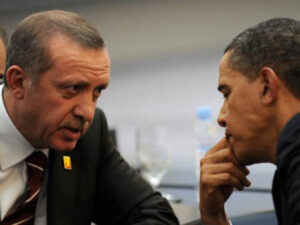
Turkey as the ‘protecting power of the United States’ in Libya ‘Turkey has agreed to be our protecting power in Libya,’ Mark Toner, a State Department spokesman, told reporters today, referring to the new role Ankara will play serving US interests in Tripoli. There were signs Turkey was effectively playing such a role when Turkish […]

read more

Canadian Senate issues report on Arctic sovereignty

Canada’s Standing Senate Committee on National Security and Defence has tabled an interim report (PDF) entitled, “Sovereignty and Security in Canada’s Arctic.” The 75-page paper discusses various aspects of Canadian Arctic policy, including domestic and international issues and multilateral regimes in the region. There are also several useful maps in the appendices, including one showing […]

read more

Israeli University Beats Out Harvard

Israeli University Beats Out Harvard

Tel Aviv University, one of the strongest academic institutions in Israel, surpasses the top U.S. institutions in a key metric for universities — citations by other researchers. TAU Prof. Carlo Strenger writes in Haaretz: Tel Aviv University has been ranked number 11 worldwide in citations per faculty in 2010 – a truly staggering result. TAU […]

read more