Foreign Policy Blogs

Regions

The Arctic Blog is moving

The Arctic Blog is moving

After five great years at the Foreign Policy Association, the Arctic Blog will be moving to a new, independent site at http://www.cryopolitics.com. I’ll continue to contribute to the FPA network occasionally at the U.S. Energy Independence, Food and Climate, and China’s Foreign Policy blogs. For all the latest on developments in the Arctic, however, please […]


read more

Kurds eye independence in oil

Kurds eye independence in oil

To the south, Iraqi Kurdistan sees an unstable Baghdad struggling to maintain control against a violent insurgency, all the while seeking to exert control over the Kurdish region’s vast oil wealth. It is to the west, though, where Kurds see a brighter future, eyeing the opportunity for independence through a pipeline to Turkey to sell […]

read more

A Candid Discussion with Nancy Hartevelt Kobrin on Suicide Terrorism

A Candid Discussion with Nancy Hartevelt Kobrin on Suicide Terrorism

Throughout the Middle East, many Muslims and non-Muslims have fallen victim to suicide bombings. In fact, more Muslims have been killed in suicide bombings in the region than Jews and Christians. This extreme form of violence has been the subject of many studies. Researchers have been baffled as to why someone, mostly at a young […]

read more

Rouhani’s Iran: Striking the Balance Between Continuity and Change

Rouhani’s Iran: Striking the Balance Between Continuity and Change

By Ghoncheh Tazmini Is Rouhani really Ayatollah Gorbachev? Analysts have been quick to make assumptions about President Rouhani’s diplomatic maneuvers, translating his diplomatic skills as reminiscent of Gorbachev’s era of Perestroika and Glasnost. Jochen Bittner of Die Zeit asks: “Is Rouhani an Iranian Gorbachev?” The Wall Street Journal asks the same question, featuring an article titled, “Is Rouhani the New […]

read more

May be time to accentuate the positives in Egypt, Turkey

May be time to accentuate the positives in Egypt, Turkey

Last month I wrote about The Economist’s timely debate about how democracy is doing these days. For the final tally of the public vote, 69 percent agreed with me that concerns about the health of democracy are not overblown. Two chief concerns are Egypt and Turkey. In an op-ed last week for “Christian Science Monitor,” […]

read more

Bahrain: Three Years On

Bahrain: Three Years On

For many of us, February 14 is celebrated as St. Valentine’s Day, an occasion marked by lovers expressing their love for each other by presenting flowers, candy or greeting cards. For Bahrainis, the day is marked quite differently, as it represents the third anniversary of the uprising on their tiny Gulf archipelago of 1.7 million people.  […]

read more

Trouble in Geneva highlights the need for more robust U.S. involvement in Syria

Trouble in Geneva highlights the need for more robust U.S. involvement in Syria

After less than half an hour of joint session talks on Saturday, February 15, the second round of the Geneva II conference on Syria has abruptly ended. In a press conference shortly after, joint United Nations-Arab League negotiator, Lakhdar Brahimi apologized to the Syrian people for the almost complete failure of the negotiations, “I am […]

read more

Egyptian Jewish Refugee Praises John Kerry’s Policy on Jewish Refugees

Egyptian Jewish Refugee Praises John Kerry’s Policy on Jewish Refugees

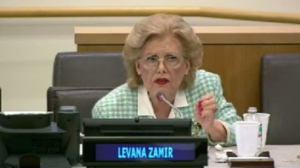
Levana Zamir, President of the International Association of Jews from Egypt, and the Egyptian Jewish community generally suffered greatly as a result of the Arab-Israeli conflict in the wake of the 1948 war. For this reason, Zamir and other members of the Egyptian Jewish community are extremely grateful to U.S. Secretary of State John Kerry […]

read more

Tunisia seeks symbolic closure to climate of insecurity

Tunisia seeks symbolic closure to climate of insecurity

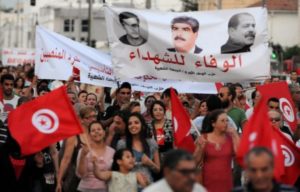
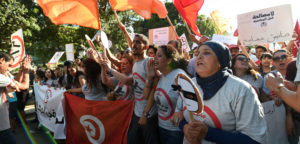
  In a week freighted with heavy symbolism, Tunisians tried to heal the scars of the tumultuous year marred by two assassinations, a suicide bombing in a resort town and routine incidents of violence, threats and political infighting. Earlier this week, three people were arrested in Kairouan for alleged links to militants deemed responsible for […]

read more

What is to be done about Syria?

What is to be done about Syria?

By Aryeh Neier There are no good alternatives. There seems no prospect that anything significant will come of the peace talks in Geneva. The government of President Bashar al-Assad considers that it is winning and, therefore, it is unwilling to agree to leave power or even to make meaningful concessions. Moreover, many of Assad’s supporters have […]

read more

From Beirut to Jerusalem Turns 25

From Beirut to Jerusalem Turns 25

  The New York Times columnist Thomas Friedman’s landmark book From Beirut to Jerusalem turns 25 this year. It remains a compelling overview of Middle East history for those who are not specialists in the region. Reading it today, Friedman’s description of a region where identities are primarily tribal is informed more deeply by two […]

read more

The Legacy of The Ottoman Empire: Conflict, Colonies and Peter O’Toole

The Legacy of The Ottoman Empire: Conflict, Colonies and Peter O’Toole

The recent death of actor Peter O’Toole has renewed some interest in the real life character portrayed in his greatest role, that of T.E Lawrence in the film Lawrence of Arabia. O’Toole not only looked like a virtual double of T.E. Lawrence, but the film about how the Middle East had developed into its modern […]

read more

Tunisia Takes Two Steps Forward, One Step Back

Tunisia Takes Two Steps Forward, One Step Back

This past week, radical Islam reared its ugly head again, this time in a seaside suburb of Tunis.  On Monday afternoon, the National Guard was called in to investigate a reported terrorist hideout in the Raoued suburb of Tunis.  The 24-hour standoff that ensued resulted in the death of seven militants and one police officer, […]

read more

Method to the Madness: The Lessons of Iraq and the Rejection of the ISIS

Method to the Madness: The Lessons of Iraq and the Rejection of the ISIS

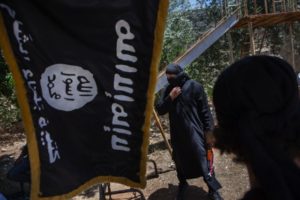
This past Sunday al-Qaeda Central (AQC) released a statement disowning its Iraqi-Syrian affiliate, the Islamic State of Iraq and al-Sham (ISIS). The declaration—which spread across jihadi online forums and eventually published by the BCC—proclaimed: “[Al-Qaeda] has no connection with the group called the ISIS, as it was not informed or consulted about its establishment. It […]

read more

Fed Taper Injects U.S. Economics into Turkish Politics

Fed Taper Injects U.S. Economics into Turkish Politics

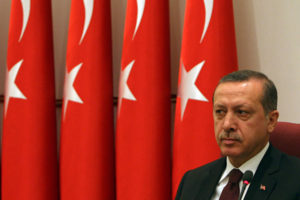
    The Turkish Central Bank raised interest rates drastically on January 28, re-setting the one-week bank lending rate at 10 percent, up from 4.5 percent, and hiking its rate on overnight lending to banks from 7.75 percent to 12 percent.   The move has ramifications for America’s influence in the world.  In Turkish politics, […]

read more