Foreign Policy Blogs

Topics

Nature's Way

Nature's Way

Nature has been designing things better and for a lot longer than people have.  We seem to have a tendency to waste energy and resources in our design.  We also tend to create byproducts in our production processes that can – and usually do – have all sorts of negative impacts, not only for ourselves […]

read more

Government secrecy and national security

Last week President Obama issued an executive order to systematize and accelerate the declassification of national security documents. National security is always the arch nemesis of transparency, the ace in the sleeve of politicians who aren’t quite comfortable with whatever pledges of openness they have made. Obama’s decision is therefore admirable not only for the […]

read more

Two Guantanamo Things

* From Juan Cole – Find out about Andy Worthington’s comprehensive research on Guantanamo detainees. * From Opinio Juris – Find out about the recent D.C. Circuit Court of Appeals decision on some Guantanamo habeas petitions.

read more

Reading List: 'When China Rules the World'

Reading List: 'When China Rules the World'

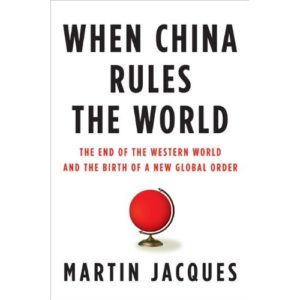
  WHEN CHINA RULES THE WORLD: The End of the Western World and the Birth of a New Global Order By Martin Jacques, Penguin Press (2010). Historians may someday debate whether the financial crisis that began a year ago is most notable for how much damage it did to the United States, or how little […]

read more

NYT: Divergent Views of US Economy in 2010

NYT: Divergent Views of US Economy in 2010

Leading economist who study the U.S. economy for signs of life sometimes have wildly different views of economic metrics, what they mean and are often sharply divideded along partisan economic perspectives. Nevertheless, there are real signs of growth going into the new year.

read more

Turtles Can Fly (2005)

Turtles Can Fly (2005)

Because Iranian director Bahman Ghobadi uses non-actor children in this movie, the viewer is given a sense of watching a documentary. The film takes place in Iraqi Kurdistan near the border with Turkey. It is set right before the American invasion in 2003. One of the main characters is called Satellite because he sets up […]

read more

NYC Food and Climate Summit

I went to this event several weeks ago and came away with a great feeling about where urban agriculture and the global movement for “cooler” approaches to farming and eating are heading.  I’ve written any number of times here about food and agriculture, including this view into the work of one particularly amazing urban farmer. […]

read more

Nigerian Farmers V. Shell

A Dutch district court in the Hague has decided that it does in fact have jurisdiction to hear a case brought against Shell Nigeria (a subsidiary of Royal Dutch Shell) by four Nigerian farmers from the oil region and Friends of the Earth Netherlands, an environmental group.  According to the Nigerian newspaper, The Daily Independent, […]

read more

The Lesson of Osirak

In a pre-Christmas New York Times op-ed, Alan Kuperman wrote about the potential downside to a U.S.-led preventive strike against Iranian nuclear facilities: As for knocking out its nuclear plants, admittedly, aerial bombing might not work. Some Iranian facilities are buried too deeply to destroy from the air. There may also be sites that American […]

read more

Tiger Woods in, Mother Nature out

Tiger Woods in, Mother Nature out

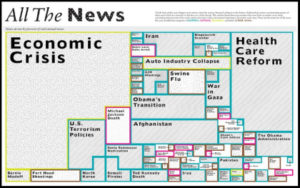
The above infographic, from Journalism.org, depicts the site’s 2009 weekly news summaries compiled from over 55 television, print, internet and radio news sources.  The bigger the story, the bigger the block. See climate change anywhere?  Or even general environmental issues?  On both accounts, no. (Although depending on your science, the California fires come close). For […]

read more

Brain Drain from the U.S.?

Brain Drain from the U.S.?

Last month Vivek Wadhwa had an interesting piece on U.S. brain drain in Yale Global Online.   Wadhwa outlines the enormous contribution made by international graduate students, faculty and researchers (as measured by patent filings) in science, technology, engineering and mathematical (STEM) disciplines – and to the U.S. economy overall. In 2006, immigrants contributed to 72 […]

read more

Land grabs persist

In 2009, the World Food Programme (WFP) shipped approximately enough food aid to feed 5.9 million people in Sudan. As food aid is shipped into the country, thousands of tons of wheat and rice are almost simultaneously exported to other nations. The paradox is that Sudan is unable to feed its domestic population, yet exports […]

read more

Somali militants kill regional WFP official

Late December brought the killing of Ali Farah Amey, the chief of security of the World Food Programme (WFP) in the Hiiraan region of Somalia. Hezbal Islam militants had just one day prior issued an edict demanding the registration of all relief workers. In a direct signal to Western aid agencies, militants of the Islamic […]

read more

Zimbabweans Face Persecution in South Africa

It can be tough to be a migrant – but even worse should one be persecuted by the local population. By moving to a new place economic migrants – and displaced persons – leave behind well-known surroundings, and often other family members too. They may not speak the language at their new location, might have […]

read more

Iraq’s Oil Leases and the World Market

Iraq’s Oil Leases and the World Market

Last month, the Iraqi government held its second round of auctions for its oil fields. Mid-month, seven fields were awarded to international oil companies.  American companies did not win any new leases in this round, but Petronas, a state-owned Malaysian company; Sonangol, of Angola; and Lukoil of Russia and Statoil of Norway did. Petronas and […]

read more