
Foreign Policy Blogs

Topics

Cambodia's Struggle with Justice

Things have been difficult for the Extraordinary Chambers in the Courts of Cambodia (ECCC), pretty much from the start.  The one thing the UN-backed court charged with holding the leadership of the Khmer Rouge responsible for their crimes had going for it was that its first defendant, Kaing Guek Eav, better known by his nom de […]

read more

President Obama to Announce Troop Surge

President Obama to Announce Troop Surge

President Obama will address the country tonight from the U.S. Military Academy at West Point and explain his decision to send 30,000 more tropps to Afghanistan over the next six months. I’m looking over my past blog posts on the subject of Afghanistan and I’d like to call attention to this one in which Gilles […]

read more

Obama on Afghanistan

I’m going to reserve final judgment until I see text of President Obama’s remarks, or the speech itself, but here are a few things to watch for tonight: 1) How many times Obama uses the word “India” or “Indian”—focusing on Afghanistan and Pakistan is fine, but leaving the elephant in the room (the Indo-Pak relationship) […]

read more

Friedman Ups the Ante

After the 2005 London bombings, Thomas Friedman wrote an op-ed criticizing Muslim religious leaders for not condemning jihadist suicide attacks.  He wrote: The Muslim village has been derelict in condemning the madness of jihadist attacks. When Salman Rushdie wrote a controversial novel involving the prophet Muhammad, he was sentenced to death by the leader of […]

read more

"Dilma Rousseff's arrival to the presidency would have a crucial impact on power and gender relations in Brazil": Q&A with Dr. Maria do Socorro Sousa Braga

The Economist‘s recent special report on Brazil emphasized the country’s remarkable achievements in the last decade and applauded what it deemed its “take-off.” The magazine’s political leanings were evident in its reluctance to give proper credit to the leftist Lula da Silva government, choosing instead to describe Lula as a lucky leader who had benefited […]

read more

Terror in Mumbai (2009)

Terror in Mumbai (2009)

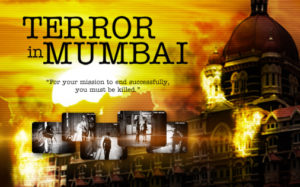
In late November 2008, 10 armed Pakistani men – little more than boys – went on a killing spree in the Indian city of Mumbai. Members of Lashkar-e-Taiba, or “Army of the Righteous,” the youths carried out the attacks in order to spur the “liberation” of Muslims living under Indian rule in Kashmir. Fareed Zakaria, […]

read more

Anteing Up

Anteing Up

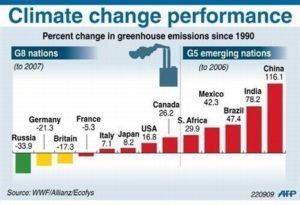
If you play poker you know that all the players have to ante up with a stake before each new deal.  You have to “feed the kitty” – or you don’t play.  Perhaps not coincidentally, parties that have an interest in a particular project, enterprise or, in the case of COP 15, addressing the looming […]

read more

EU: Post Parades its Ignorance – Again

The Washington Post once again parades its profound ignorance of the European Union in an editorial reacting to the appointment of new EU leaders in Brussels. Starting with the ultra-hackneyed, apocryphal cliché about Henry Kissinger supposedly wanted a single telephone number for Europe (he didn’t), the Post announces that after eight years of labor, European […]

read more

Post-Holiday Catch-Up

A lot of big things happened over the holiday break.  Here are some of them: 1) The Kingdom of Buganda rejected a land law passed by the Ugandan parliament.  The law gives tenants more rights to resist potential evictions by landlords.  Read about it here. 2) The governments of Mozambique, Malawi, and Zambia are blocking […]

read more

Tabs to read

1) Louis Uchitelle, in the New York Times, despairs about the lack of infrastructure superprojects. I’m in firm agreement. 2) Indian business practices are apparently not up to par, according to this piece on Indian-Americans returning to their home country. Money quote: “Some very simple practices that you often take for granted, such as being […]

read more

Somali Fighting Causes Relocation for International Aid Workers

Reuters reports fierce fighting instigated by insurgent groups in Somalia has caused the relocation of several expatriate workers, while aid agencies fear a continuing breakdown of security in the country. The workers were part of the UN World Food Programme and World Vision, among the last few international aid agencies still providing aid in war-torn […]

read more

Chavez and the Jews

At a party last year, an acquaintance asked me why Hugo Chavez, the President of Venezuela, was so anti-Israel. How were Israel and Jews a threat to him? Since Chavez has been president, anti-Semitic behavior in Venezuela (not known as a hotbed of anti-Semitism) has increased noticeably with attacks on synagogues and against the tiny […]

read more

The Battle of the G-spots in 2010

The Battle of the G-spots in 2010

“The formation of the G20 group of world leaders is likely to be the most lasting institutional consequence of the global financial meltdown of 2008,” writes Gideon Rachman, a columnist for the Financial Times, in the Economist’s The World in 2010. Rachman outlines the G’s jostling for preeminence – from the G2 to the G77 […]

read more

A BRIC Tutorial

Featuring analysis and commentary by Eswar Prasad of the Brookings Institution and Derek Scissors of the Heritage Foundation, CNN provides a video introduction to the BRIC – Brazil, Russia, India and China – countries. Kitty Pilgrim outlines the impact of the countries representing 40 percent of the world’s population and 25 percent of the landmass, […]

read more

U.S. Promises to Send More Students to China: Quality AND Quantity?

U.S. Promises to Send More Students to China: Quality AND Quantity?

Patricia Kushlis has a post in WhirledView  on President Obama’s commitment to increase the number of U.S. students going to China from the current number of 20,000 to 100,000. Her excellent post is here.  As she notes, this represents an enormous increase – in the number of US students in China and in the overall number of U.S. […]

read more