Like many Americans, I’ve been watching the budget impasse with a mix of consternation and disgust. It seems like our politicians are playing a game of chicken with our country’s welfare hanging in the balance. Of course, the most talked about implication of the so-called sequester is the certain impact it will have on the […]
Did America enter a post-racial era with the election of a black president? The answer still appears to be a resounding “no.” Race relations in the American media continue to be a contentious topic with many Americans still not ready to see each other as simply Americans. Economic policies have also played a role in […]
In an upcoming meeting in Washington, the General Assembly of the Organization of American States (OAS) will consider a proposal that would greatly diminish the ability of the Inter-American Commission on Human Rights (IACHR) to address human rights violations in the region. At the Forty-Second General Assembly meeting in Cochabamba, Bolivia, a bloc of states […]
In two previous posts, I wrote about the work of three Ohio State University researchers who are using GPS to detect covert nuclear tests. Now, there is word that the International Monitoring System (IMS) of the the Comprehensive Test Ban Treaty Organization (CTBTO) is of increasing utility, not only for monitoring nuclear testing, but also […]
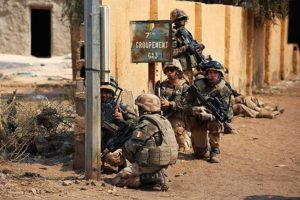
Forces representing France and the government of Mali seem to have mostly regained control of the West African nation’s northern region following last month’s offensive, as I covered here. But the fallout from their pushback against rebellious elements continues. I found two developments from a recent BBC update of particular interest. One concerns the status of […]
Next week, starting March 4, the 57th session of the Commission on the Status of Women will take place at U.N. HQ in New York. The main focus of CSW57 will be the “elimination and prevention of all forms of violence against women and girls.” A worthy cause, and one which in my ideal world […]
With Secretary Kerry currently traveling on his inaugural trip overseas as secretary of state, the Pew Center has compiled data on public opinion of the U.S. in the countries that he is visiting. Public opinion in the various countries on his agenda (though Qatar, Saudi Arabia and Abu Dhabi were not in the Pew report) […]
In an OpEd in Tuesday’s Wall Street Journal, Senators Bob Corker, currently Ranking Member on the Foreign Relations Committee, and James Inhofe, well-known global warming skeptic and Ranking Member on the Armed Services Committee, opined about how the administration’s commitment to eliminating nuclear weapons was 1) dangerous, 2) likely to cause an arms race around […]
Not too long ago President Barack Obama announced in his State of the Union address in February the start of free trade negotiations with the European Union (EU). These negotiations are expected to take at least two years while any deal would have to be approved by the European Parliament. On the surface, that […]
Staying alive at DHS is a full-time occupation. One slip-up, the chain quivers, the blame starts its downward flow, and if you’re an agent, you’re pulling duty in Pembina, ND, or spending the rest of your working life doodling on a yellow legal pad in an empty room at HQ/DC. So believe me when I tell you that it takes more than a fit of pique to file a legal complaint against DHS Secretary Janet Napolitano, as the National Ice Council has done on behalf of eleven agents who believe that recent policy directives on prosecutorial discretion and the Dream directive on deferred action—are forcing them to choose between enforcing immigration and deportation laws passed by the US Congress in 1996 and their professional careers. Christopher Crane, head of the Council, reports that agents who continue to enforce laws currently on the books—ignoring policy directives from the top instructing them neither to apprehend, arrest, or depart aliens who’ve entered the US illegally or who’ve overstayed their visas (even illegals serving time in US prisons for felonies and misdemeanors)—are targets for disciplinary action….
Estonia, which joined the EU in 2004 and the Eurozone in 2011, officially unveiled its nation-wide electric vehicle (EV) network last week. The ex-Soviet republic designed its pioneering new fast-charging, web-connected network to eliminate “range anxiety,” improve energy efficiency and reduce carbon emissions. The network’s current infrastructure includes 151 fast-charging stations with 14 additional […]
I appeared on the talk show “The Fresh Outlook” this weekend to discuss cybersecurity issues and China. Here is a link to the video. I argued for a more nuanced, less panicky approach when dealing with China on this sensitive subject. Here are some more thoughts: The most recent revelations of the activities of the Chinese […]
Since in the summer of 2010, Admiral Mike Mullen, the chairman of the Joint Chiefs of Staff at that time, has argued that the national debt constitutes “the most significant threat to our national security.” As he elaborated, it became clear that his real concern was the strength of the U.S. economy, the basis for […]
When the last conclave that elected Pope Benedict XVI was underway, a colleague stopped by my office and remarked on CNN’s seemingly nonstop coverage. My non-Catholic colleague’s point boiled down to: “I don’t get it. Why should we care about this?” Stipulating that the world’s many Catholics care deeply, why should it matter to […]
Hugo Chavez in Venezuela and Rafael Correa in Ecuador swept into power promising to use the wealth of natural resources in their countries to help address widespread poverty and stabilize the economy. Both improved situations enough to win reelection, but both also seem to have a strong grip on power and willingness to curtail democracy […]