
Naming genocide something else does not make a difference to the victims. Indeed, why anyone would want to re-label a crime against humanity?
Naming genocide something else does not make a difference to the victims. Indeed, why anyone would want to re-label a crime against humanity?

The Kurds are often hailed as the West’s most reliable partner in the fight against the Islamic State. At the same time, they have taken advantage of the chaos in the region to get closer to achieving their dream of statehood.
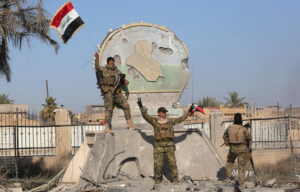
ISIS’s increased activity abroad is a sign of weakness rather than strength: the group has lost around 20% of its territory in Syria and over 40% in Iraq since its peak expansion in August 2014.
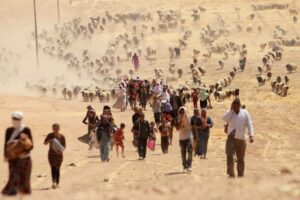
Recently, U.S. Secretary of State John Kerry acknowledged that a genocide is occurring. We all knew about it for a long time.
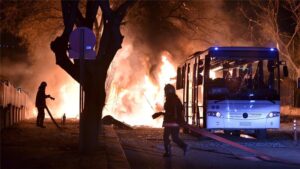
In dealing with this immediate threat, it behooves the Turkish government to put politicking on the back-burner, separate the non-violent opposition from the violent, and mend fences with the former. Swallowing that bitter pill is necessary for terrorism to be brought “to its knees.”
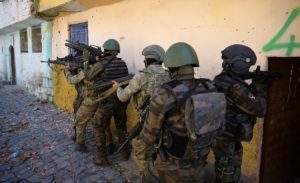
The indiscriminate killing of civilians in order to fight terrorism is unlawful. Moreover, the state’s brutal response has actually led to an increase in the number of terrorist attacks.
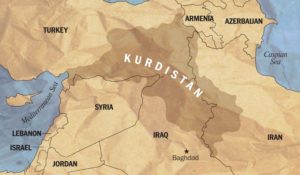
The multiplicity of Kurdish national movements throughout the Middle East adds an additional layer of complexity in the fight against ISIS.
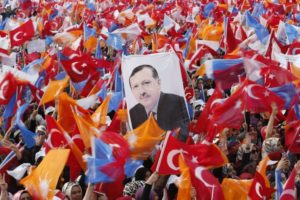
Turkey, long hailed as a bastion of secular democracy in the Muslim world, could be spiraling toward an all-out civil war as conflicts between Turkish security forces and Kurds as well as other ethnic minorities continue to escalate.
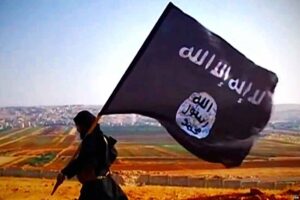
Lacking outside alliances and with the geopolitical situation slowly starting to tilt against it, Islamic State’s pretensions to act as a legitimate government seem to have its days numbered.

With atrocities taking place in Iraq and Syria, the international community must stop the oppression against certain groups. Indeed, the lesson of Rwanda has been almost entirely ignored in 2015.
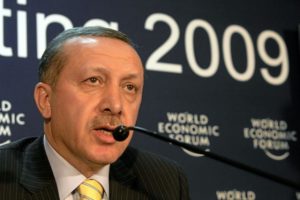
Turkey’s historically troubled relationship with its Kurdish population has become less tense since the Justice and Development Party’s (AKP) founder and current President of Turkey, Recep Tayyip Erdogan, became prime minister in 2003.
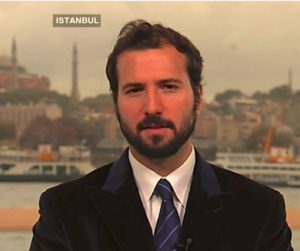
Akın Ünver sits down with Reza Akhlaghi of the Foreign Policy Association to discuss Turkey’s current foreign policy challenges and the situation in Kobane.
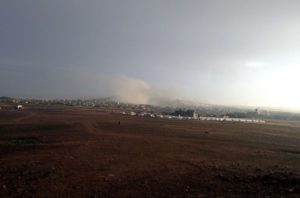
As a U.S. ally and member of NATO, Turkey has a large, well-trained, and well-funded military with more than a half-million personnel in uniform. It is also the only NATO nation that shares a border with both Iraq and Syria, where the Islamic State continues to take and hold significant territory.
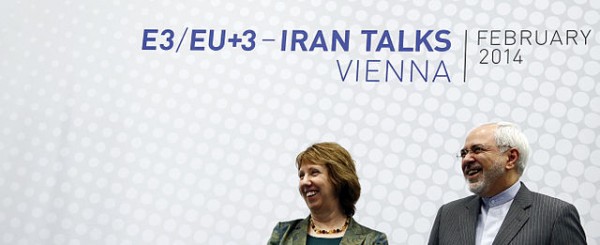
Mohsen Milani is the Executive Director of the Center for Strategic and Diplomatic Studies at the University of South Florida, where he is a professor of international relations.

Soner Cagaptay is the Beyer Family fellow and director of the Turkish Research Program at The Washington Institute. Dr. Cagaptay has written extensively on U.S.-Turkish relations, Turkish domestic politics, and Turkish nationalism, publishing in scholarly journals as well as key American and Turkish media outlets. He writes regularly as a columnist for Hürriyet Daily News, Turkey’s oldest and […]