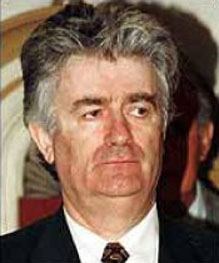
 Peacekeeping troops with the European Union and NATO searched the homes of relatives of Radovan Karadzic Friday looking for indications of his whereabouts. Karadzic vanished in 1998 after stepping down from his official government duties. He, as well as Gen. Ratko Mladic, are on the run for allegations regarding the massacre at Srebrenica, in which 8,000 Muslim men and boys were killed in 1995. Serbia's National Security Council said it is offering a $1.4 million reward for information leading to the capture of Mladic. The U.S. already has a $5 million reward available for information leading to the arrest of Karadzic. Karadzic has eluded capture for over a decade with no hint emerging to his location. Mladic is suspected of hiding in Serbia.
Troops from NATO and the European Union Force, EUFOR, raided the homes of Karadzic's immediate family beginning early Friday morning local time. “The aim is to find material or information relevant to the network of Radovan Karadzic,” said EUFOR spokesmen Maj. David Fielder. Investigators uncovered “paper-based” documents they said may be useful in locating Karadzic.
A recent book by Florence Hartmann, a former spokeswoman for the U.N. war crimes division, alleged that the United States and Russia intervened in Serbian affairs regarding the fugitive Radovan Karadzic. Hartmann claims that the two countries made a secret deal with Karadzic to not detain him in exchange for his disappearance. Rasim Llajic, a Serbian government official in charge of that countries relationship with the war crimes tribunal, stated that Hartmann's allegations appear accurate
In September, Belgrade officials released Karadzic's son, Alexander “Sashsa,” from police custody following his detention on illegal identification papers. It was unclear whether police questioned him the location of his father at the time.
