Afghanistan has found itself all over the news so much lately that you’d think it was running for President of the United States. On that regard, when was the last time John McCain went to Afghanistan to assess the situation, we know he's been to Iraq on many occasions, and what about Barack Obama, has he even been to Afghanistan? Anyway, the Afghan nation is in the news and the news isn't good.
There were more coalition combat deaths in Afghanistan in the last month than in Iraq, a hugely embarrassing/impressive Taliban orchestrated jailbreak occurred in Kandahar, the Taliban have taken over several villages in the key southern Argandand River area, Afghan and NATO troops are desperately trying to gain back control of the area, the Pakistani and US government are in a tiff regarding an American strike near the Afghan/Pakistani border, and finally the resurgence of an old friend and enemy Maulavi Jalaluddin Haqqani, a Taliban commander who has orchestrated many suicide attacks against NATO forces and who the New York Times calls ‘one of the biggest threats to NATO and US forces. The Haqqani case exemplifies many things that are going wrong in the world's mission to stabilize Afghanistan-weak cooperation between Afghan/Pakistan/NATO forces, a lack of troops to cover the border, and the tremendous complications of ethnic and tribal loyalty embedded in the region.
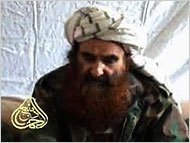 Taliban Commander Maulavi Jalaluddin Haqqani
Regarding NATO forces, the group held a 2-day conference and Allies promised ‘modest’ improvements for their efforts in Afghanistan. Italy lifted previous combat restrictions and many nations in the alliance pooled resources to obtain three more C-17 heavy transport planes. NATO's Secretary General Jaap de Hoop Scheffer called the recent moves and debates ‘encouraging but not entirely satisfactory’ and US Secretary of Defense Robert Gates more forcefully stated ‘I told them that my expectations are simple, I expect government decisions and actions to match government rhetoric.’ The lack of enough troops to police the Afghan/Pakistani border was a key topic of discussion.
Lastly, the International Donor's Conference for Afghanistan was held last week and here's Condoleezza Rice's remarks. She discusses the tremendous amount of democratic and civil societal progress that has occurred in the nation since 2001, but acknowledges the nation's still ‘fragile’ being. Here is the State Department's breakdown of US aid to Afghanistan from 2001-2008, the US aid appears to have increased every year.
 US Secretary of State Condoleezza Rice
Here is Rice's final line; “The United States of America will be committed to Afghanistan for as long as it takes and well beyond for the development of a prosperous, democratic, and free Afghanistan.”
(Photos: New York Times)
