
Much has been made of the political aspects of the Russian-Ukrainian gas dispute. However, a thoughtful scholarly paper at the Council on Foreign Relations offers an alternative explanaiton:
Moscow…has resorted to bullying, blackmailing and otherwise interfering in the sovereignty of its neighbours. In some cases, the motive is simply money: Ukraine owes Russia nearly $2bn for gas, Moldova owes $861m and Georgia $179m. In relation to their respective state budgets, these debts are enormous and cannot be easily discharged.
What makes the money argument all the more potent is the fact that this article was written in 2001, when Ukraine was pro-Russian and long before the Orange Revolution. Thus, because Russian behaviour does not appear to have changed much since Ukraine's realignment with the west, it is likely that politics has less to do with the dispute than is generally made out.
This is borne out in a brilliant article a few days ago by Jérome Guillet and John Evans in the FT. Robert Amsterdam very helpfully linked to it in his blog but unfortunately seems to have ignored its conclusions.
The piece rightly investigates the historical roots of the gas conflict, tracing its origins to the Soviet gas grid that kept the republics very rightly integrated in a single delivery system to the West. After 1991, the republics became sovereign countries, each left holding a disembodied part of the gas industry.
Carving up the Soviet Union along along the borders of its former republics made for an often unworkable allocation of physical assets. Vital assets for Gazprom, the Russian gas monopoly, are located in Ukraine and thus no longer under its direct control: the pipelines are an obvious item, but, just as significantly, Ukraine controls most of the storage capacity of the Russian export system. On the other hand, Ukraine, a heavy industry country, has mostly depleted its gas reserves, making it dependent on gas from Siberia.So this is a situation of mutual dependence.
Russia has tons of gas, but in order to export it to the West, 80% of it must go through Ukraine, which has very little gas of its own and a tiny economy with very little money to pay for gas.

At the same time, Ukraine and Russia have equally heavy gas needs: their infrastructure and industry were built in Soviet times when gas was nearly free and ecological protest meant a ticket to the Gulag. So after independence, Ukraine suddenly found itself in the unenviable position of needing lots of gas for heating and industry without any cash to pay for it. Its only leverage was being the main transit country for Russian gas.
So this is a situation of mutual dependence. Russia needs Ukrainian infrastructure to honour its export contracts to Europe, and Ukraine needs Russian gas. In case of conflict, withholding gas (from Russia's side) or shutting down export infrastructure (from Ukraine's) are tempting options, which have been taken up repeatedly since the demise of the Soviet Union.
Ukraine used to get its gas allocation from Soviet planners and continued to expect the same after independence. When Russia first tried to get payment for its deliveries in the early 1990s, it failed. When it first cut off gas to Ukraine to enforce payments, Ukraine simply tapped the gas sent for export purposes; when European buyers howled, Russia relented and restored gas supplies without having managed to get paid by Ukraine. This has gone on. Yet somehow the gas continues to flow every year.
So whenever one speaks of Russian blackmail, one should not underestimate the importance for Russia of Europe as a gas market. It is worth noting that even the USSR did not use its gas deliveries to Europe as a weapon. Jérome Guillet and John Evans agree:
Worries about Russia or Gazprom using the "gas weapon" against Europe are misplaced. In their official capacity, both are keenly aware of their absolute dependency on exports to Europe for a huge share of the country's income, and on the need for stable, reliable, long-term relationships to finance the investments needed in gas infrastructure.
So why the disputes?
It has a lot more to do with Ukrainian and Russian oligarchs fighting among each other for spoils than with any international power confrontation:
Gazprom understood long ago that Ukraine would never pay for official deliveries. The attempted "solution" was to privatise a portion of the trade. Customers were offered lower rates if they paid them directly to another supplier, formally unrelated to either Ukrainian gas authorities or Gazprom.
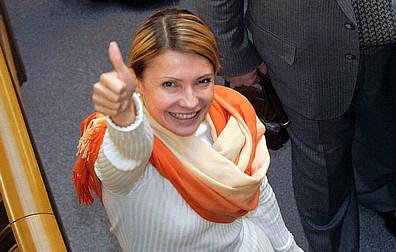
The co-operation of senior Gazprom management and Russian and Ukrainian politicians was required to set up the 30bn-cubic-metre-a-year trade. The trade's enablers are in a position to benefit personally from it , and in effect cut out both Kiev and Gazprom. Political infighting in Ukraine can largely be understood by the struggle to be the Ukrainian counterparty to the trade. (It is no coincidence that Yulia Tymoshenko, the prime minister, made her fortune in gas trading in the 1990s and that Viktor Yanukovich, the pro-Russia opposition leader, represents some of the largest heavy industrial gas buyers in eastern Ukraine.) In Russia, similarly, both the Kremlin and Gazprom are rife with infighting between shifting coalitions.
So the bottom line: just as the issue of Russian press censorship should be seen as an expression of low level corruption and brutality rather than deliberate Kremlin treachery, the Russia Ukraine gas wars should be seen as an expression of post-Soviet business-political clan warfare rather than international power conflicts.
Certainly Russia is interested in using its gas business with Western Europe to butress its international position, but it has a lot more at stake in the relationship than the EU. At the moment, energy is its main export, its only leg to stand on, while the EU has many avenues on which it can influence and affect Russia. So it would be suicidal for Russia to politicise and ruin its one source of leverage.
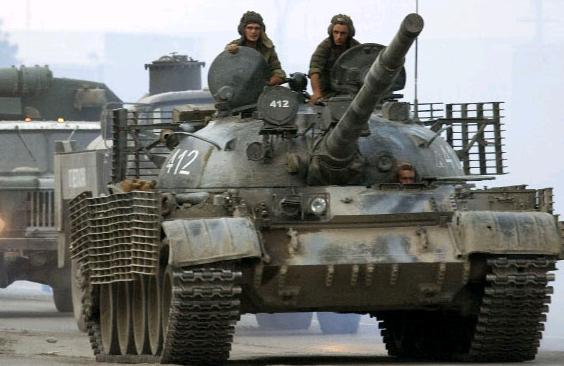
As for Ukraine and Eastern Europe, they worry that if Russia circumvents them to send gas directly to the West, then they will lose their sole leverage against Russia: the ability to siphon off gas. This is a legitimate worry, but it would be misguided to think that Russia wants direct gas pipelines to Western Europe specifically in order to be able to bully its immediate neighbours with impunity. Direct gas pipelines to Western Europe are simply much more profitable. And, as we have learnt from the Georgia war, Russia has far more effective ways of bullying its neighbours than turning off their gas taps.
It is harsh to demand that Ukraine pay market price for gas immediately; their already stretched economy would likely collapse. But there's no need to spin theories about Russia doing it to somehow ‘punish’ a Western leaning state: isn't the potential of billions of dollars in revenue enough? As we have seen, Ukraine got the same treatment when it was still Russia's ally, and even Belarus is now forced to pay more.
Nothing personal, just business.
