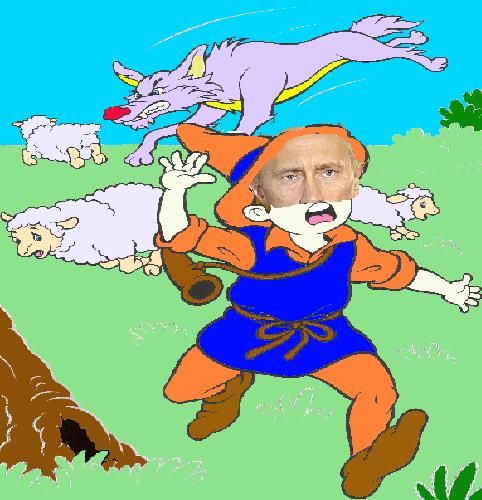
Writing in Grani.ru, a newspaper critical of the Kremlin, Ilya Minshtein has an Aesopian take on the Russia Ukraine gas dispute.
Every new year's eve, Russia and Ukraine stage a seasonal pantomime in which Russia threatens to cut off gas or impose market rates unless Ukraine pays off its energy debts and stops tapping into deliveries to Western Europe.
However, in view of the stratospheric energy prices, Russia was never really interested in recouping a debt as miniscule as the alleged $1.5 bil that its neighbour owes – a drop in the ocean of oil and gas revenue. The true purpose was to gently remind Western leaning Ukraine ‘who's your daddy’ and forewarn it of any unreasonable romances with NATO etc. Every year, the brinkmanship is usually resolved within a few days and things go back to normal.
Except this time, floored by a devastating economic crash that has decimated its stabilisation fund and desperately seeking any cash it can get before energy prices hit rock bottom, Russia actually needed the money, but Ukraine, true to the old script, called its bluff.
Thus, just as with the proverbial shepherd boy, Putin's previous record of posturing and gas-bluster with Ukraine has left his country high and dry at the most crucial of times.
In the end, it is Russia, not Ukraine, that will be held accountable by the EU in the way that a business is held accountable by a client for a missed order even if the shipment was stolen by an unscrupulous deliveryman.
—-
Thank you to Ian, James and Malia for your insightful and engaging comments on the previous article! I really appreciate your points of view and valuable knowledge.
Just a few quick points of reply.
Malia, your point about the agreement to ease into market prices by 2011 is a good one; but I think Putin knows that the price will continue to fall by then and getting Ukraine to switch immediately would ‘lock in’ the current prices.
Ian, you are quite right and I think Ilya's argument further validates your points. As for the value of the trade, I disagree that the only way out is for the value to decline through the diversification involving N Africa and Caspian. The incident might alternatively slightly raise the EU's support of the Nord Stream project that would cut out the Eastern European middle men. We will see.
James, thank you for bringing up Belarus and the matter of the 40% interest rate. I did not intend to discount the place of politics in the equation – it clearly exists and plays an important role. My point was simply to put a greater stress on the commercial aspects that I felt were being drowned out in favour of a 'sexier’ narrative. But you are quite right: the whole thing stinks.
