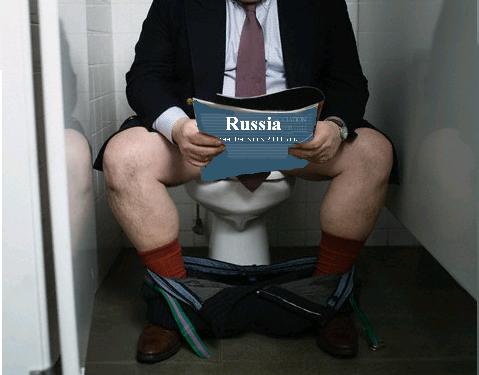
Just what sort of person would confess to reading the FPA Russia blog?
In the first of an occassional series, we caught up with Scott Spires, a Moscow-based linguist, translator, writer, and recreational Russia Blog user.
FPA Russia Blog: How do you like living in Russia?
SS: I love it, despite the occasional aggravations and difficulties. Some foreigners just have “the Russia bug” and I’m one of them. Initially, the attraction was that it was so different from what I was used to; now, part of the attraction is that it is becoming quite similar – a night on the town feels pretty much like it would in New York or Chicago; advertising, pop culture, business culture are becoming much as they have long been in points west. That is a fascinating story in itself.
I was here in late Soviet times; it was like a different planet. Also, my personal life is very interesting in the way it can only be in a massive metropolis, with its endless possibilities for culture, entertainment, food and the like. Just last week I went to a concert by a Buryat throat-singer – 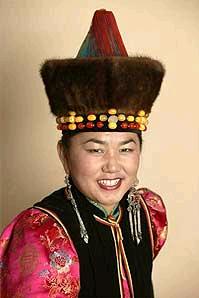 in how many places could I do such a thing?
FPA RB: Where do you see things going?
SS: That is the big question. Granted the economy is suffering, but the fact that all other economies are suffering (unlike in the 90s) might provide a psychological cushion against upheaval. I’m certainly not planning to move anywhere, and now is definitely not the time to move back to the US.
As for the political situation. One of the problems here is that it is difficult to define precisely, since it doesn't really fit any known paradigm. Western journalists and others know what a democracy is supposed to look like, or a communist country, or a military dictatorship. But present-day Russia doesn't fit any of these models, and as a result they struggle to describe it accurately.
I call it a “semi-authoritarian open society.” I often have to point out to people that, even if the political structure is somewhat crooked and rigged against competition, society is totally open – you can read any book you want, go to any house of worship, visit any foreign country, enjoy a wide range of critical opinion in print and on the Internet.
I actually think Russia is freer in the intellectual sense than a lot of EU countries, where there are hate-speech laws, laws against offending minorities, and the like (and they are enforced). It is in fact the EU, and not Russia, that criminalizes certain views of history (in regard to the Holocaust and the Armenian genocide, for example).
 Russia's two biggest problems are not “Putin's dictatorship” but corruption and a dysfunctional legal system – these cause or exacerbate all the country's problems in my view. To my mind, Putin's biggest failure is that after 8 years, Russia remains a country where you can order a hit on an inconvenient person and get away with it, all because of these two problems.
FPA RB: What Russia books are you reading right now?
SS: Currently reading a book of short stories by Victor Pelevin – it contains “The Yellow Arrow” and other stories. Enjoying it very much; Pelevin is a very sharp, satirical author with an amazing  imagination. (I reviewed one of his novels for Russia Profile magazine last year.)
Also Orlando Figes’ “Natasha's Dance,” a cultural history and generally a fun read. I am more interested in cultural and social phenomena than in politics and the like, and this tends to dictate what I read. (I have an occasional niche at Russia Profile, writing articles on ethno-cultural topics, or book reviews.) However, I plan to read Andrew Wilson's “Virtual Politics” in the near future, and I’m about to order Alexei Yurchak's “Everything Was Forever, Until It Was No More” (about the last generation that grew up in the USSR – basically a sociological study).
