The Council on Foreign Relations today published an interview with Pavel Felgenhauer, the outspoken Putin opponent and astute defence analyst with Anna Politkovskaya’s old paper Novaya Gazeta, about all the main geopolitical questions facing Russia today.
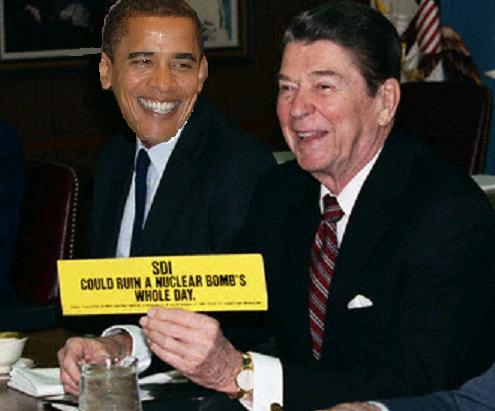
The most interesting part of this was his assertion that Russia believes that the US missile shield in Eastern Europe “is a smokescreen”.
They believe that nuclear missiles will be deployed in Poland near Russia and these nuclear missiles will have also a first-strike capability and could hit Moscow before [Russia’s response] could get airborne, so this is going to actually be seen not so much as missile defense as a deployment of first-strike capability.
He also notes that any quid pro quo regarding Russian pressure on Iran in exchange for the US aborting the missile shield is seen as a ploy, as Russia’s lack of the necessary leverage to force the Iranians away from nuclearisation will give the US a free hand to proceed with the shield.
I think Felgenhauer‘s argument is sound, if a little pessimistic. On the plus side, Russia’s recent military reforms, aimed at professionalising the army, should send a strong positive message to the US.
This is because, despite an overall increase in military expenditure which looks threatening on the surface, the reshuffle is actually a revolutionary rejection of Cold War era doctrine of mass mobilisation. By reducing the officer corps and trimming the fat, Medvedev removes the army’s technical potential for a European invasion and reconstitutes it into a more ‘clinical’ small-conflict force no longer for fighting NATO but rather terrorism and regional threats.
Obama would do well to recognise this when weighing the missile shield; if Russia has finally moved to take NATO out of its crosshairs, then the US should reciprocate.
In fact, even the usually sceptical Economist reports that already, “both sides are signalling a truce” and making some tentative steps in renewing arms control negotiations that were either frozen since the Cold War or undermined by Bush. So much so, that “an early and radical chop in weapons numbers [might] be announced by the two presidents next month”.
