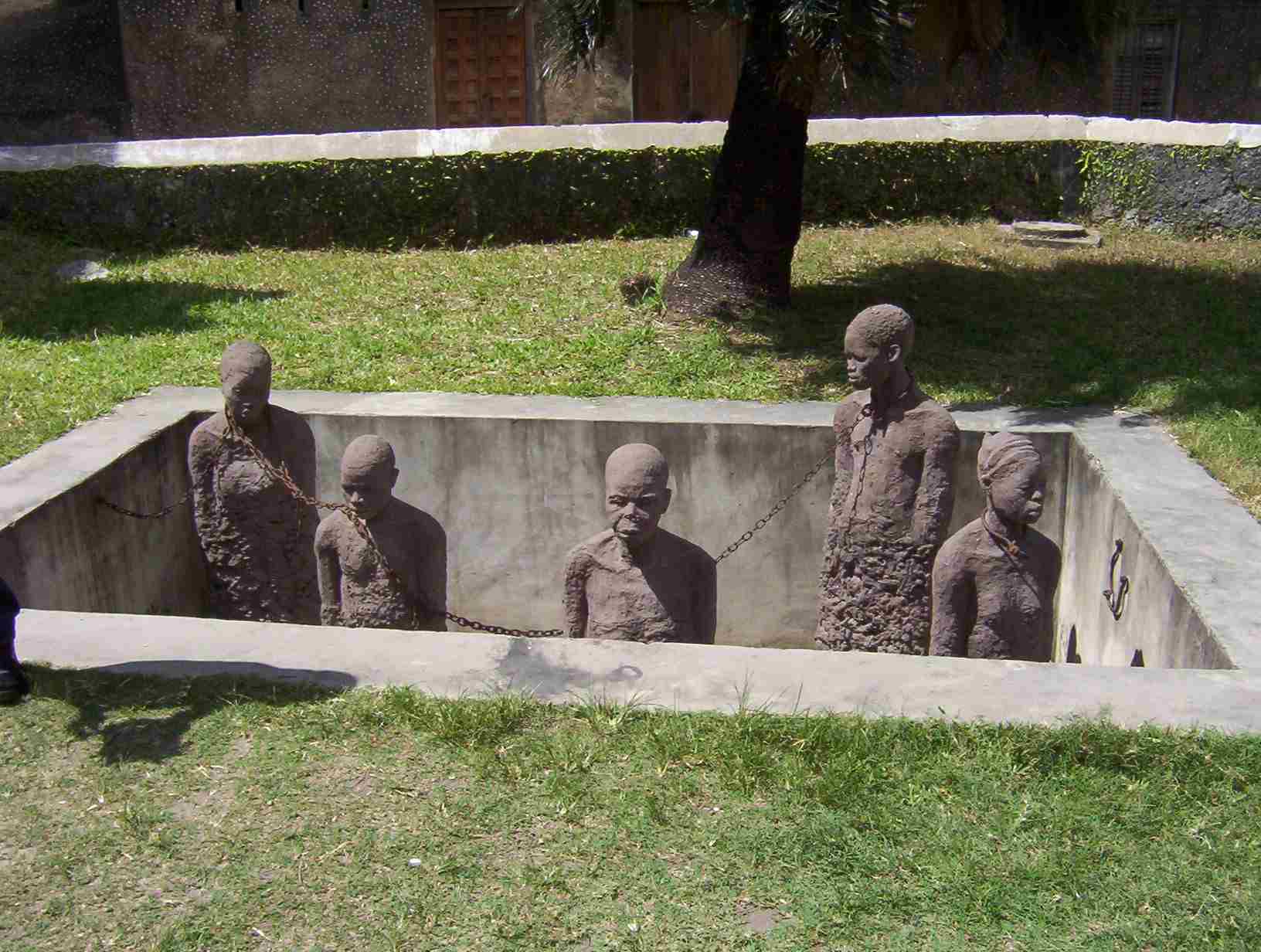
Slavery Monument in Zanzibar
Yesterday, March 25th, the UN marked the second annual International Day of Remembrance of the Victims of Slavery and the Transatlantic Slave Trade.
The story of the end of the slave trade deserves to be told here at the United Nations. Indeed, the defense of human rights is at the heart of this Organization’s global mission. Our Charter proclaims equal rights. The Universal Declaration of Human Rights states that “no one shall be held in slavery or servitude”. –Secretary-General, Ban Ki-moon
However, as we take a moment to remember the some 12-17 million victims of the Transatlantic slave trade, let us remember and never forget our horrendous past, but let us also remember that we have not fully escaped the ghosts of slavery.
“Despairingly credible comparisons of scale and suffering may be drawn with the trans-Atlantic trade in Africans in the Americas in which more than 12 million people were forcibly transported over the ocean in four hundred years. It is to our great shame that if today’s statistics are correct, and 700, 000 people are now being trafficked across borders into slavery annually, we will have equaled that total in a mere 20 years.” – Mrs. Ndioro Ndiaye Deputy Director General International Organization of Migration (IOM)
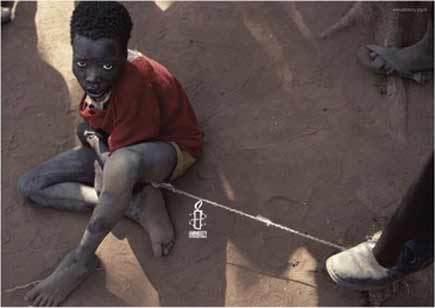 The figures in the statement by Mrs. Ndiaye and the IOM leave the figure for modern slavery at 14 million, however leaders in the modern anti-slavery movement, such as Kevin Bales, President and Co-founder of Free the Slaves, cite the figures as some 27 million. Figures for the Atlantic Slave trade and modern slavery are both undoubtedly underestimated, regardless of the exact number any number of persons held in any form of slavery is plainly unacceptable. It is clear that we have not fully learned the lessons from the legacy of the 400-year slave trade.
The establishment of the International Day of Remembrance of the Victims of Slavery and the Transatlantic Slave Trade will hopefully serve to bring more awareness to the issue and increase the pressure on states to increase awareness and educate on the the issue of both historic and modern slavery. Thus this day, along with the work of countless modern abolitionists, charities, states and the passing of more and more legislation against these modern crimes, will aid in the prevention of modern slavery, and see that future generations never have to hear the word slavery, but in that of a historic context.
To learn more about Human Trafficking/Modern Slavery see the following resource pages: Modern Slavery and Human Trafficking Links
Human Trafficking Conventions and Laws
Slavery and Trafficking Related Books
Human Trafficking and Modern Slavery Reports and Publications
Human Trafficking and Slavery Related Movies and Documentaries
Also see my other posts on Child Trafficking, Slavery, and Child Soldiers
If you have reason to suspect that someone is a victim of human trafficking, please call the National Human Trafficking Resource Center hotline on (1-888-373-7888). Multilingual call specialists are on standby 24 hours a day, 7 days a week. All calls are confidential.
