Is Stalin being rehabilitated in Putin’s Russia? That’s the fashionable question being asked by the middle-brow press and fanned by such big name historians as Simon Sebag Montefiore and Orlando Figes.
A few days ago, even the BBC’s Laurie Taylor jumped aboard and invited Mikhail Ryklin, “one of Russia’s most significant intellectuals” now living in the West, to talk about the current influx of Stalinist sympathies in Russia (audio at Sean’s Russia Blog).
Granted the radio segment very likely did not do his views justice, but I took issue with much of what was said.
“According to exiled Russian academic Michail Ryklin, Putin’s Russia is turning the clock back and rehabilitating the most famous demon of the Soviet Union.
In a new book, he claims that although the Soviet Union proclaimed itself an aethist state, communism functioned as its religion, and when faith faded it was replaced by mass terror. But now memories of the terror and bloodshed have receded and Stalin is being reclaimed”.
In a March interview published in Eurozine, Ryklin says that Stalin “is widely regarded as the greatest politician in Russian history, instrumental in defeating the Nazis, the most important event in the 20th century for Russians. The pact is forgotten, the mass murders are dismissed as part of the big modernisation project preparing for the war, explained away as something that was necessary. Lenin has been blackened, made a scapegoat. Stalin has been scrubbed clean.” 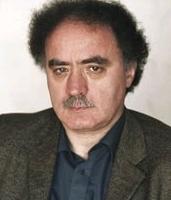
Ryklin’s argument about Communism being a religion is neither original nor convincing.
Taking the Weberian definition of “religion as a kind of totalising experience, something for which people are prepared to sacrifice everything and which makes sense of their entire lives”, Ryklin reasons that “by this definition, of course, communism is religion. For millions of people the sense of their lives was defined by communism as a set of beliefs. Communism was real religion.”
Of course, if one defines any comprehensive and definitive belief or idea as a religion, then liberalism and democracy would also join these ranks. So apart from this rather tautological suggestion, what judgment is Ryklin making about Communism when he calls it a religion?
Given that his wife organised the famously vandalised atheist art exhibition “Caution: Religion”, much of the comparison is intended to be pejorative: If religion is bad and communism is religion, then communism is bad. Another aspect of it is the issues of blind, irrational faith of the true believers, such as Bertold Brecht, who continued to believe in Communism even when confronted with the horrors of Stalinism.
Perhaps ironically for a someone claiming that Communism is a religion, Ryklin does not seem very preoccupied with its actual philosophical prescriptions and sets of beliefs. In fact, he ends up reducing Communism to a structure, a way of thinking rather than a set of ideas (which is a valid way to see Marxism, a form of analytical thought, but not communism, an idea-based societal organisation). When he reviews the motivations behind the prominent Western fellow travellers’ – Brecht, Benjamin and Russell – embrace of Communism, Ryklin describes Stalin’s policies but makes little attempt to situate them within the Communist idea-universe.
Could it be that these philosophers identified with the ideological tenants of communism on purely rational grounds?
For example, as Sean mentions his blog, Ryklin notes during the radio show that while millions perished under Stalin, for other groups it proved to be a period of social mobility, perceived order, and most importantly, Russia’s victory over its external enemies. “There are very different images of this time depending on what group in society your family belonged,” Ryklin tells Taylor.
So, if it was a case of winners as well as losers, a more positive judgment of Stalinism could be a perfectly rational, non-religious response by members of society who had benefited from it. And if particular intellectuals aligned their sympathies more with those groups than the system’s victims, then it seems understandable that they should have attempted to justify the excesses. What makes things even more complicated is that the lines between victims and perpetrators was often blurred; as Figes writes in The Whisperers, many families that lost members in the repression remained faithful for a mix of other reasons, including fear, patriotism, ideology and personal interest. This is true even for my own family, where my great grandfather had been murdered during the revolution while my grandfather had worked in the NKVD.
It is worth remembering that Soviet socialism, especially during Stalinism, was unique among dictatorships precisely in its victimization of societal elites: the educated, the nobility, the wealthy, the talented.
Exactly the opposite held for the Nazis, who forged an incredible symbiosis with the German aristocracy. Indeed, according to Christopher Clarke’s fascinating article in the London Review of Books:
“The Nazi movement acquired supporters as high up in the traditional social elite as it was possible to go. Among Hermann Göring’s close associates was Prince August Wilhelm of Prussia, son of the Kaiser, who became interested in Nazism in 1926 and joined the Stormtroopers in 1930. Through August Wilhelm, Göring gained access to his brother Crown Prince Wilhelm von Preussen, and to the princes of Hessen, Christoph and Philipp. Göring was renowned (and resented by some Nazis) for his sycophantic attraction to the high-born, but he was not alone. Himmler, too, targeted the nobility, in the firm belief that they embodied the principles of selective breeding espoused by his SS. By 1938 nearly a fifth of all senior SS officers were titled noblemen (the figure for the lower officer ranks was 10 per cent). From a sample of 312 families of the old nobility, the Freiburg historian Stephan Malinowski found 3592 individuals who joined the Nazi Party, including 962 who did so before the seizure of power in January 1933. These noble Nazis included members of the oldest and most distinguished East Elbian families: the Schwerins supplied 52 party members, the Hardenbergs 27, the Tresckows 30, and the Schulenburgs 41”
Likewise in Italy, Mussolini enjoyed the support of the king, and virtually every South American regime from Pinochet to Peron to Fujimori enjoyed the backing of the aristocracy and wealthy middle classes. 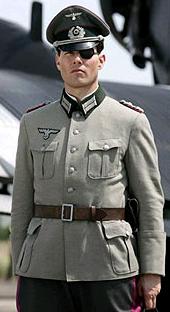
While Stalin’s Russia may have perverted the communist ideal in practically every other possible way, it did stay roughly true to its essential class allegiances. Stalin and all of his henchmen hailed from poor backgrounds; they were very often badly educated, untalented and crude.
In contrast, the people against whom they committed unspeakable atrocities were often noble in more ways than one: gifted and principled academics, soldiers, scientists, poets and musicians. And in all the individual human tragedy and extreme injustice, there echoed the undeniable ring of big-picture class justice inherent in the image of a pockmarked, lame Georgian man, born a Russian colonial subject, now indiscriminately terrorising innocent people who had previously towered over him racially, intellectually, financially, and morally.
Even his murder of Trotsky carried that same perverse school-ground justice; a clumsy, misplaced, floundering revenge for all those times that the elite-educated cosmopolitan revolutionary condescended towards the awkward prole named Koba, whom Trotsky disrespected, marginalized and kept as a lowly secretary, making Stalin risk his life robbing banks for the revolution all the while looking down his nose at him.
Stalinism was thus the political equivalent of the Columbine massacre, on a national scale.
Indeed, the current quest by liberal historians and intellectuals to explain the ‘re-Stalinisation’ of Russia bears a stark similarity to the media’s agonizing search for the ‘reasons’ behind the notorious school shooting. Why did they do it?
And just as the Columbine shooters Harris and Klebold, according to the journalist Mark Ames, “are literally heroes to thousands, perhaps hundreds of thousands of American kids”, so Stalin continues to be broadly admired by many ordinary Russians.
These people aren’t psychopaths. They admire Stalinism not just because of the victory in WWII but also in the same way that they relished the inherent underdog justice of the fat, balding, uncouth, peasant Khruschev standing up to the elegant Harvard educated Boston Brahmin JFK, even if it might have led to a nuclear apocalypse; in the same way that a part of you can’t help cheering for Sharikov in Bulgakov’s Heart of a Dog; in the same way that Harris and Kelbold’s rage against a school bully, Rocky Wayne Hoffschneider, despite claiming 12 totally innocent lives, nevertheless inspired so many bullied American school kids who have had enough; that rage is as vague as it is righteous, and for this reason it is so often destructive and violent against all the wrong people.
That’s the problem with fighting a system through personal reprisals: its most visible beneficiaries, representatives and supporters are seldom personally guilty of any abuses. On the contrary, they are often thoughtful, charitable people, often even inclined to hold liberal, compassionate beliefs.
Yet in its primal and crude reaction against a deep yet opaque injustice, it should not be so hard to understand how Stalinism and Soviet Communism could hold at least some appeal for radical intellectuals.
And it’s therefore a cop-out to blame it on blind religious fervour.
