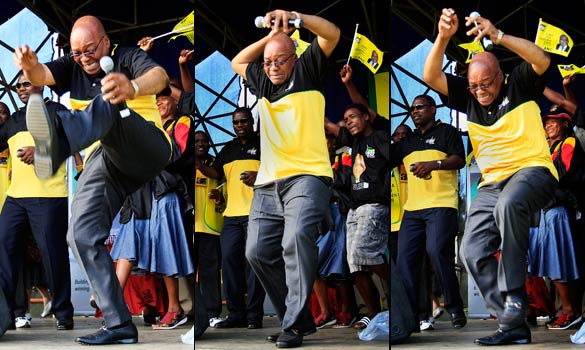
South Africa’s governing party, the African National Congress, romped to victory in the country’s national and local elections. (With over half of the votes counted, it remains unclear if the ANC will reach the two-thirds majority needed to change the constitution.) The ANC’s win paves the way for Jacob Zuma to assume the presidency.
Some experts believe that South Africa’s internal concerns will curtail the country’s regional sway. “We are going into a period where we don’t have a continent-wide heavyweight,” says Princeton N. Lyman, a senior fellow at the Council on Foreign Relations. Alex Vines, head of the Africa program at Chatham House, argues that due to the international ambitions of previous presidents South Africa needs “time for internal reflection.”
This may be true, but only to a point. South Africa is the continent’s largest economy – it provides more than a third of sub-Saharan Africa’s total GDP – and sole member in the Group of 20 major economies. With the country’s relative strength, Jacob Zuma’s influence will stretch beyond South Africa’s borders.

