It has been said that to wait is a Cuban condition: waiting for the fruits of the revolution to manifest themselves; waiting to reunite with family; and waiting, as an exile, to someday return to the island. One in six Cubans today lives outside of the island as a member of the diaspora—the migrant community that stretches from Miami to Moscow. The uprooted lifestyle is a shared experience among many, and a social phenomenon explored by Ruth Behar and Lucía M. Suárez in The Portable Island: Cubans at Home in the World (Palgrave Macmillan, 2008).
Listen to a presentation of the book here: here.
This is a premature post, because I have not read the book yet. But the title is enough to have pulled me in, and enough to have inspired me to reflect briefly, because “portable” is exactly what Cuba has had to be, in at least two very different senses.
First, as the book means to suggest, exiles and migrants transport bits of Cuba throughout the world and create more “Little Havanas” than just the Miami neighborhood by that name.
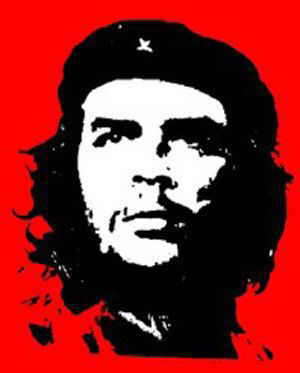
Second, and (I believe) beyond the meaning intended by the book: Cuba is portable in the sense that revolutionaries, socialists, leftists, anti-U.S. and anti-capitalist groups, challengers of the status quo and underdogs worldwide invoke Cuba, Fidel and the Che as symbols of their own effort to achieve equity or overturn elite rule. In other words, the island is a symbol that can be taken and used anywhere and everywhere.
An apt use of the word.