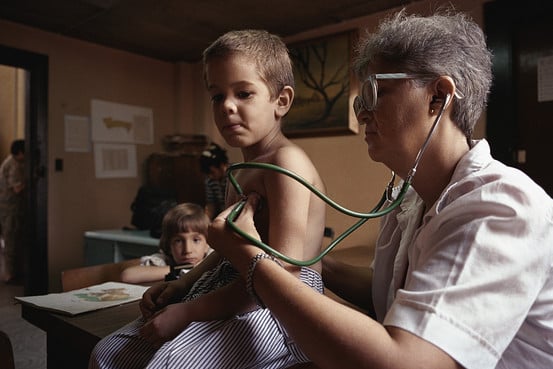
Today the Solomon Islands’ Solomon Star proudly announced that the country plans to send 25 more medical students to Cuba for training next year. Cuba has already given free scholarships to 50 students from the Solomon Islands and sent its own doctors to the Pacific archipelago in an effort to help address the latter country’s shortage of doctors in hospitals and clinics.
The two nations do not have a long history of cooperation: it was only April of 2007 that they established official relations with an exchange of ambassadors. In September of that year, Cuba sent its first doctors.
In this way, Cuba’s so-called “medical diplomacy” continues to expand its reach. Cuba has pursued similar policies with other Pacific islands in Oceania—sending doctors to the small nations and simultaneously providing scholarships for Pacific students to study in Cuba—and with countries in Latin America, Africa and beyond. Since the revolution, Cuba has provided medical assistance to scores of developing countries throughout the world both on a long-term basis and for short-term emergencies. At the end of 2005, Cuban doctors were collaborating in 68 countries. Havana offers disaster relief assistance even to countries that do not have good relations with the island: it provided relief to Central American countries after Hurricane Mitch in 1998, and offered the same to the United States after Hurricane Katrina (former President Bush declined). The state runs the risk of seeing its valuable doctors defect, as the incentives to “escape” while abroad are high: there are often better salaries to be earned in el exterior, and sometimes better overall economic conditions. Many do not return from their service abroad. But Cuba continues to send doctors in generous numbers.
But Cuba’s intentions are confusing. Although the island boasts a population with one of the highest life expectancies in the region, an infant mortality rate lower than that in the United States, the lowest HIV prevalence rate in the Americas and one of the lowest in the world, there are now shortages of supplies, equipment and doctors that put pressure on the health system. Why would Cuba continue a policy of exporting doctors in such circumstances, if Cuban citizens themselves are left with too few doctors and rather limited resources?
