Robert Buddan of the University of the West Indies at Mona had a thought-provoking piece in the Jamaica Gleaner today, entitled “Managing crisis in Jamaica and Cuba.” Buddan highlights the difference in options available to the two countries in facing similar debt difficulties. Cuba, for example, cannot seek or receive loans from the International Monetary Fund or from other multilateral institutions. It is restricted from much trade by the U.S. embargo. And its tax system is limited to foreign companies and currencies. Jamaica, meanwhile, is also faced with a grave debt problem, but it can freely trade, tax and borrow.
Not only their abilities, but their fundamental approaches to crisis differ. In Jamaica there is no plan for conservation of energy and imports, mobilization for production, or sacrifice of conveniences and luxuries. Jamaica, of course, is similar in this way to many capitalist countries.
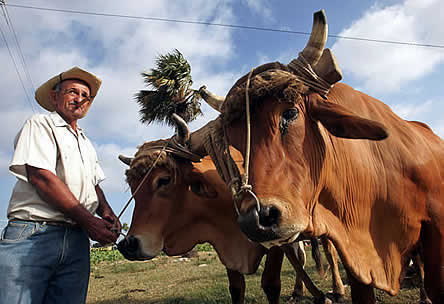
So who ends up in better shape? Hard to say, but it is tempting to side with the more self-reliant country—the country that visibly tightens its belt in response to problems—Cuba. As Buddan points out: while both countries have energy problems, most Jamaicans would laugh at the suggestion of using oxen instead of diesel-guzzling farm equipment. Yet this is exactly what Cuban farms have started doing more and more recently in order to effectively lower energy use.
