
The mediating role of the United States in the Israel-Palestine peace plan seems to -slowly- be picking up steam.
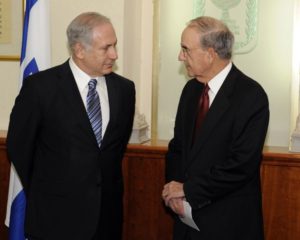
President Obama met with PA Chairman Mahmoud Abbas, Israeli Prime Minister Binyamin Netanyahu, and Egyptian President Hosni Mubarak. Following the latter meeting, Obama called Jordanian King Abdullah and now sent the U.S. regional envoy George Mitchell to meet with Netanyahu in London on Wednesday. The commotion around negotiations could represent a prelude to the unveiling in September at the United Nations of a comprehensive U.S. peace proposal. At Wednesday’s meeting, Mitchell could be ironing out the final details of the plan with the Israeli leader. Rumors of the peace plan’s release emerged following Mubarak’s visit in Washington. Notably, some reports indicate that the Israeli government agreed to a temporary settlement freeze that would exclude East Jerusalem construction. In another step indicating progress, Netanyahu seems willing to begin negotiations with Abbas as early as next month, the Israeli leader said in remarks at the weekly cabinet meeting.
State Department Spokesman Ian Kelly said the following about the Mitchell-Netanyahu meeting:
“Well, I think – you know that we have placed a very high priority on getting a comprehensive peace – comprehensive in the sense that we want a regional solution to the problem. And we wouldn’t want this solution to be based on a two-state solution. What we’re trying to do right now is we are trying to lay the foundation – or what George Mitchell is trying to do is lay the foundation that will lead to the resumption of meaningful negotiations. And this is part of that whole process. There have been some reports that we’re close to a breakthrough. I think I would say that – I would characterize it as that we’re getting closer to an agreement. But any reports that we’ve come to an agreement, or that we expect one on Wednesday necessarily, I would have to call premature.”
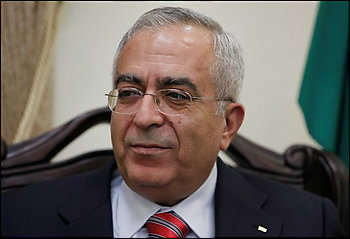
Moreover, the Palestinian leadership appears more invested in the current peace process than in previous negotiations. Palestinian Prime Minister Salaam Fayyad intends to release a 65-page document tomorrow that outlines a strategy to develop the West Bank into a sovereign nation. His plans, largely unrealistic, include the establishment of both an airport and railways that run between countries. In the past, Palestinian leadership focused on Israel, including a peace plan, the right of return, and the status of Jerusalem. The focus on Palestinian institutions indicates that Fayyad, while still urging negotiations with Israel, believes that it is about time for Palestinians to take responsibility for their own state. Fayyad maintains strong support from the West but faces increasing internal opposition, particularly from Hamas. Notably, Fayyad’s document states:
“The government will work on encouraging investment in Palestine through offering tax cuts to local and foreign investors (and) will review investment regulations and remove obstacles that hinder investment… Our national duty stipulates that we should do whatever we can to get our economy out of the cycle of dependency and alienation.”
Regardless of all the overtures from the United States, Israel, and the Arab world, significant hurdles in the peace process remain intact. Any agreement could quickly be torpedoed by extremist groups throughout the Middle East. Even with determination, compromise, and understanding by the region’s leaders, many other factors will influence the final outcome of negotiations that will lead towards an independent Palestinian state alongside a secure Israel or lead to total failure like previous peace processes.
Netanyahu and Mitchell photo from the Israeli government website.
Fayyad photo taken from Wikipedia.
