 The Cuban missile crisis in 1962 is widely regarded as the closest the world ever came to a nuclear war. But in the early 1980s, the Cold War was at its chilliest. The threat of nuclear annihilation was nigh as President Ronald Reagan began a trillion-dollar arms buildup in the United States, ordering atomic detonations in the desert of Nevada as new arms were developed and tested. The Soviet Union simultaneously undertook measures of its own in a quest for nuclear superiority.
The National Security Archive, a private research group at George Washington University, this month made public a Pentagon report from 1995 on “Soviet Intentions 1965-1985.” The report was based on extensive interviews with former top Soviet military officials, and it took two years of prodding from the security archive for the Pentagon to declassify them.
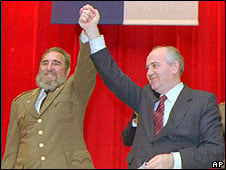
Several pieces of new information emerge from these documents (see here or here), including a bit on Cuba. Andrian A. Danilevich, a Soviet general staff officer from 1964 to 1990, relates in his interviews that in the early 1980s, Fidel Castro “pressed hard for a tougher Soviet line against the U.S. up to and including possible nuclear strikes.” This pressure apparently ceased only after Soviet officials gave Castro a briefing on the ecological impact on Cuba of such action.
Historical evidence like this is chilling, but not inconsistent with the body of information previously available, and not entirely surprising given the circumstances of the day.
