
Following months of mutual cooperation on anti-terrorism initiatives and attempts to secure the release of abducted IDF soldier Gilad Shalit, Israeli-Egyptian relations seem to be taking a hit this week as multiple events accentuated the perpetual tension between the two nations. The countries concluded their decades-long war under the guidance of U.S. President Jimmy Carter in 1979, although many analysts describe the peace as “cold” because of the continued border tension, minimal cooperation, and deep-seated distrust between the two countries’ citizens.
For starters, Egyptian Foreign Minister Ahmed Aboul Ghei penned a letter to the United Nations Security Council calling for international supervision of nuclear programs in the Middle East, including “Israel’s nuclear capabilities.” Even though Israel likely developed its first nuclear weapons at least 40 years ago, the country remains mum on its capabilities and refuses to sign the Nuclear Nonproliferation Treaty. A resolution passed at last week’s International Atomic Energy Agency general assembly calls for international inspections of Israel’s nuclear facility in Dimona. Versions of the resolution introduced at previous IAEA meetings failed primarily due to efforts from the United States and European countries to convince developing nations to oppose the motion.
In parallel to the nuclear issue, Egyptian Culture Minister Farouk Hosny blamed the West, and Jews in particular, for his defeat in elections for the leadership role of UNESCO, the leading international cultural and education entity. Critics of Hosny questioned his ability to perform in the role due to excessive censorship in Egypt and Hosny’s previous comments that called for the burning of Israeli books. Upon losing, Hosny blamed “European countries and the world’s Jews” for his defeat as opposed to considering how his comments on censoring the literature of other cultures would potentially conflict with his ability to serve as the world’s leading cultural liaison.
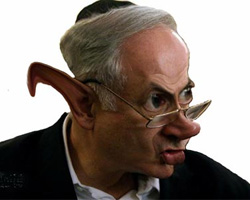
Lastly, the Israeli Foreign Ministry went into an uproar over a recent cartoon in Al-Ahram that depicts Israeli Prime Minister Binyamin Netanyahu with a large nose, pointy ears, and a scheming glare. Israeli Foreign Ministry Director General Yossi Gal summoned Egypt’s Ambassador to Israel Yasser Rida to admonish him over the cartoon and asked him to relay to Cairo Israel’s firm objections over the insulting depiction.
(Full disclosure: Even though I find the cartoon highly -highly, highly…. highly- entertaining, the caricature represents an anti-Israel and, more importantly, anti-Semitic sentiment. By highlighting Netanyahu’s nose and making him appear ‘evil,’ the cartoon taps into centuries-old stereotypes of Jews that were historically used to foster and breed anti-Antisemitism.)
Photo taken from Haaretz.
