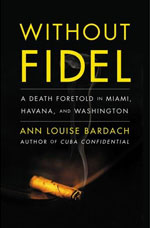
 On October 6, 2009, Ann Louise Bardach’s new book Without Fidel: A Death Foretold in Miami, Havana and Washington will be released. The reporting contained therein is based on countless interviews with Washington officials and politicos, Cuban officials and exiles, Castro family members—including Raúl—and Fidel Castro himself, and thus provides insights and information that have otherwise not permeated the veil of state secrecy in Cuba. Bardach provides detailed reporting on Fidel and his family during the years of his rule, on his collapsing health in the years since 2006, and on what lies ahead: who will be Raúl’s heir? Will the US embargo end with Fidel’s death? How will his departure transform politics and policy in the Western Hemisphere?
The Daily Beast published two exclusive excerpts from the book, here and here—a piece called “Castro Family Values” and another called “The Day Castro Wept.” The latter begins:
The dying began on July 27, 2006-and it has yet to end. Certainly, it would have been hard to imagine a final coda less appealing to Fidel Castro-a proud and prudish man who has zealously guarded his personal privacy. For Castro, an obsessive autocrat and micro-manager, nothing could have been more distressing than to see details of his emergency intestinal surgery splayed across the front pages of newspapers and Web sites five months later. For the first time, Fidel Castro had been sidelined as the master of his own fate. A new portrait—that of a frail octogenarian clinging to life—supplanted his carefully crafted persona of the vigilant warrior.
But as befitted a movie-star dictator—and the world’s longest-reigning head of state—Castro would take his time leaving the stage. That exit, with periodic finales, is fated to be a marathon: an epic that one might be tempted to call The Fideliad.
Read on here.
Ms. Bardach is the author of several books on Cuba, including Cuba Confidential: Love and Vengeance in Miami and Havana, a book that Fidel himself read. When she arrived in Havana for a visit in 2008, airport security would not let her pass to enter the country, and a Cuban official explained, “A Fidel no le gustó su libro” (Fidel did not like her book).
