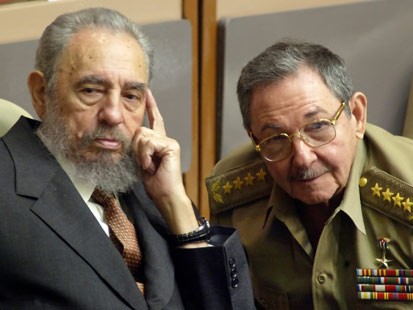
Last year, the Center for Strategic and International Studies (CSIS) held a series of panel discussions on “Cuba Outlook: Raúl and Beyond,” with Cuba experts from Canada, the United States and Europe participating. The product is a report of the same name by Peter DeShazo, just released by CSIS, which synthesizes the group’s analysis of Cuba’s political, economic and social realities, the nation’s foreign affairs, and its future in these realms. Read it here.
A few of the report’s most interesting contributions to the conversation on where Cuba is headed:
The most promising sectors of the Cuban economy are medicines and biotechnology, medical services, energy and tourism. Cuba is expected to move toward being a “knowledge economy” capable of exporting higher technology services and medical products. (Although the report does not mention it: certainly Cuba’s high emphasis on education and technical training over the last half century have been excellent investments in this direction.)
In terms of international trade, Venezuela and China are Cuba’s key partners, having displaced Spain, Canada and the Netherlands in past years, although Venezuela’s share is highly dependent on oil and is likely to shrink while China’s will continue to grow. (See more on Cuba’s strengthening ties to China here. Since becoming President of China, Hu Jintao has visited Cuba more times—twice—than any other Latin American country, including Brazil.)
The Cold War strategy of the “guerra de todo el pueblo” remains current doctrine, and the Armed Forces continue to enjoy high prestige in Cuban society. But their numbers have been greatly reduced (to 50,000-60,000 regular troops, down from a peak of around 200,000), and a new generation of younger officers—currently in their late 40s and early 50s—now hold key regional commands. These individuals tend to admire the US armed forces as highly competent and see benefit in establishing closer cooperation with the United States in that sense. The new generation of leadership will guide the Armed Forces to a future that may see the end of the guerra de todo el pueblo strategy, replacing it with something as yet undetermined.
Melissa Lockhart Fortner is Senior External Affairs Officer at the Pacific Council on International Policy in Los Angeles, having served previously as Senior Programs Officer for the Council. From 2007-2009, she held a research position at the University of Southern California (USC) School of International Relations, where she closely followed economic and political developments in Mexico and in Cuba, and analyzed broader Latin American trends. Her research considered the rise and relative successes of Latin American multinationals (multilatinas); economic, social and political changes in Central America since the civil wars in the region; and Wal-Mart’s role in Latin America, among other topics. Melissa is a graduate of Pomona College, and currently resides in Pasadena, California, with her husband, Jeff Fortner.