
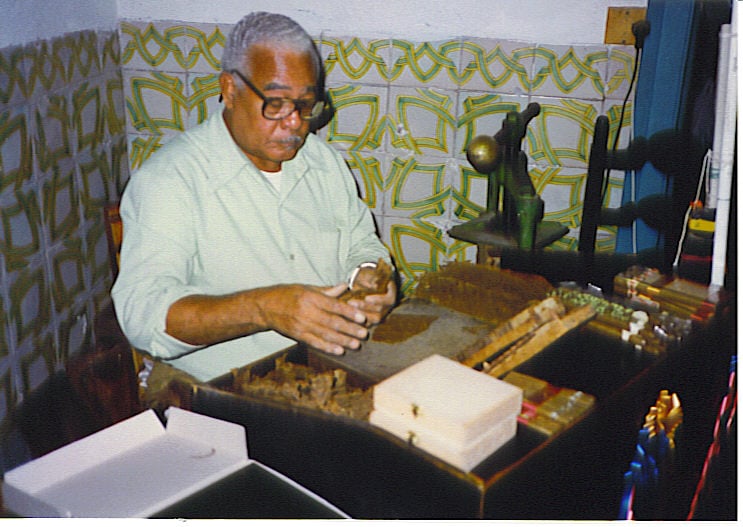
Around 200,000 private farmers and their families grow and cure tobacco for cigars under contract with the Cuban state, and tens of thousands more roll the leaves into puros for export. Cuba’s cigar brands, which include Cohiba, Montecristo, Trinidad and Partagas, dominate the global premium market: their sales comprise 70% of the world total (even while they are excluded, of course, from the US market by the embargo).
But demand for Cuban cigars, the “best in the world,” is down. The global recession and a proliferation of smoking bans worldwide have both left their mark, such that demand for Cuba’s cigars fell by 3% in 2008, and is reportedly down by 15% in 2009.
It is for this reason that Cuba has decided to slash the acreage devoted to growing tobacco by more than 30%. Cuba’s National Statistics Office, in a report posted on its web page, said land to be planted with tobacco for next year’s crop would be only 49,000 acres, down from 70,000 acres this year, which was in turn less than in 2008. Cuba’s cigar rolling factories have been operating at well below capacity all year, and with these further cuts in acreage, the crop produced will continue to decline.
As perhaps the most characteristically desirable and successful Cuban product (rivaled at one point, perhaps, by rum), the cigar’s current troubles illustrate the extent to which the Cuban economy continues to flounder while the state struggles to keep it afloat.
