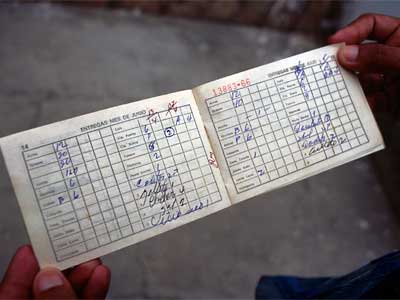
Last week potatoes and peas were dropped from the monthly ration books that Cubans depend upon as one of their main sources of food. Not having these products in the ration books means, of course, that potatoes and peas will no longer be rationed. Islanders can buy as much of them as they want, if (1) they can afford the high prices and (2) the products are on the shelves in the first place.
With this new change (and considering the shortages that have long plagued Cuban stores) some believe that those Cubans whose relatives abroad send them money will be tempted to hoard supplies and be able to buy up all the potatoes and peas before ordinary people can save the money to buy their own fair portions. That, of course, is what rationing hoped to avoid in the first place.
Previously, Cubans were entitled to buy only up to four pounds of potatoes and 10 ounces of peas a month, with the price set at about a penny per pound for potatoes and just under a penny per pound for peas. Both were available only in state-owned ration stores or on the black market. Now, official buying limits are gone, but Cubans must pay 5 cents a pound for potatoes and 17 cents a pound for peas at the same ration shops.
The relatively huge price increase will be difficult for Cubans on a $20/month salary to swallow, but the Cuban government has clearly stated its intention to move away from the ration books, or libretas, so this change is not likely to be reversed. It is at least a test before doing the same with products that are more central to the Cuban diet, like rice and beans.
See Businessweek’s piece here for more information.
