
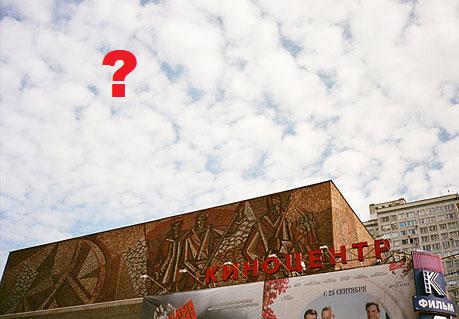
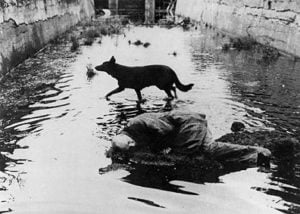
In the 1990s, the Russian film landscape had come to resemble something straight out of Tarkovsky’s Stalker, with stray dogs wandering through Mosfilm studios in Eisenstein’s footprints and actors and directors stumbling around a menacing no man’s land in search of money and meaning.
What happened before, and after, is the subject of an engrossing (and plenty flawed) BBC documentary entitled Movie Nights in Moscow on Radio 3, in which Oxford professor Rana Mitter travels to Russia and speaks to directors, academics and viewers to determine the state of cinema in Russia today.
This state can best be summed up by the following exchange between rising auteur Alexey Popogrebsky and renowned Soviet director (and current head of Mosfilm) Karen Shakhnazarov.
For Popogrebsky, the 2004 fantasy blockbuster Nightwatch was the turning point for Russian cinema, when
Young people said: maybe its not so bad to go watch a Russian film, because in terms of the return on their money, they were getting as many special effects per square foot as any other Hollywood blockbuster. Because people want to be entertained, they want to be impressed.
But for Shakhnazarov, who directed the iconic Glasnost youth movie The Courier and whose new film The Vanished Empire evokes 197os USSR, that is precisely the problem with modern Russian cinema. Speaking with an accent that lends heightened poetry to his words, he lays the blame even more on the viewer than film-maker:
In Soviet period, we had Idea. You can say it was bad idea, ok. You can say it was good idea, somebody says that. But it was an Idea. Around this idea was the fire; some life was around this idea. Somebody support this idea, and others not support it, those called dissidents. But, I mean, this was the really big idea. Now, it’s vanished. And so we have, in my opinion, our society have no anything to live for. Because its impossible to live just for have a lot of sausages in the shops. There’s no real idea for the people, you see?
I don’t think [viewers today] are searching for something like the Idea, I suppose. Or, very few of them want to find in cinema something that is called Idea. Just they want to go to see entertainment.
Of course, Mitter delves into the recent high quality Russian art-house fare such as the internationally acclaimed Paper Soldier, Volchok (Wolfy) and The Return.
But at a time when even commercial movies are seen only by elite upper middle class audiences who can afford to spend $10 on a ticket, the viewership of such ‘idea-films’ is so negligible that they can not hope to speak to the population at large.

And while Mitter proclaims the new cinema to be a renaissance equal to the colossal flowering of creativity and boundary-pushing under Glasnost in the 1980s (which he doesnt spend nearly enough time talking about!), he is wrong.
This is because the cinematic awakening under Glasnost was truly inclusive, rather than elitist; challenging films that today would be the preserve of art house audiences involved the general public in dialogues about their own pasts and debates about their futures.
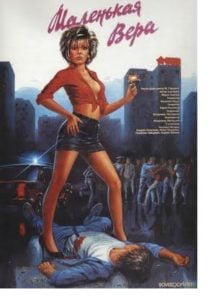
Millions of ordinary people flocked to cinemas to see movies banned since the 60s, such as Kommissar and Abuladze’s anti-Stalinist Repentance, or new social realist films depicting the dark undersides of ‘Socialist utopia’ such as Little Vera (first Soviet film featuring nudity!); or films that re-examined the place of young people in society, such as Bykov’s The Scarecrow, Shakhnazarov’s The Courier, Igla (a film about drug abuse featuring Soviet rock legend Victor Tsoi) and the groundbreaking Latvian documentary Is It Easy to Be Young.
 While many of those films were heavy and depressing, (their darkness serving as a political rebellion against the culture of official cheerfulness that marked Socialist Realism), so many quality films were not: for example, the above-mentioned Courier or the satirical comedy Kin Dza Dza.
And there was not the same kind of apartheid between highbrow ‘chernukha’ like Wolfy and commercial trash like Night Watch that we see today.
They were for the most part politically engaged and philosophically committed.
In the final scene of The Courier (2:55 in), the main character, Ivan, a high school senior, is watching some dudes breakdance in the park and asks his pal Basin: What do you dream about in life?
-Buying a winter coat
-What kind of dream is that?
-Winter is almost here and I’ve got nothing to wear; I went last winter without one and was sick all the time
-Cant your parents get you one?
-My dad’s paying alimony but my mum won’t give me a penny. Says I don’t need money. She is a sick person, there is no doubt. But what can you do?
At which point Ivan gives Basin the new jacket that his dad had just given him, and says:
-I won’t be needing it: I’ll get drafted into the army soon anyway. Wear it, and start dreaming of something greater.
He could have been addressing the new Russian cinema and its audiences.
