
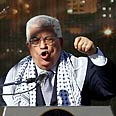
He announced he’s quitting. He halted the peace process. He condemned Israel for not stopping settlement activity. He criticized Hamas for not using popular resistance. He wants to unilaterally declare statehood. He still says he wants peace. He kind of backtracked on quitting. He rejected a U.S. peace negotiations effort.
That’s right, Palestinian President Mahmoud Abbas is all over the place.
He announced elections for January before announcing his intention to step down as President. He is also chairman of the PLO. It’s unclear whether he’ll stay on as chairman, although the PLO just agreed to permit Abbas to stay on as head of the organization following the expiration of his term as President in late January. Therefore, even though his presidency will technically end, Abbas will still be the top decision maker in the West Bank. Effectively, his resignation will not mean much until elections -or he steps down from the PLO- actually happen and now it’s unclear if/when they will occur. All of this turnover has led many people to question whether the entire PA will now collapse.
In terms of the peace process, Abbas was a moderate who got virtually nowhere in peace negotiations with Israel. However, both Israeli and U.S. officials called on Abbas to stay in power, wary of whoever will succeed him as President. But now, Abbas has rejected a U.S. plan to resume negotiations that had relatively favorable provisions for the Palestinians, including increased sovereignty over certain areas. Instead of negotiating, he’s also attempted to garner support for a United Nations resolution to forgo talks and unilaterally declare a Palestinians state.
Abbas has also chastised Hamas for failing to adequately live up to it’s resistance mantra, part of which is a simple cheap shot against his chief rivals. However, calling for resistance, which is nothing new from the PLO but odd considering the extremely tense situation in Jerusalem, only inspires potential terrorists to act on their impulses. An increase in terror activity would undoubtedly collapse the seedlings of the peace process, radicalize Israel even further to the right against the formation of a Palestinian state, and result in additional Israeli military incursions into the West Bank to round up terrorists. Calling for resistance does nothing but complicate an already extremely complex situation.
So, what’s the moral of the story?
Abbas wants to quit, but kind of isn’t. Abbas wants to resume negotiations, but rejects calls for them. Abbas is pro peace, but also wants resistance.
There’s one last fact we haven’t yet addressed. Abbas’ popularity is in the dumps. Top Hamas official Ismail Haniyeh and imprisoned Palestinian leader Marwan Barghouti both have equal approval ratings to Abbas.
By positioning himself outside of politics (but still retaining power) and standing up to both Israel and the United States, Abbas is seeking a boost in ratings. We have yet to see a poll on how Abbas’ recent news-making has affected his popularity. Maybe it plummeted further, but I suspect it’s starting to go up.
We’re seeing a different Abbas, not the pushover and Israeli ‘puppet’ that he was accused of being in the past. He has never really led the Palestinians, a prime example of which was when he lost complete control of the Gaza Strip following a loss in parliamentary elections in 2006. Perhaps he’s trying to emerge as a leader. By gaining popularity, maybe he can unite Palestinians behind a peace plan or any plan that would turn Abbas from a pawn into a hero. He is getting old and his legacy is tarnished.
Either that, or he truly is fed up with the peace process, the Palestinians themselves, and Hamas and he now just wants out. In that case, we’re finally seeing his true colors.
Photo from Yedioth.
