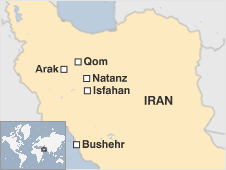
Iran recently rejected a compromise plan proposed the UN Security Council members that would have sent uranium to Russia and France, where it would be processed into fuel rods and sent back to Iran for use in a research reactor . This would have been a classic compromise, one that satisfied no one and yet met the basic needs of all parties. The international community would have an assurance that the uranium was not being enriched for use in nuclear weapons and Iran would have their right to a peaceful nuclear energy program respected. Unfortunately, this compromise was rejected by Iran, which proceeded to launch a military exercise designed to demonstrate their willingness to defend their nuclear facilities. To help make sense of all of this, the Carnegie Endowment for International Peace has assembled a panel of scholars to examine Iran’s nuclear program from American, Russian, and Middle Eastern perspectives, focusing on the implications for regional and global security.
Image Credit: BBC News
