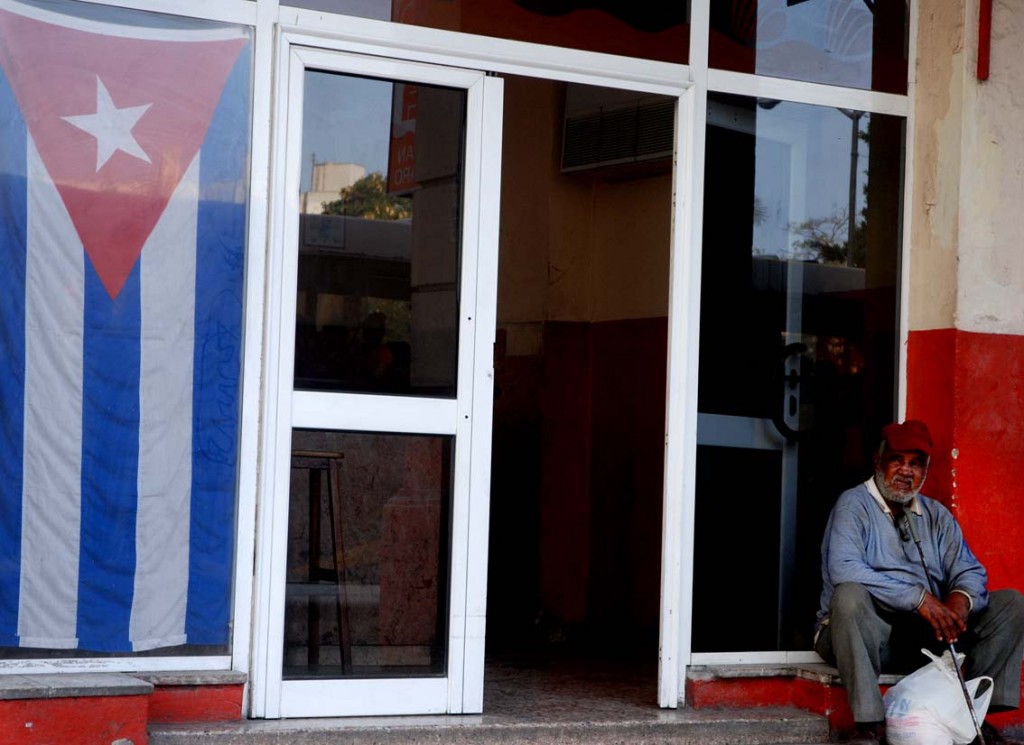
The “vicious circle” is, as Dalia Acosta and others have written, a pattern that has been repeated over and over during the history of Cuba in the last decades: the seemingly inevitable cycle of relaxing and tightening among the governments of Cuba, the United States and the European Union. The reasons for the vicious circle are uncertain. Is it purely a lack of trust that makes the actors take baby steps forward, only to pull back? Is it, as some opine, the need of Havana’s regime to project the image of an enemy? Whatever the cause, the cycle continues.
Acosta portrays the dilemma in two different ways: (1) the Cuban government’s tendency to generate an incident each time that a break appears in the old conflict with the United States (in other words: Havana needs the embargo to project its image as a country under siege that must therefore maintain certain policies); and (2) the political opposition’s perpetuation of the polarized status quo by substituting external legitimacy—from governments as well as from civil groups or associations—for the need of building a grass roots base on the island.
Without spending time on whether or not the first is true (as that question is nearly impossible to determine and is more commonly taken up by Cuba-onlookers anyway), let’s take a look at the second, which at first glance appears offensive, then at second glance almost deserves begrudging agreement. But on the third and final look, I think the hypothesis needs a reversal. It is not that the small opposition movement in Cuba that forces polarization; it is foreign support of their cause without accompanying dialogue with Havana that polarizes the nation and its relations with foreign powers. Cuba is a tiny country (relative to the United States or the EU) with a small dissident force: US or EU support and dialogue with that opposition without equal or greater dialogue with the regime will always cause a negative, defensive reaction from Havana.
