
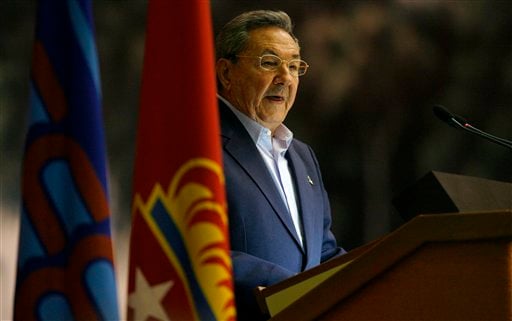
In recent posts we’ve discussed the future of Communist Cuba after the current generation of leaders is gone, and what might be expected of the next generation. These questions are on the top of the minds of current leadership, and so this weekend’s conference of the Union of Communist Youth fit smoothly into that context: the participants gathered to map a future without Fidel and Raúl, using a slogan of “socialist continuity” and acknowledging that this year the conference, which is held every five years, would likely be the last one presided over by the island’s historic leaders of the revolution.
“There will be no turnover, only continuity,” said José Ramón Machado Ventura, Cuba’s Vice President and Raúl’s hand-picked successor. But Machado is a year older than Raúl himself, and Cuba does not appear to have any young leaders positioned to replace the Castro’s generation.
The Union of Communist Youth, in that case, might end up being the most influential force determining the future of the state. It has a membership of 600,000, including Liudmila Alamo (the not-so-young First Secretary of the Union), and Elián González (the now 16-year-old who in his childhood became the face of the ugliest aspects of US-Cuba relations and the highly dangerous nature of migration policies between the two countries when he arrived in Miami—his mother having died on the dangerous illegal boat trip to the United States—and found himself torn between his Miami family and his father who had remained in Cuba. More on Elian here).
The Union’s publication, Juventud Rebelde, wrote up a conference summary of sorts today called “We are the Future,” dismissing the naysayers:
“A los enemigos de la Revolución que pretenden dibujar a Cuba como una nación dividida, donde supuestamente es insalvable el abismo entre la generación histórica que construyó la Revolución y las generaciones más jóvenes, solo se le puede responder con más participación, con más compromiso, con más unidad.”
“To the enemies of the Revolution that attempt to portray Cuba as a divided nation, where the gap between the historic generation that built the Revolution and the younger generations is supposedly impossible to bridge, the only way to respond is with more participation, more compromise, and more unity.” (Author translation)
(AP Photo/Ismael Francisco, Prensa Latina)
