Another month, another chance to move forward on the US-Cuba relationship…
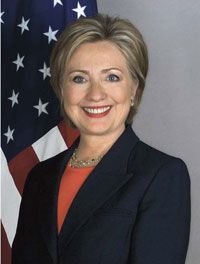
Progress seems to have stagnated lately, and April’s comments by Secretary of State Hillary Clinton predict more of the same. Clinton, speaking at the University of Louisville at the beginning of this month, answered a question from the press about Cuba by underlining the efforts the Obama administration has already made and faulting the Cuban side for not reciprocating (“We came in and said, look, we’re willing to talk and we’re willing to open up, and we saw the way the Cubans responded”). Her final comment was far from optimistic in the short term:
“I think that many in the world are starting to see what we have seen a long time, which is a very intransigent, entrenched regime that has stifled opportunity for the Cuban people, and I hope that will begin to change and we’re open to changing with them, but I don’t know that that will happen before some more time goes by.”
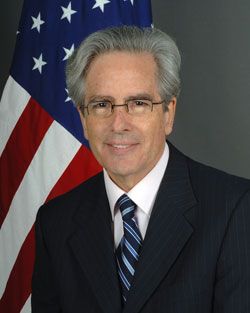
Assistant Secretary of Western Hemisphere Affairs Arturo Valenzuela’s most recent relevant comments came before the House Committee on Foreign Affairs in March, where he mentioned the Cuba issue only briefly. He repeated the now familiar message that the Obama administration has made positive steps and remains concerned about the state of human rights and a democratic future in Cuba.
So Nicholas Maliska’s point made in The Havana Note this week is well taken: when Arturo Valenzuela speaks to the Cuban American National Foundation (CANF) this May 20 (a date recognized by some Cubans as their Independence Day of 1902), he will do more than issue an odd statement or answer to press questions. He will deliver what might well be the Obama administration’s first major speech on Cuba, and he has the potential to say something new. He will do so before the leading organization for Cuban exiles, a relatively centrist/moderate group, and he will be watched by hard-liners and pro-engagement advocates closely.
CANF put out a report last year called “A New Course for US-Cuba Policy: Advancing People-Driven Change,” which marked a serious departure from the past as the group—representative of a large Cuban-American contingent—admitted the failures of past policy and prescribed forward-looking changes. The Foundation stopped short of advocating to scrap the embargo (for which it was criticized by some), but this softer stance gives Valenzuela more leeway for his comments than might have been possible in the past in front of this group.
We’ll be listening.
